A small island in the middle of the North Sea with cliffs full of gannets and a beach where seals rest. A photographer's paradise in May.
Heligoland is Germany's only offshore island. It lies about seventy kilometres from the coast and is reached by ferry from Hamburg, Cuxhaven or Büsum. In spring the breeding season is in full swing. The ferry from Cuxhaven takes about two and a half hours. On a rough North Sea it can be quite a ride. The island covers only about one square kilometre. It is a red sandstone rock with cliffs up to fifty metres high. Next to it lies the smaller sandy island of Düne with an airfield and beaches.
The best-known sight is the Lange Anna rock stack, about 47 metres high, standing alone in the sea at the northern tip of the island. It is the symbol of Heligoland.
The gannet cliff
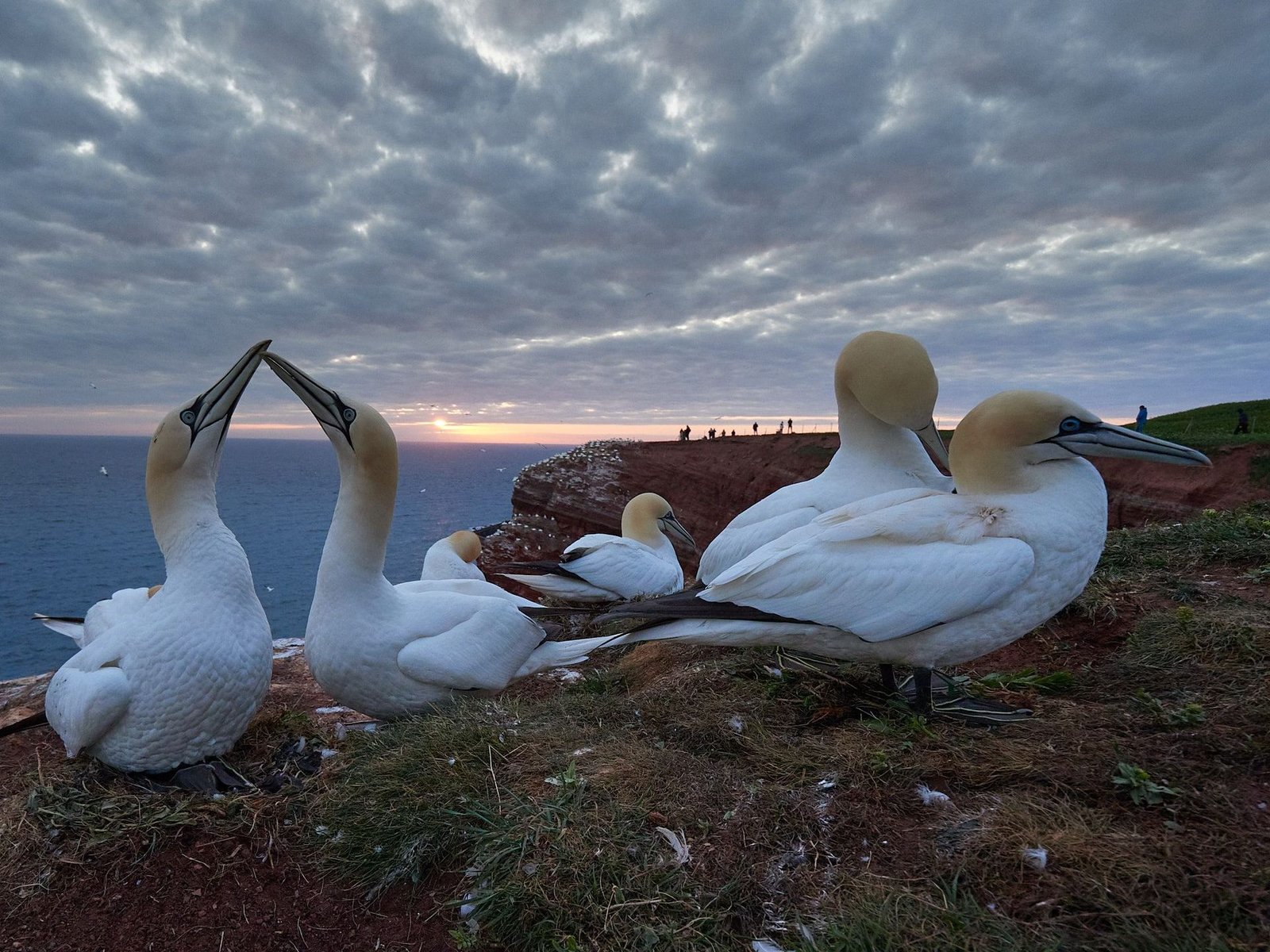
In the north-west of the island is the Lummenfelsen cliff, Germany's smallest nature reserve. Northern gannets, guillemots, razorbills and fulmars nest here. A path with viewpoints runs along the cliff, from which the birds can be seen just a few metres away. Gannets first settled on the island only in the 1990s. Today more than a thousand pairs nest here.
Besides gannets, common guillemots nest here. In summer their chicks jump from the cliff into the sea before they can even fly. Their parents then keep feeding them on the water.
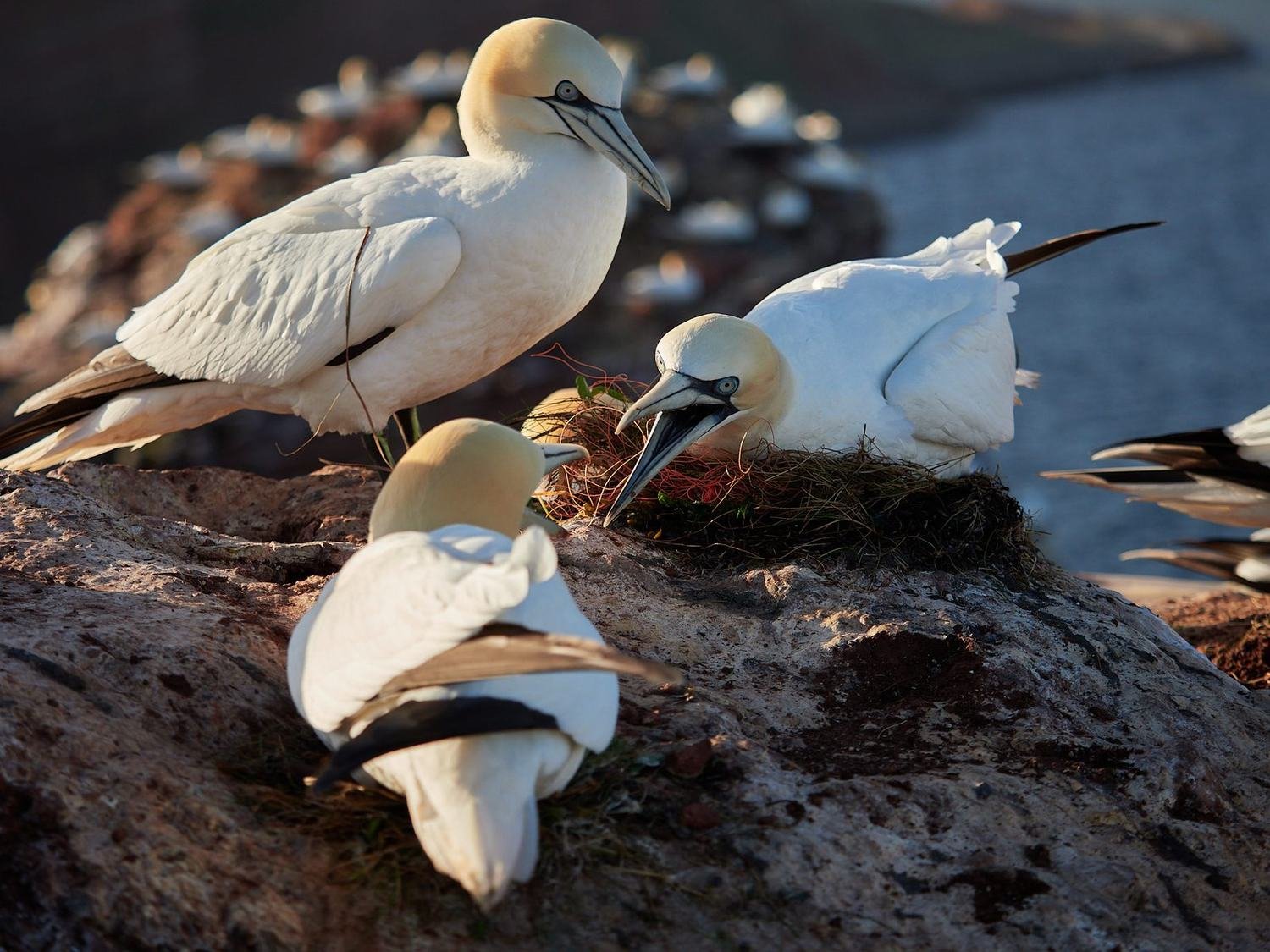
Gannets are large seabirds with a wingspan of up to two metres. They build their nests on narrow ledges of the rock from grass, seaweed and, sadly, pieces of fishing nets and plastic. They plunge headfirst into the sea from up to thirty metres and catch fish underwater. Their skulls are reinforced and they have air sacs under the skin to cushion the impact. Pairs greet each other with a courtship display – they touch bills, bow and stretch their necks. The colony is noisy and the birds constantly squabble over space.
Pairs often stay together for life and return to the same nest every year. The female lays a single egg.
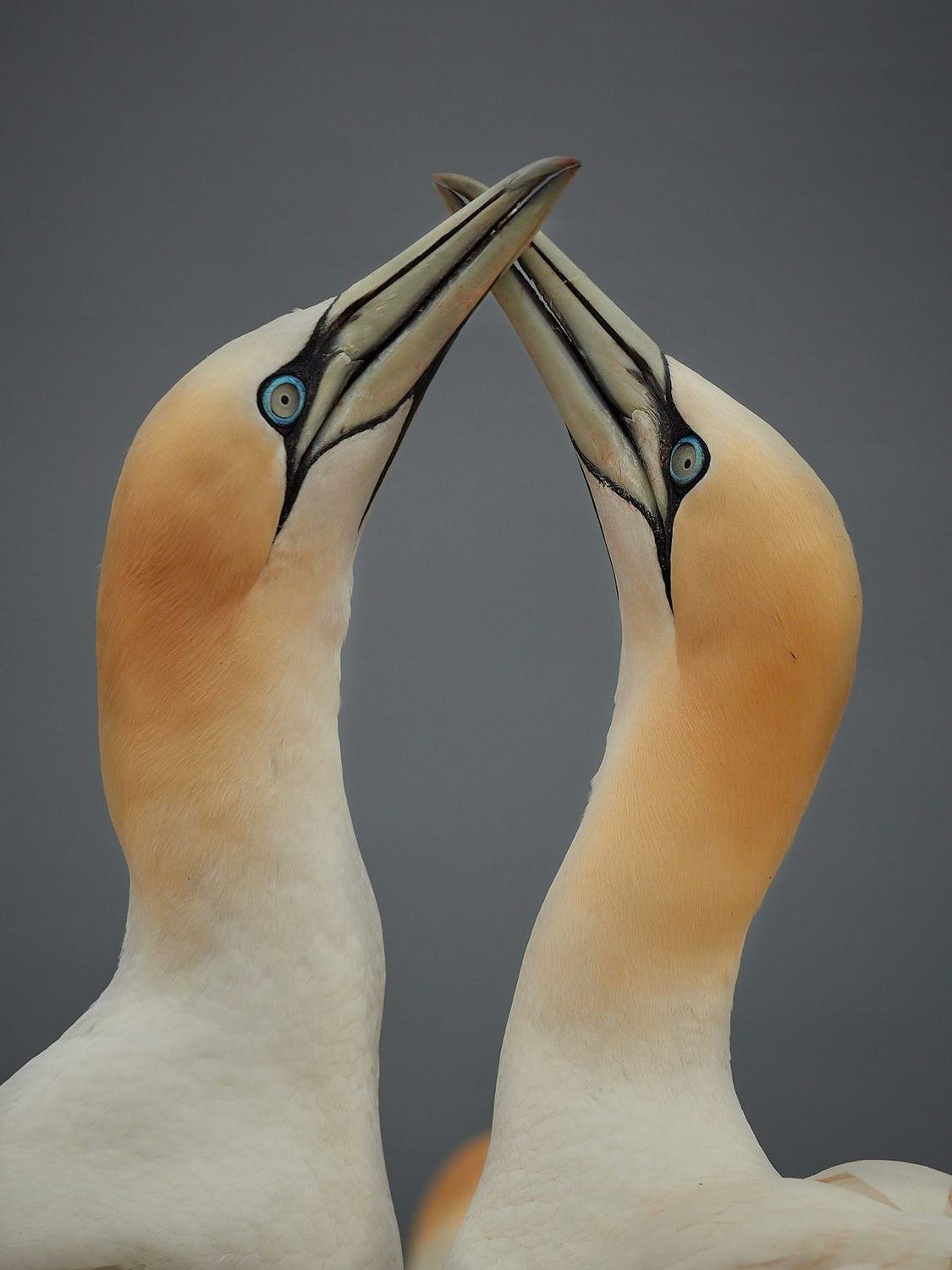
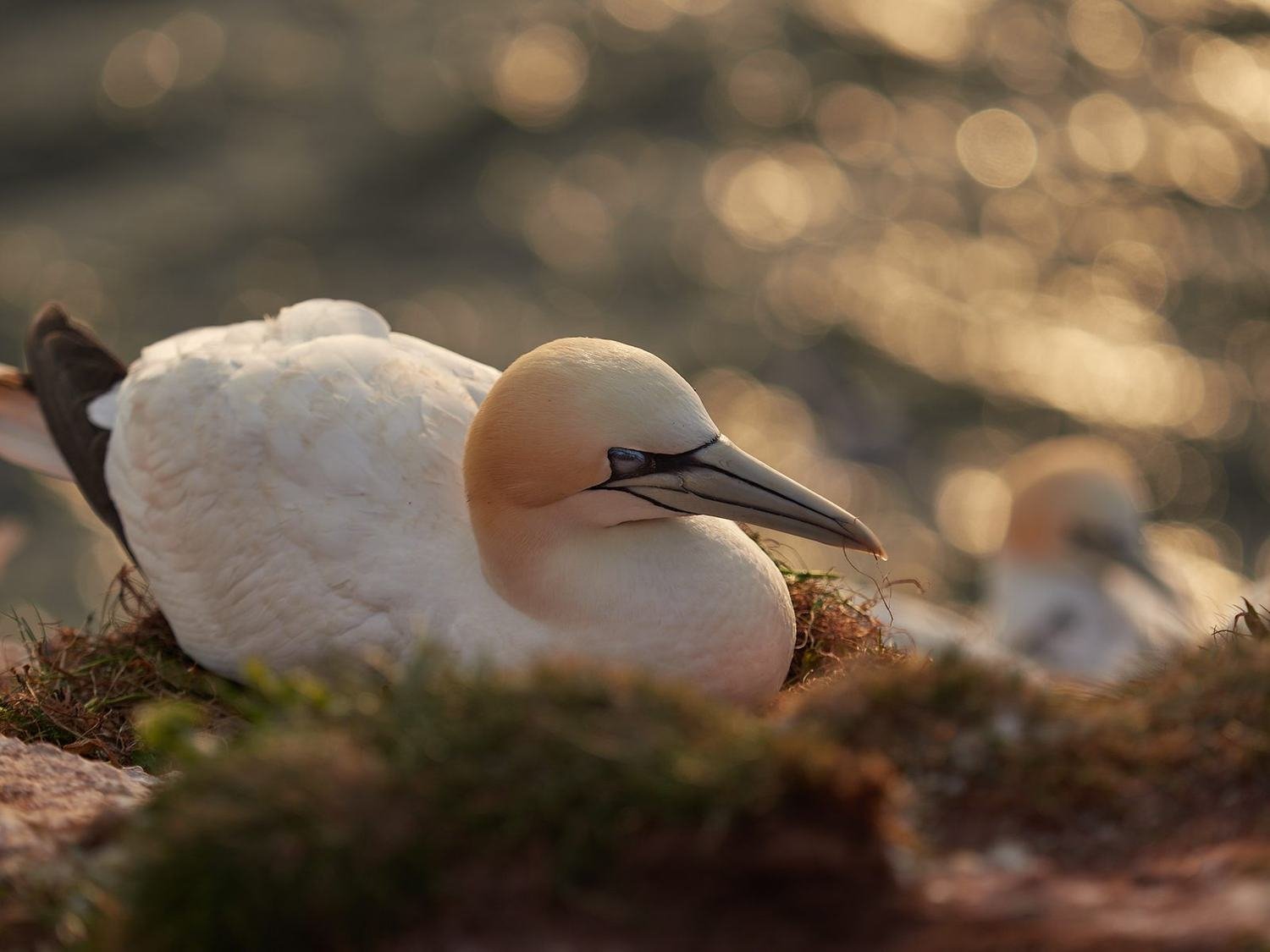
The best light is in the evening. The sun sets into the sea and lights the cliffs and birds in warm colours. Birds circling above the cliff make beautiful silhouettes against the sky. On the cliff the gannets are used to people. You can photograph them even with a short telephoto lens, but a longer focal length helps with flight shots.
Seals on Düne
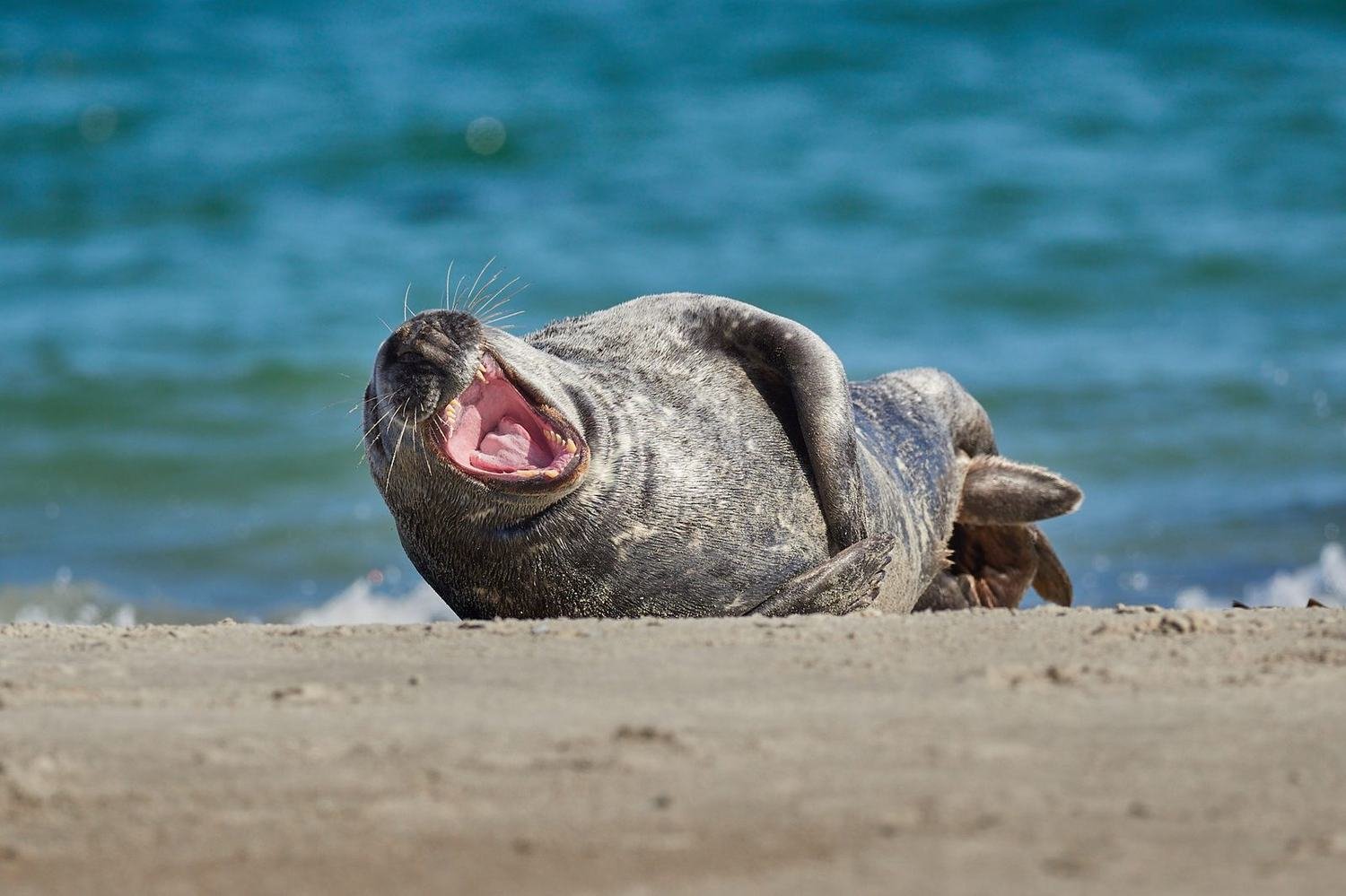
A small ferry runs to the neighbouring island of Düne every half hour. Harbour seals and grey seals rest on its beaches. Grey seals are Germany's largest predators and males can weigh more than two hundred kilograms. Grey seals have an elongated head without a pronounced forehead. Harbour seals are smaller and have a round, dog-like head.
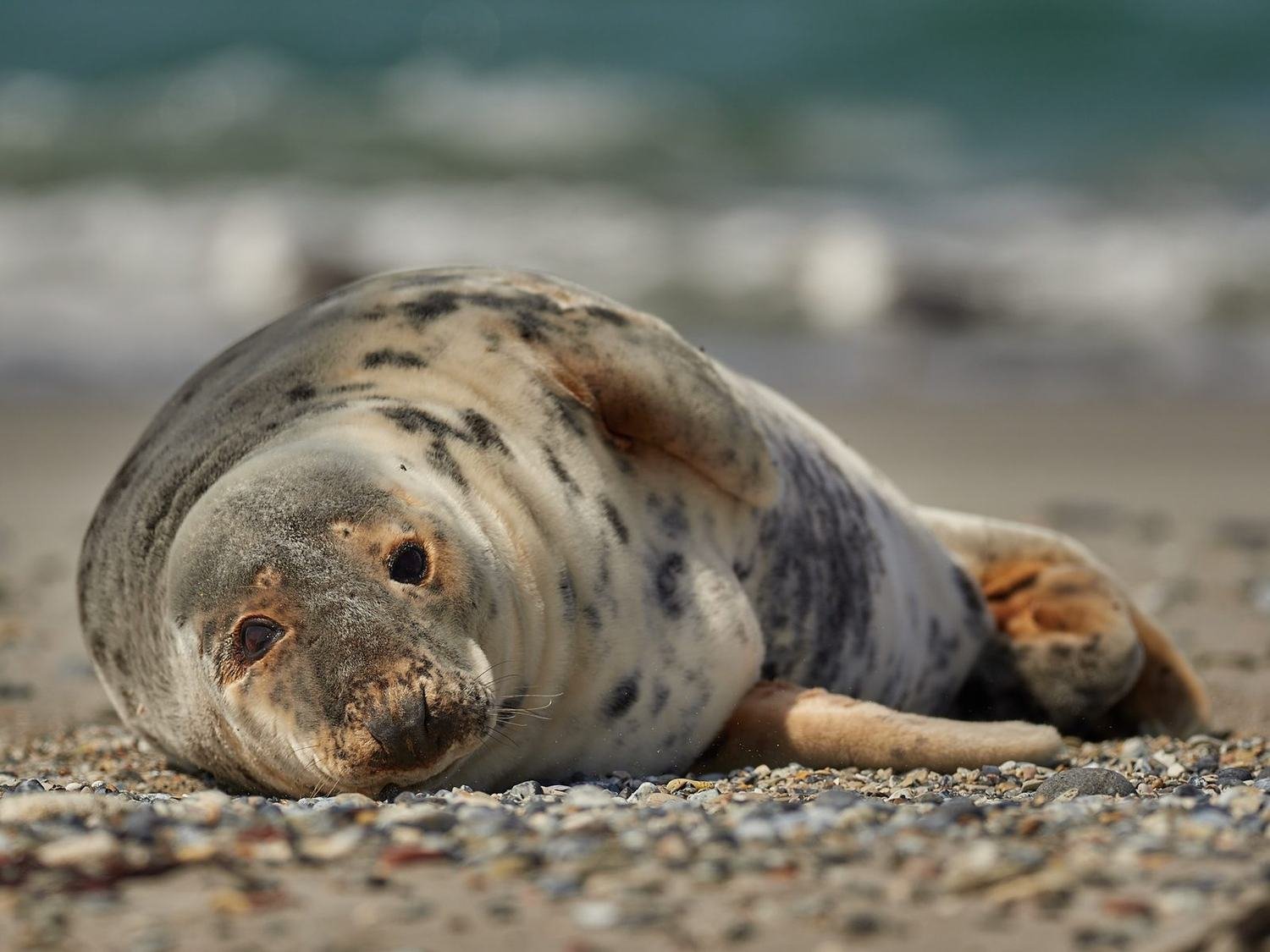
You need to keep a distance of at least thirty metres from the animals. Seals are curious and sometimes come closer on their own. With a telephoto lens you can photograph details too. Reserve wardens work on Düne, making sure people do not disturb the animals. In winter, when the pups are born, some beaches are closed.
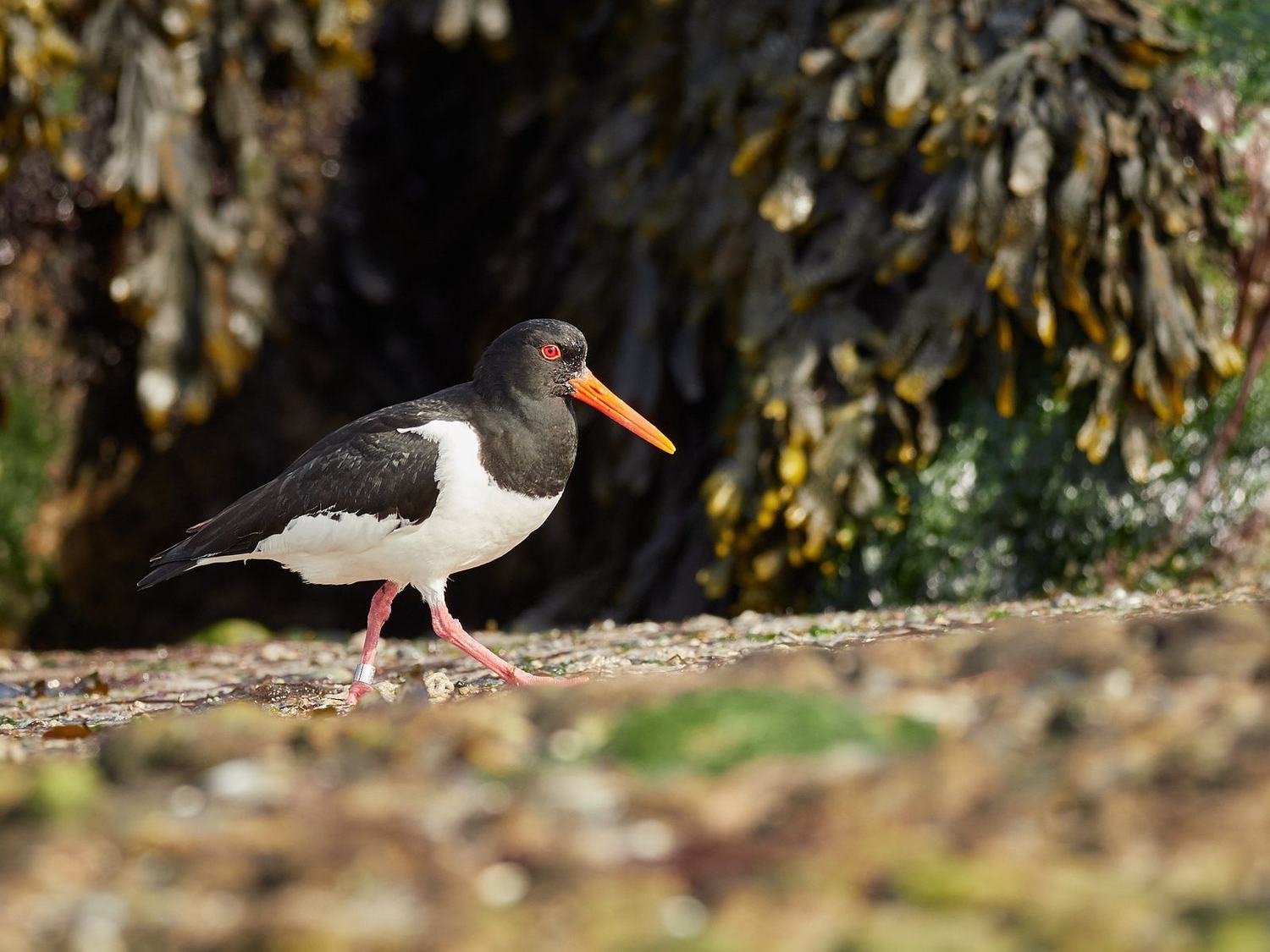
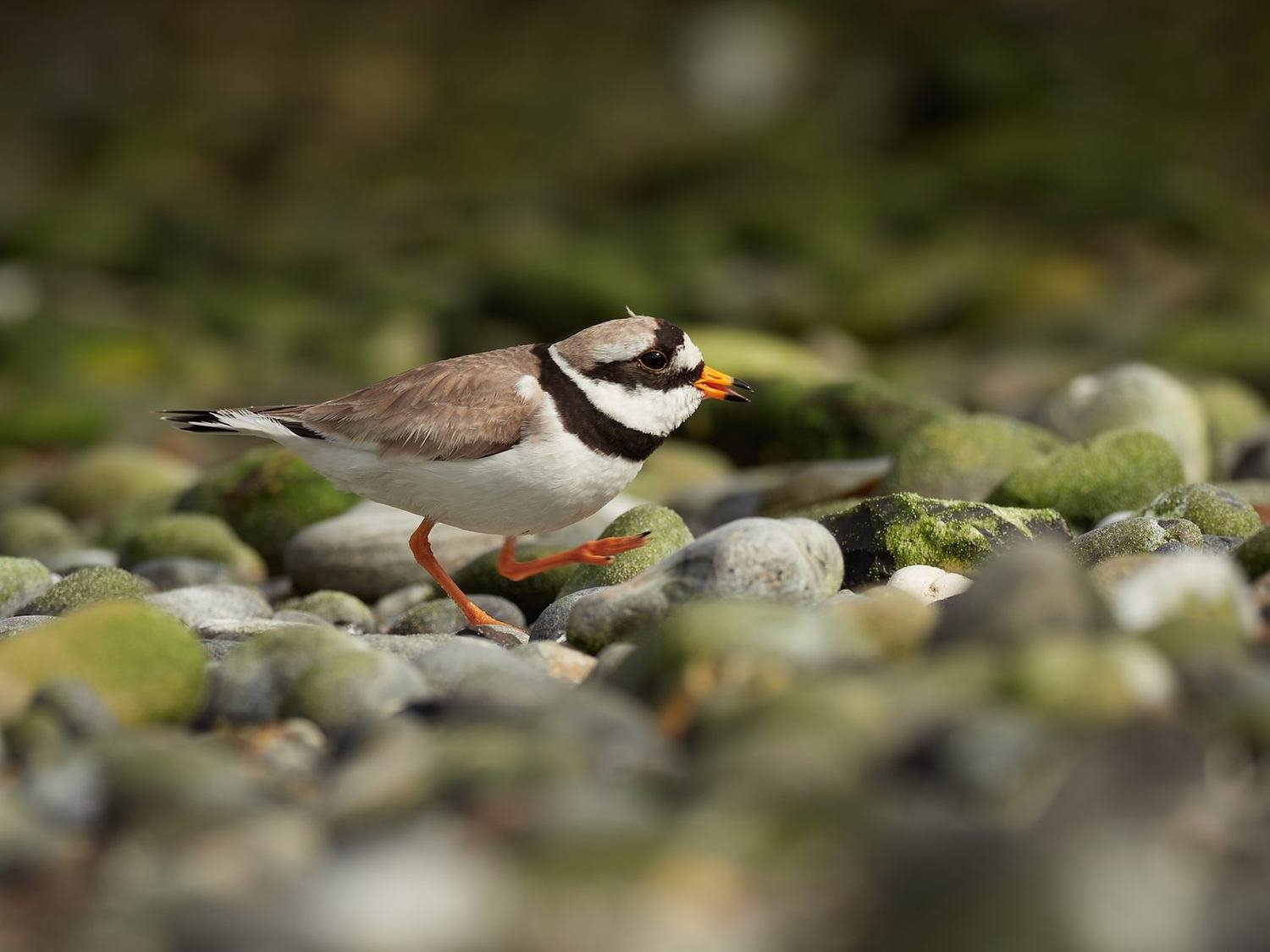
Besides seals, waders move along the beaches – oystercatchers, plovers and sandpipers. The ringed plover runs across the sand looking for food in the waves. Heligoland is also an important stopover for migrating birds. In spring and autumn ornithologists observe rare species that have strayed from far away.
The island
Heligoland has about a thousand inhabitants. There are no cars and everyone walks everywhere. The island is a duty-free zone, so people come here to buy alcohol and cigarettes. The little town has two parts – the Unterland by the harbour and the Oberland on the plateau above. They are connected by a staircase and a lift.
The island belonged to Britain, then to Germany. During the Second World War it was a military base, and after the war the British tried to blow it up. Craters can still be seen today. At the end of the 19th century Britain exchanged it with Germany for the island of Zanzibar. The people of Heligoland still speak their own Frisian dialect.
Practical tips
The best time for gannets is from April to July. For grey seals with pups it is November to January. It is worth staying on the island at least two nights so there is time for both evening and morning light.