A small country with big nature. Toucans in the rain, hummingbirds, iguanas, caimans and the red-eyed tree frog.
Costa Rica covers only about 0.03 per cent of the world's land, but it is home to about six per cent of all animal and plant species. A quarter of the country is protected. For a nature photographer it is a dream come true. The country has had no army for more than seventy years and invests its money in education and nature conservation. Ecotourism brings in a large part of its income.
Costa Rica lies between two oceans. On the Caribbean side there are rainforests and beaches with turtles, on the Pacific side dry forests and volcanoes.
Toucans
Toucans are the symbol of Costa Rica. Several species live here, and the most striking is the keel-billed toucan with its colourful bill. The bill is large but light, because it is hollow inside. Toucans use their bills to tear fruit, but also to regulate their body temperature. When it is hot, they send more blood into the bill to give off heat.
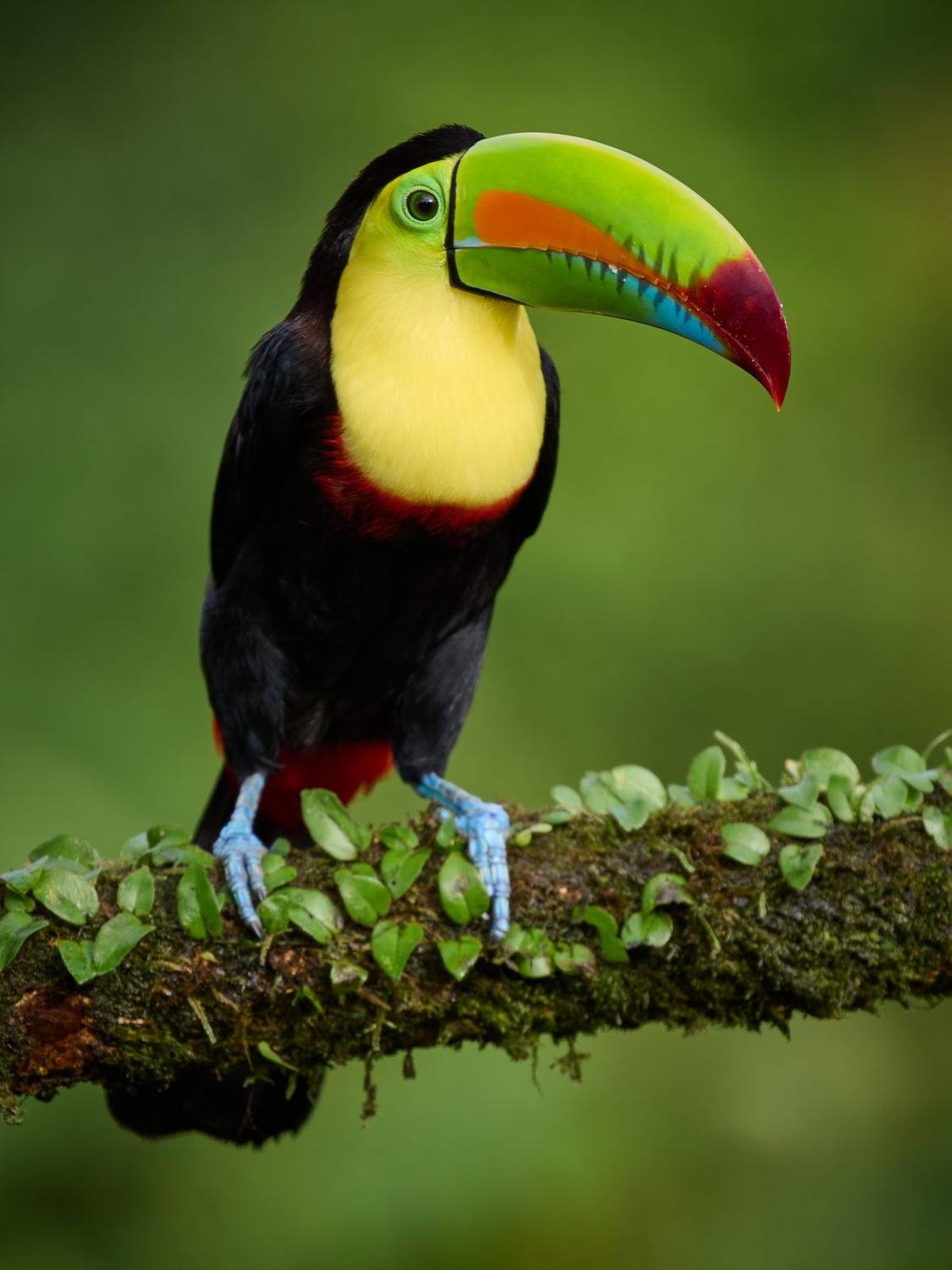
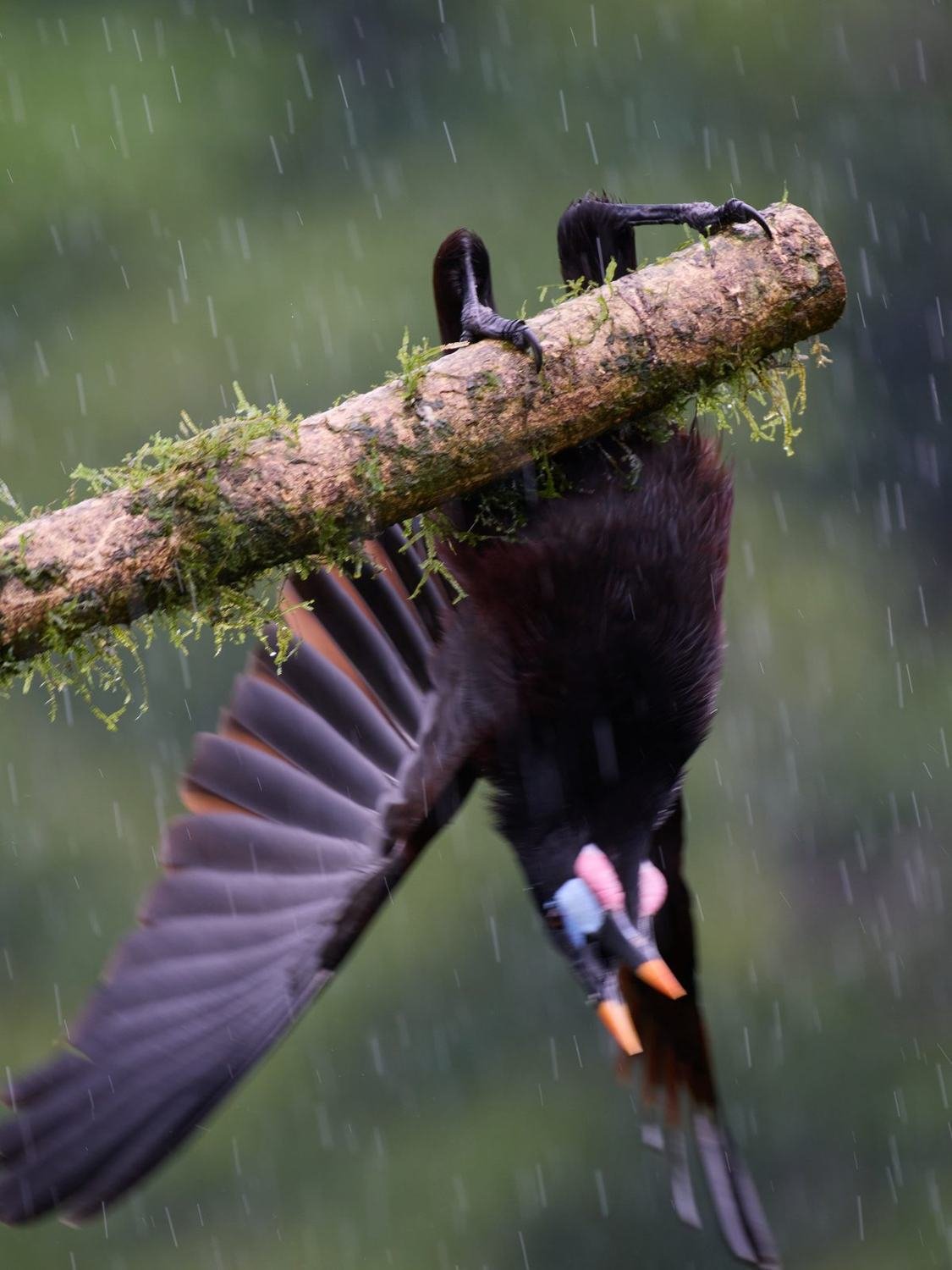
Photographing toucans in flight is hard. They fly fast and in short bursts between the trees. The title photo was taken in the rain. In the rain colours are richer and the background darker. But the camera needs a rain cover. Montezuma oropendolas also live in the forests. When displaying, the male bows forward, spreads its wings and makes a strange bubbling sound. Oropendolas build hanging nests that look like long sacks. In one colony dozens of them hang from a single tree.
Loggerhead and leatherback turtles nest on the Caribbean coast. The turtles lay their eggs at night and guides watch over them with red light that does not disturb them.
Hummingbirds
More than fifty species of hummingbirds live in Costa Rica. The lodges hang feeders with sugar water and hummingbirds buzz around them constantly. The smallest hummingbirds here weigh only about two grams. Some species are territorial and defend their feeder against the others.
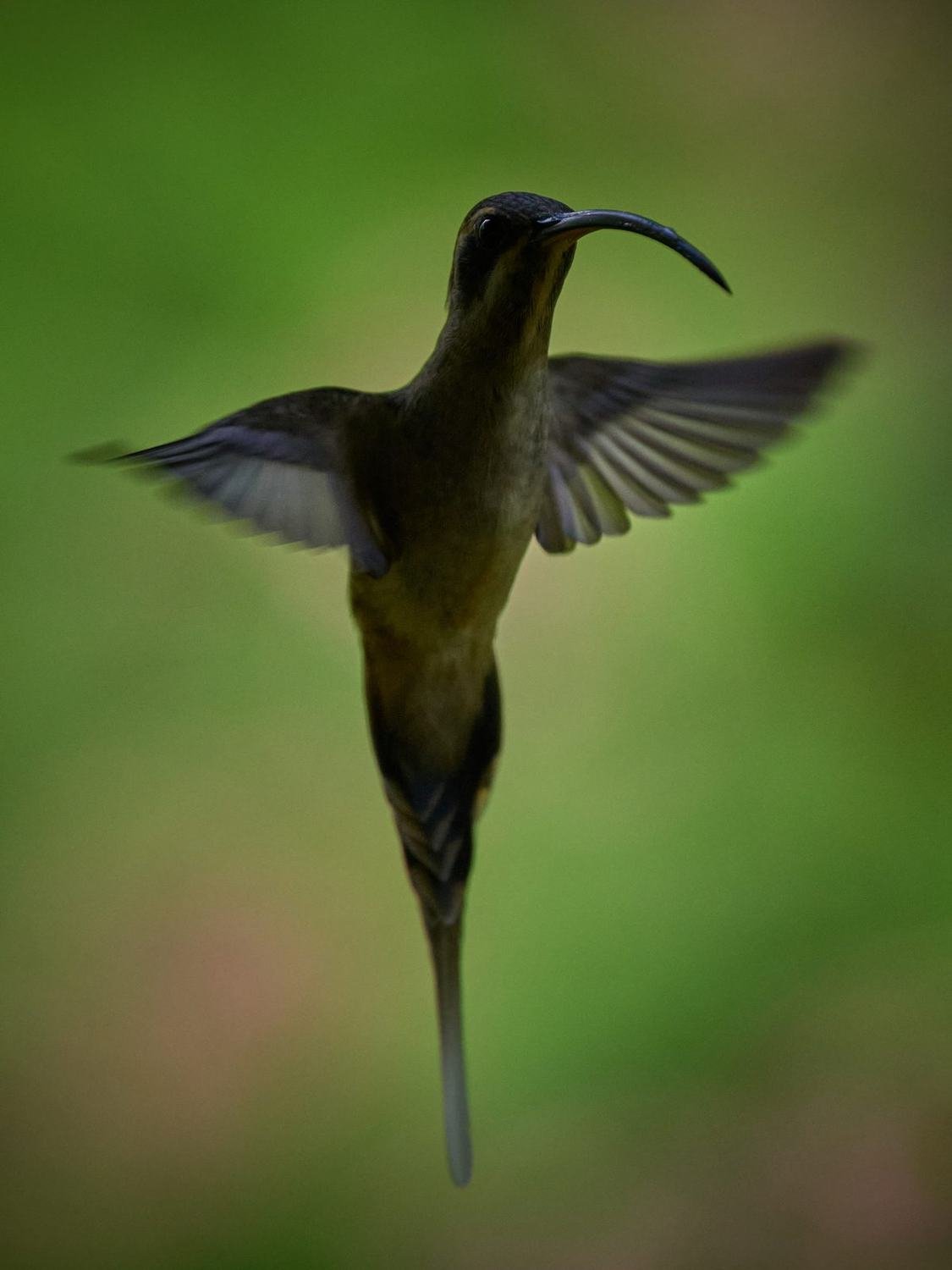
The lodge gardens are full of heliconia and hibiscus flowers. After rain a rainbow sometimes appears above them. Heliconias have curved flowers that only hummingbirds with curved bills can reach. The plants and birds evolved together.

Reptiles
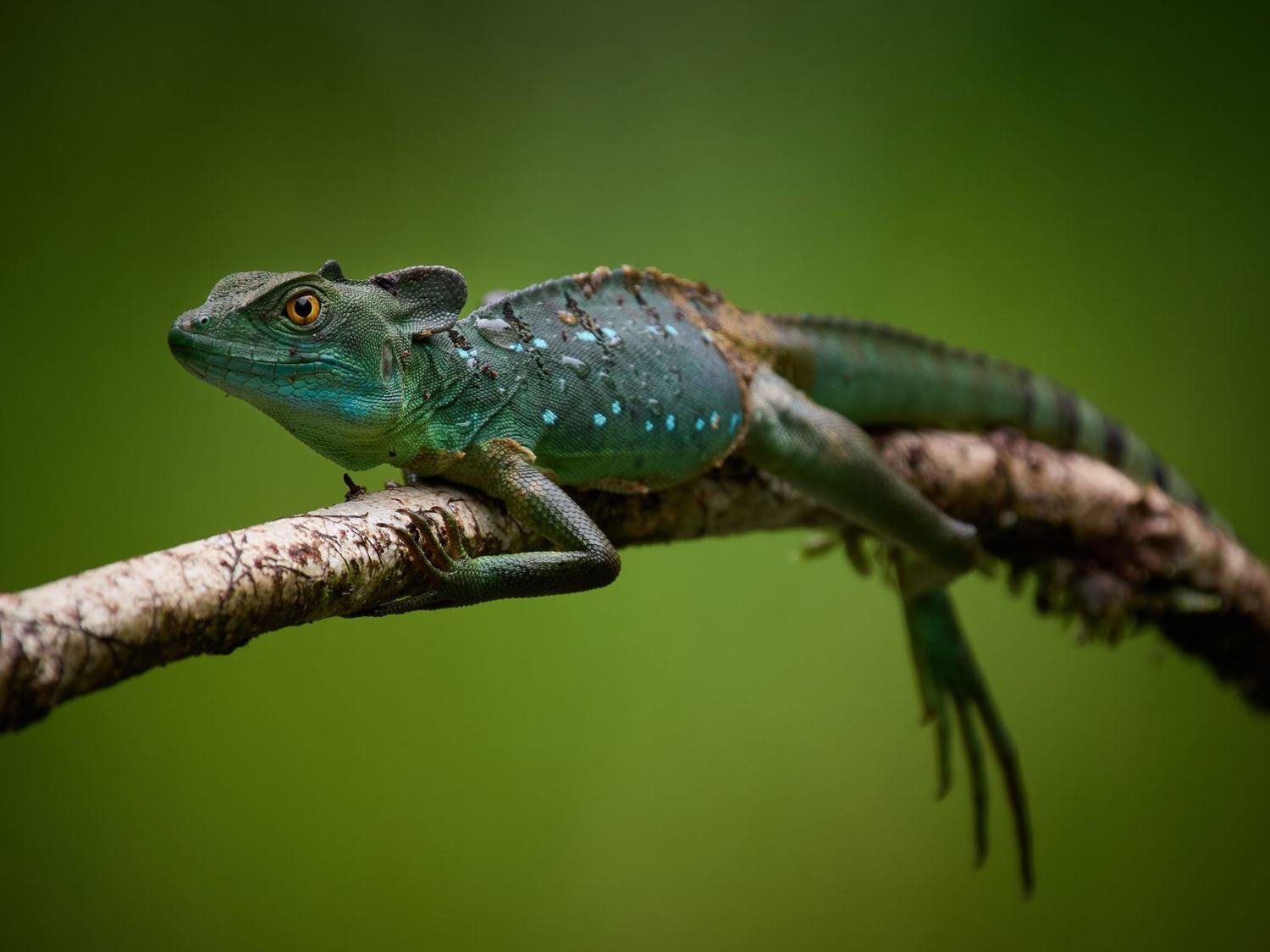
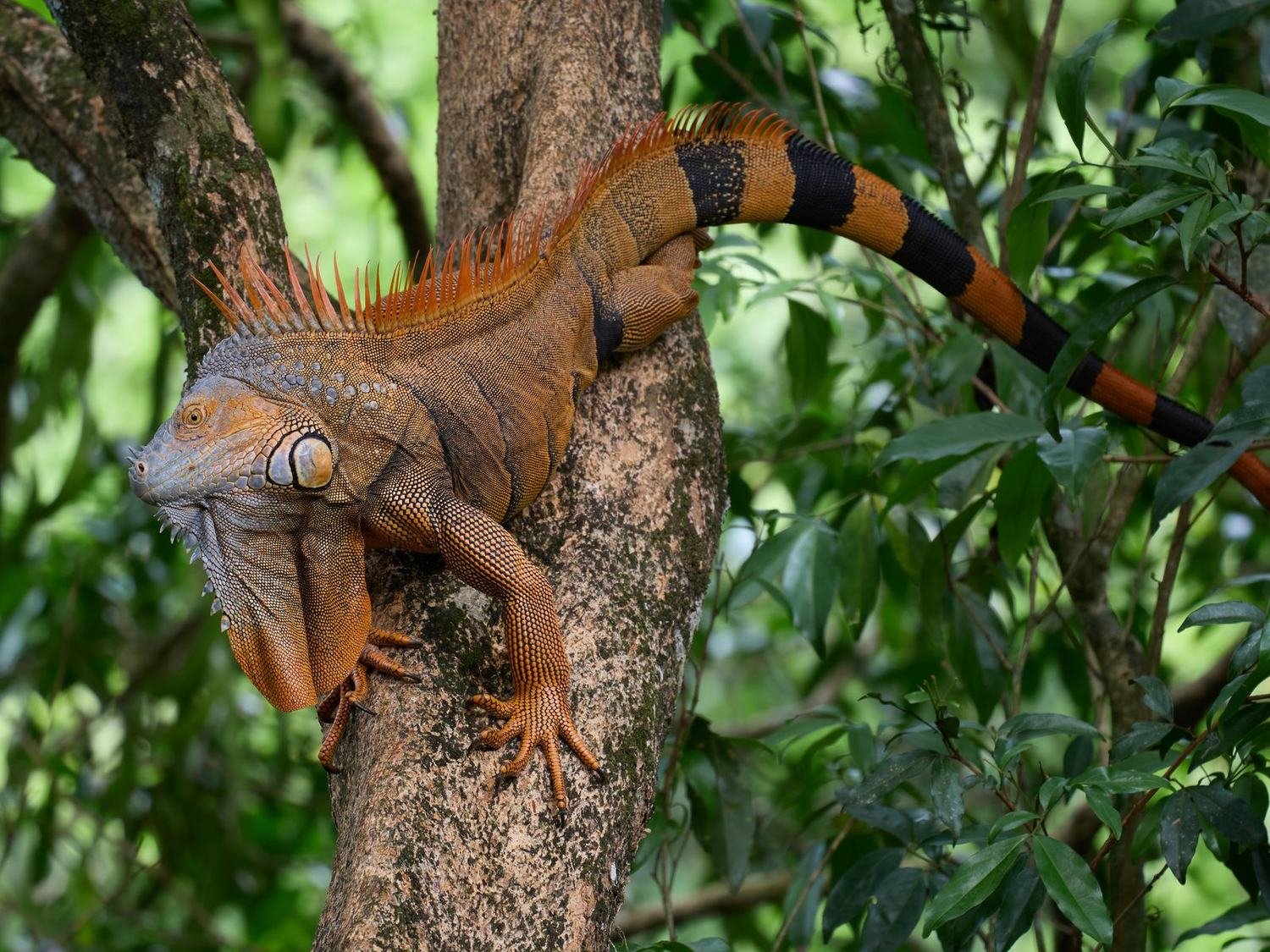
The basilisk can run across the surface of water, which is why it is called the Jesus Christ lizard. Iguanas bask in the trees above rivers. In the breeding season the males turn orange. Broad feet with fringes on the toes help the basilisk run on water. Young basilisks can run several metres across the water.
Caimans live in the rivers and wetlands. Herons and other birds fish around them and are not very afraid of the caimans. Small boats take you along the rivers, so you can photograph birds and reptiles from water level. Large crocodiles also live in the Tárcoles River. In Tortuguero National Park canals run through the rainforest. You travel them by boat and can see monkeys, sloths, birds and caimans.

Kingfishers and frogs
Kingfishers catch fish by diving headfirst into the water. Photographing them as they burst out of the water with a fish takes a fast shutter and a lot of patience. Six species of kingfisher live in Costa Rica. The largest is the ringed kingfisher, the smallest the American pygmy kingfisher.

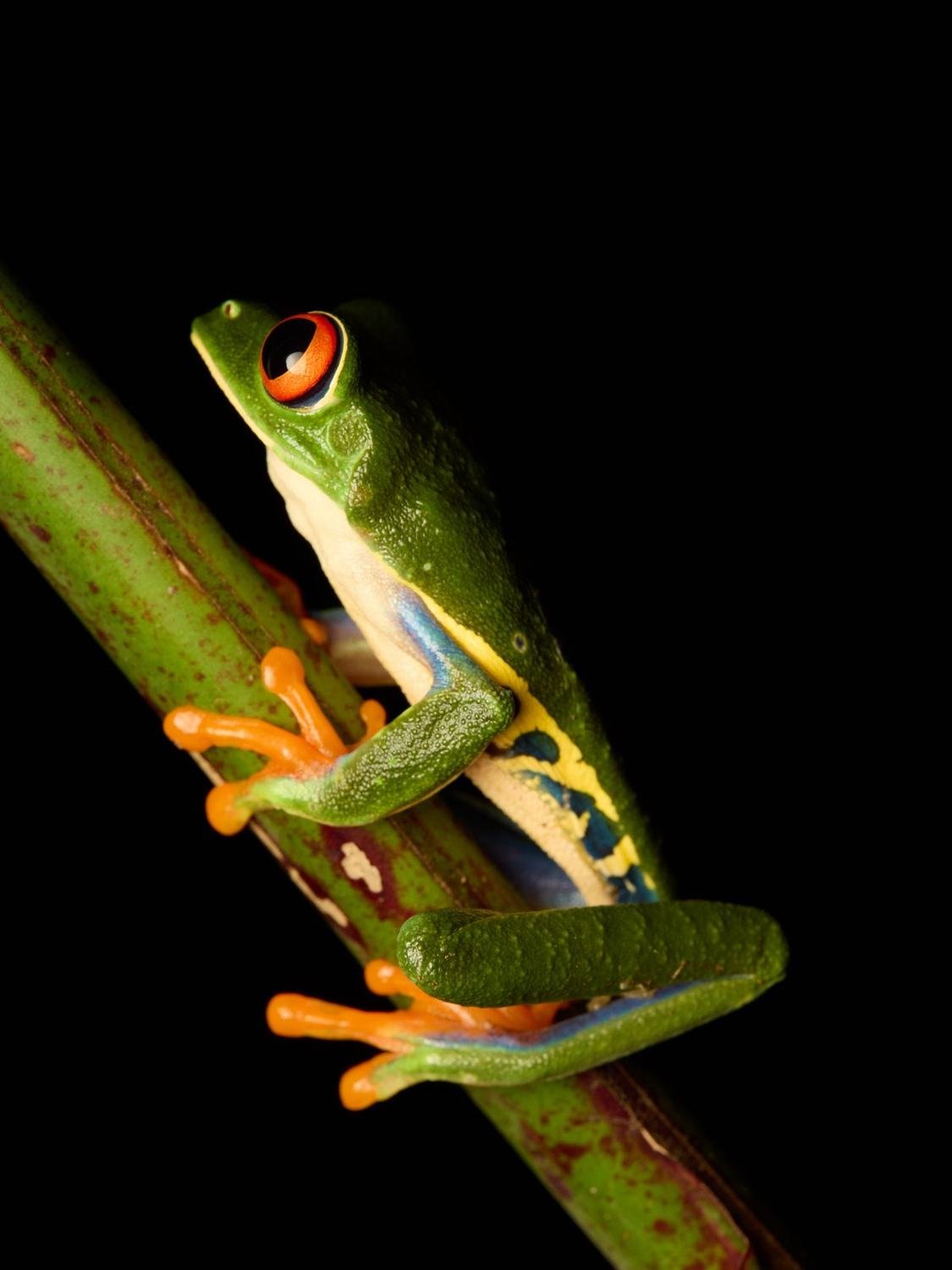
The red-eyed tree frog is Costa Rica's best-known frog. It has a green body, blue flanks and orange toes. It sleeps on leaves by day and hunts insects at night. You can photograph it at night with a torch and a guide. When the frog opens its eyes and shows its colourful flanks, it is meant to startle a predator. Before the predator recovers, the frog jumps away. Besides tree frogs, tiny poison dart frogs live here with toxins in their skin. Their bright colours warn predators.
Practical tips
The dry season on the Pacific side runs from December to April. On the Caribbean side it rains almost all year. A telephoto lens is good for bird photography and a head torch for night walks. Even in the dry season the mountain forests are cool and damp, so a jacket comes in handy. Lodges often have their own trails and feeders where you can photograph all day.