On the slopes of the Andes the cloud forests teem with hummingbirds, toucans and butterflies. Two weeks with a telephoto lens among hides, lodges and waterfalls.
Ecuador is a small country, but one of the most diverse in the world. In an area smaller than Italy, the peaks of the Andes, the cloud forests on their slopes and the Amazon rainforest follow one another. More than 1,600 species of birds live here, around 130 of them hummingbirds. The country is named after the equator, which runs through it. The capital, Quito, lies at around 2,850 metres and the surrounding volcanoes can be seen from the centre.
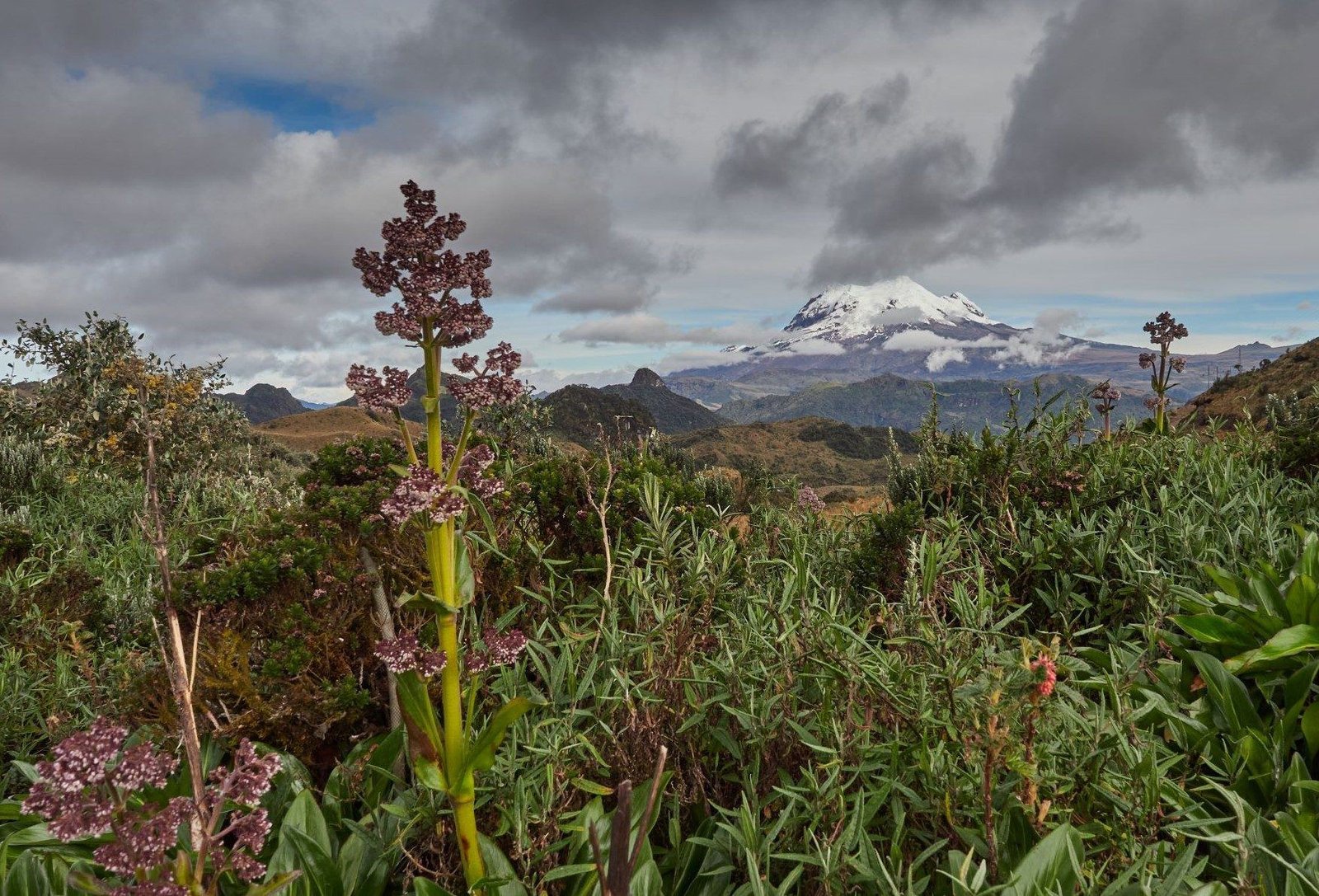
Here the Andes form two ranges with a string of volcanoes. Some are still active and their snowy summits can be seen from far away. On the slopes facing the Amazon and the Pacific grow cloud forests, where it is almost always damp and the trees are wrapped in moss and bromeliads. The highest mountain is Chimborazo at 6,263 metres. Because the Earth bulges at the equator, its summit is the point farthest from the centre of the planet. The best-known volcano is Cotopaxi with its perfect cone.
The cloud forest
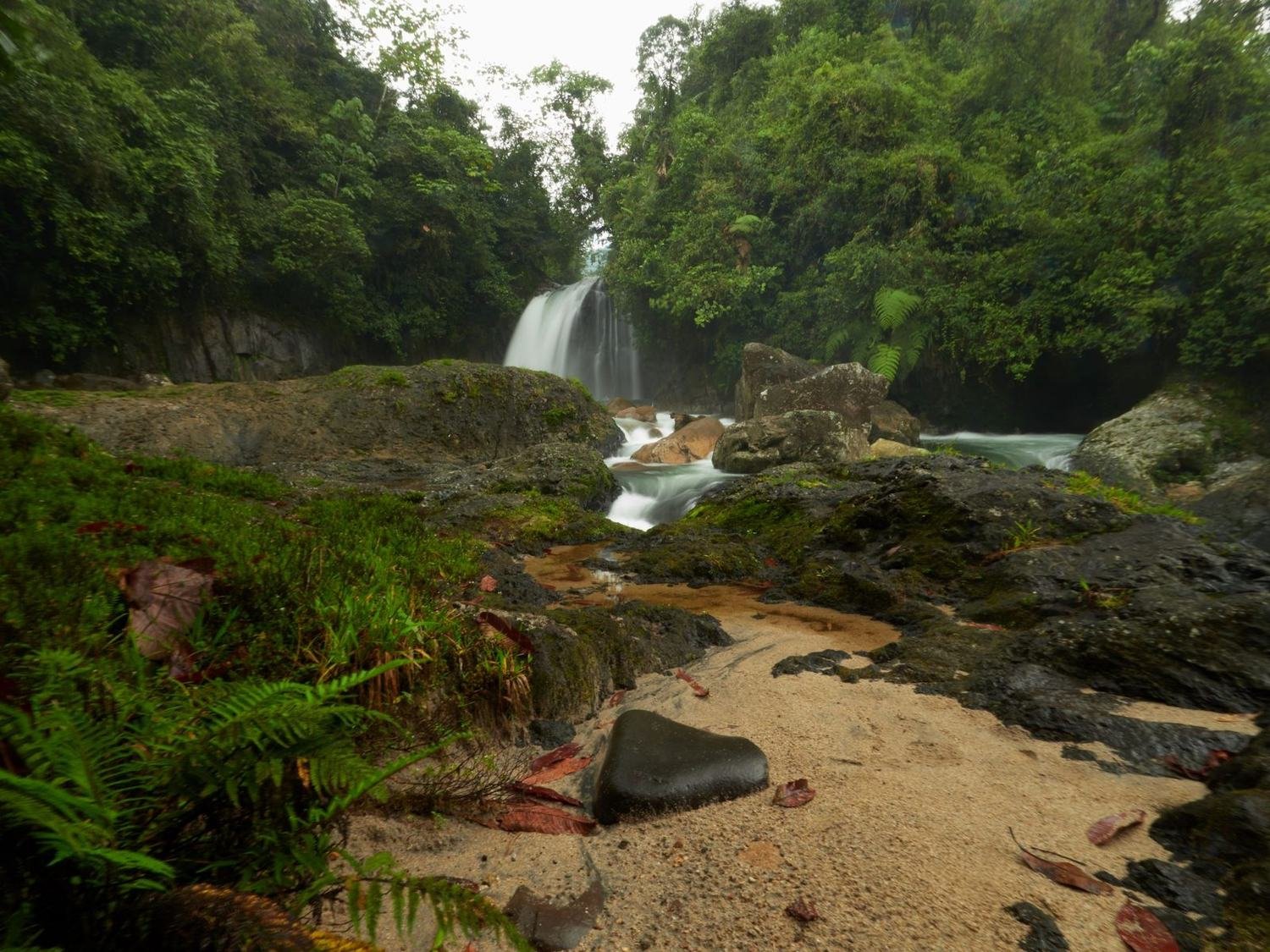
The cloud forest feels mysterious. In the morning mist drifts between the trees and the sun gradually burns it off. It shines through the canopy and creates rays of light that look like something out of a fairy tale in photographs. Cloud forests grow at roughly one to three thousand metres. The trees here catch water directly from the mist, and orchids, bromeliads and ferns grow on their branches. A single tree can host dozens of plant species.
The lodges have hides and feeders that birds visit regularly. Photographers sit here from morning with telephoto lenses, waiting for the right moment. Sometimes it comes within minutes, sometimes after several hours. Some hides are at canopy level. From there you can see birds that stay hidden in the leaves when seen from the ground.
Hummingbirds
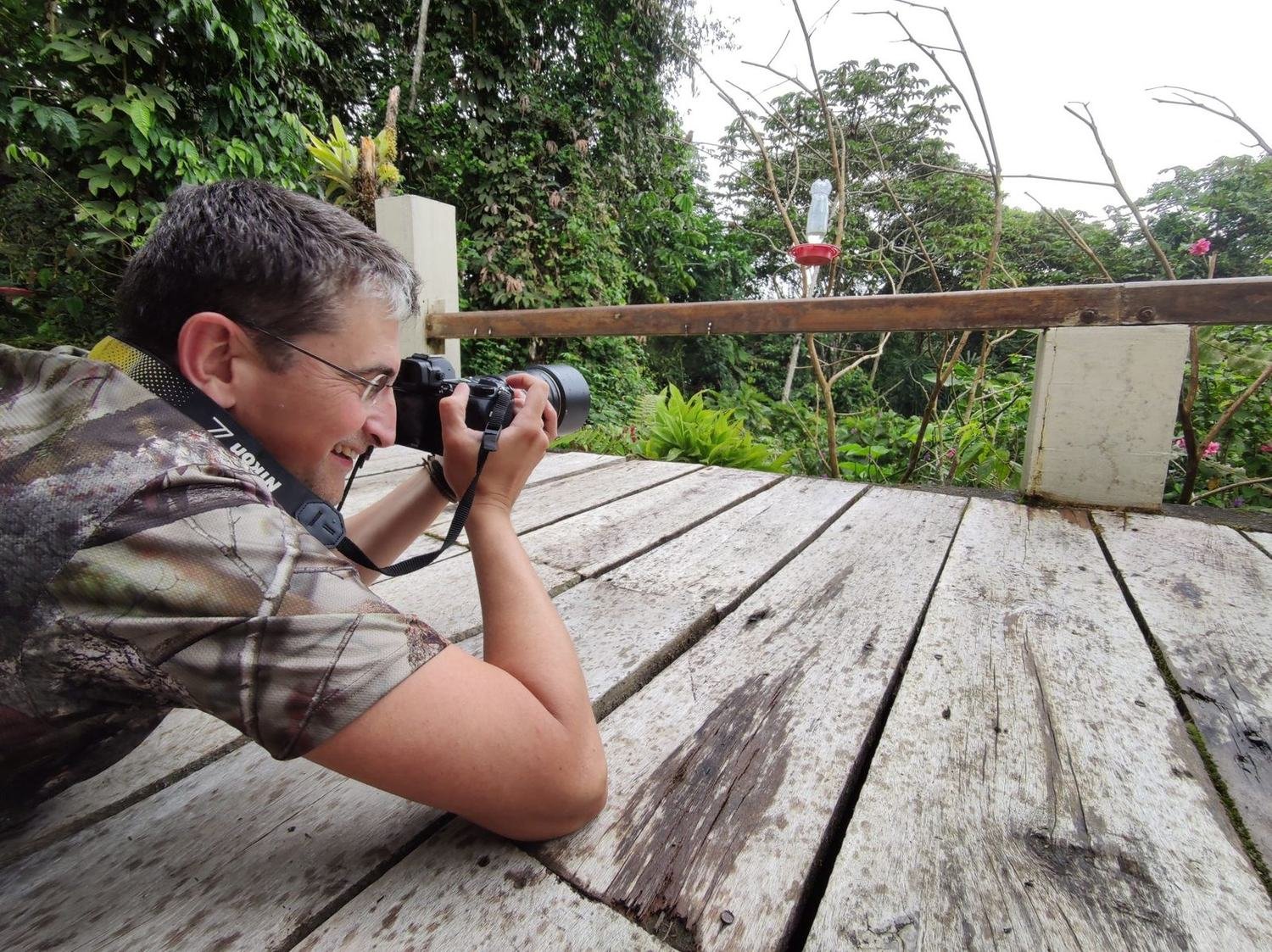
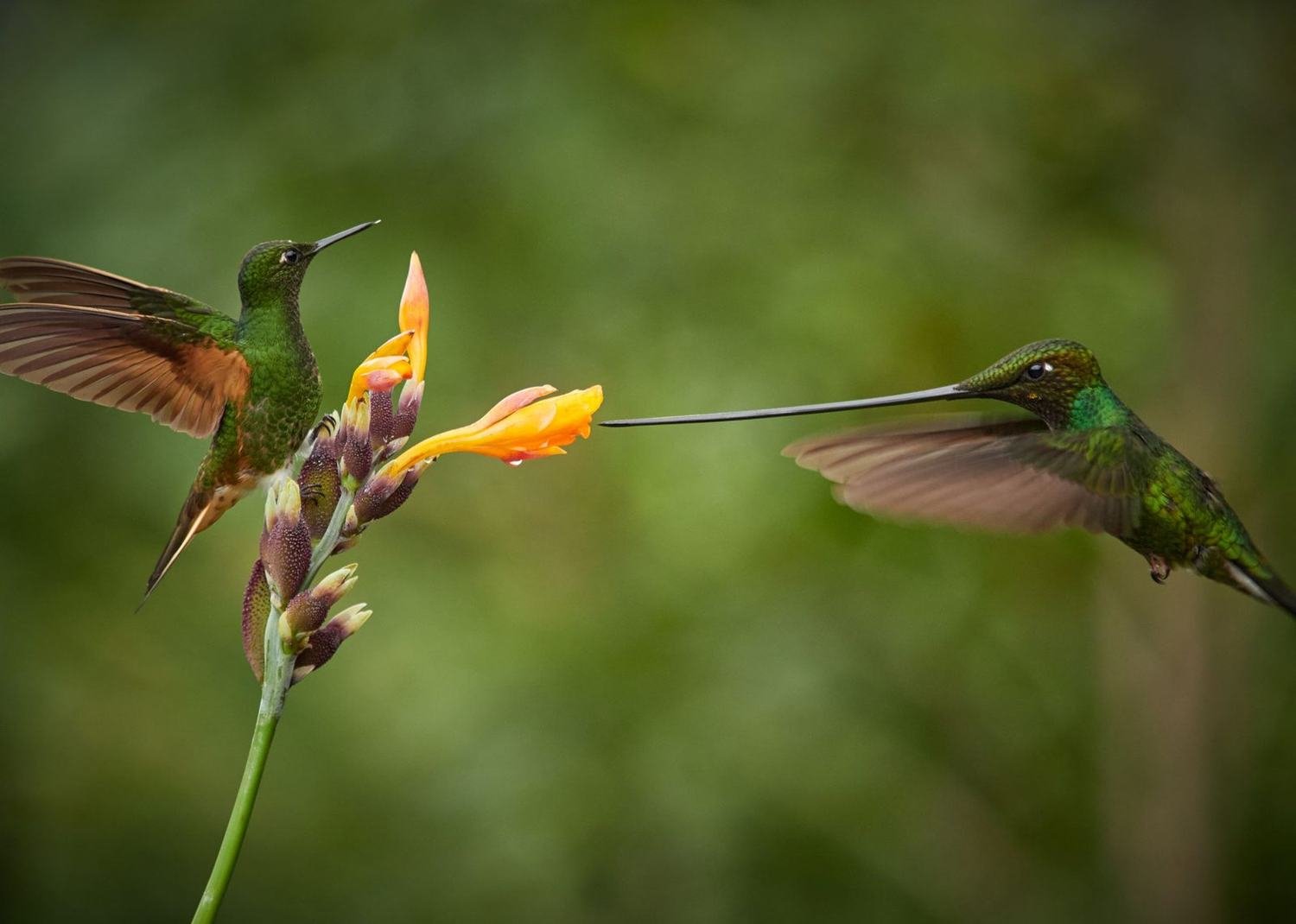
Hummingbirds are the main attraction. They beat their wings dozens of times a second and can hover in mid-air and even fly backwards. Capturing them sharply is a challenge – you need a fast shutter speed and plenty of light, or a flash. Hummingbirds have the fastest metabolism of all birds. Every day they have to drink more nectar than their own body weight. At night they fall into torpor to save energy.
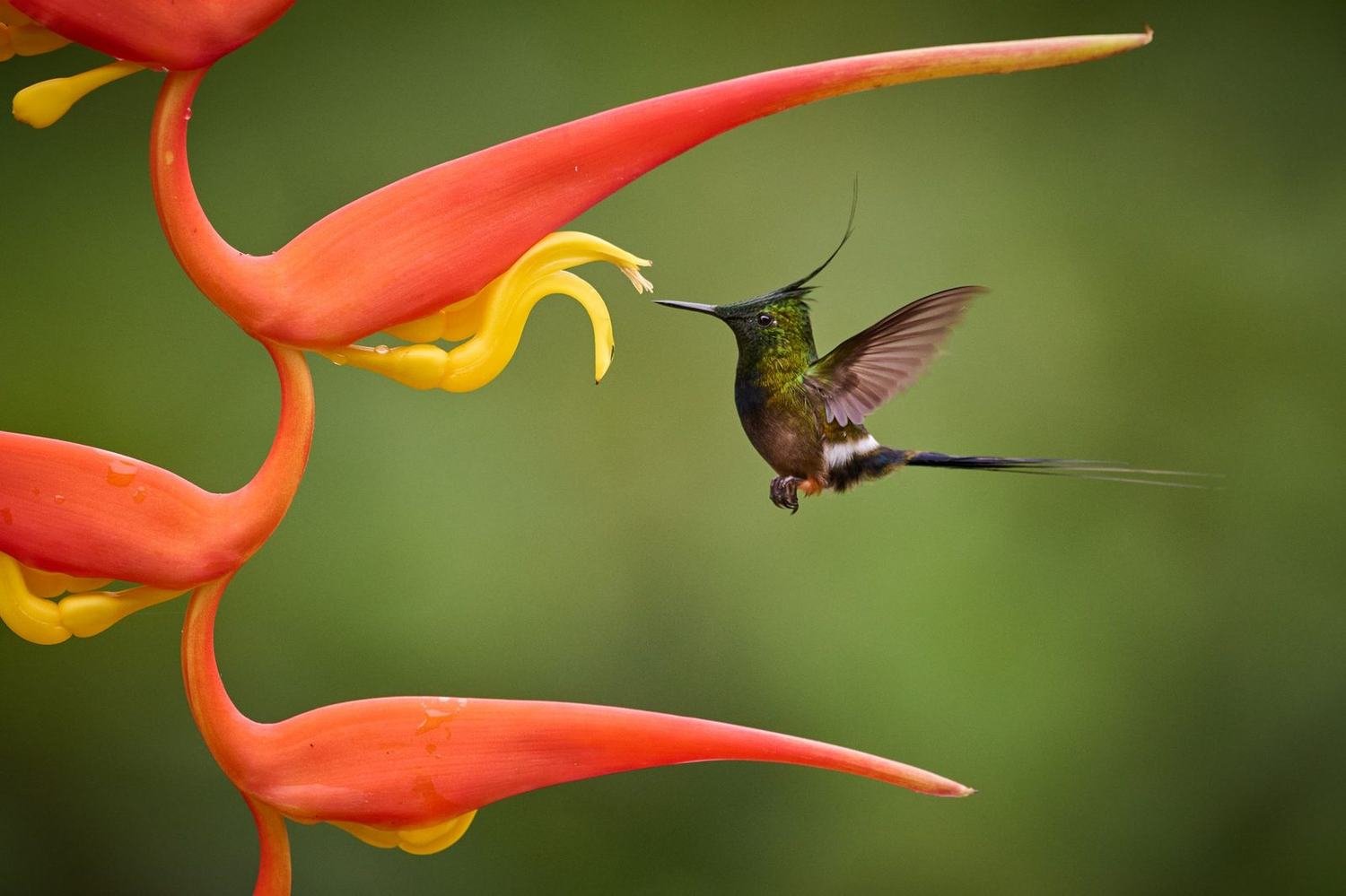
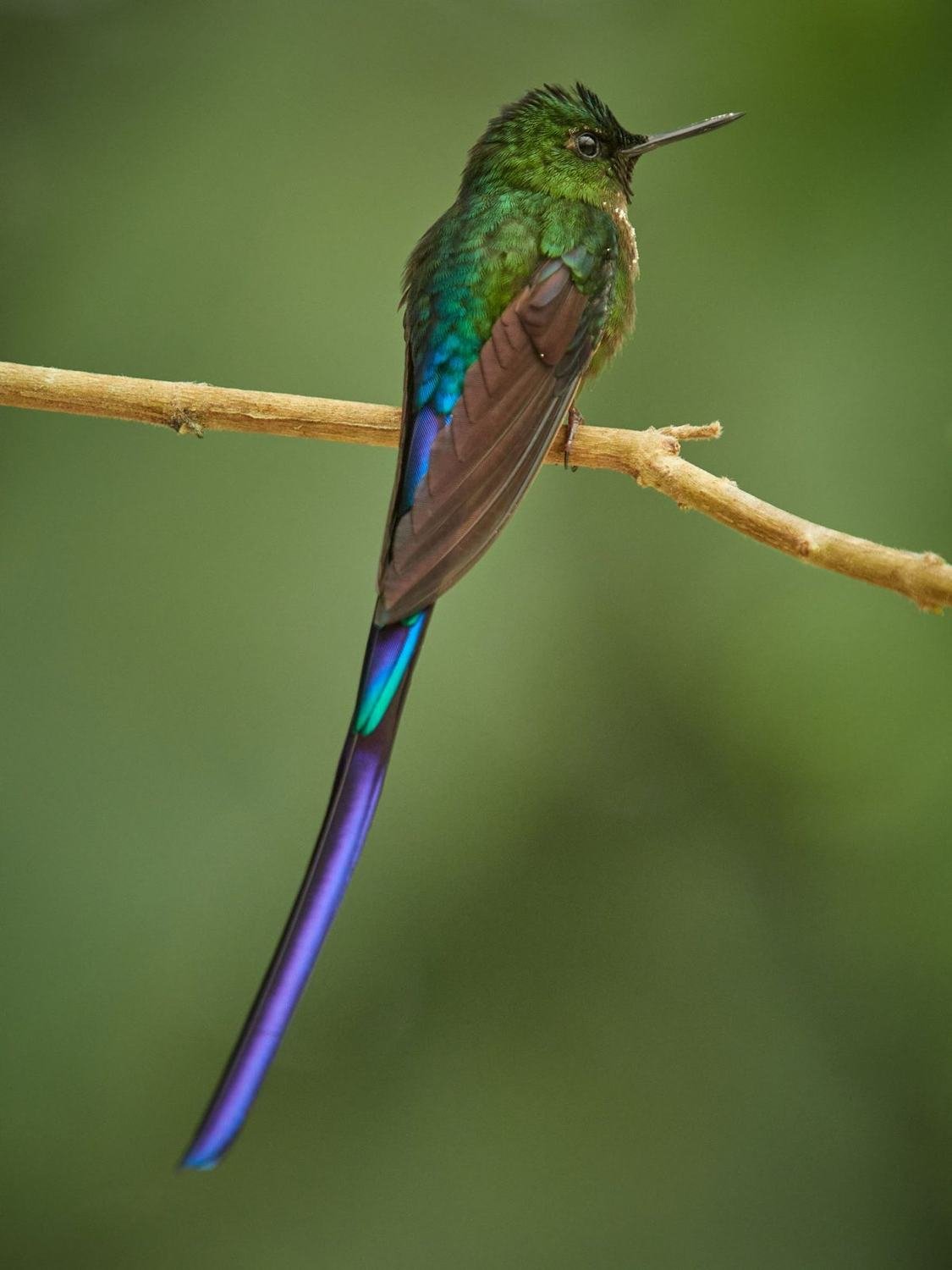
Each species has a differently shaped bill, adapted to the flowers it drinks nectar from. The Sword-billed Hummingbird has a bill longer than its whole body. The Violet-tailed Sylph, on the other hand, has a tail twice as long as its body that shimmers blue and violet in flight. At the feeders the hummingbirds constantly chase each other and squabble over places. The smaller species keep to the side and wait for the bigger ones to leave.
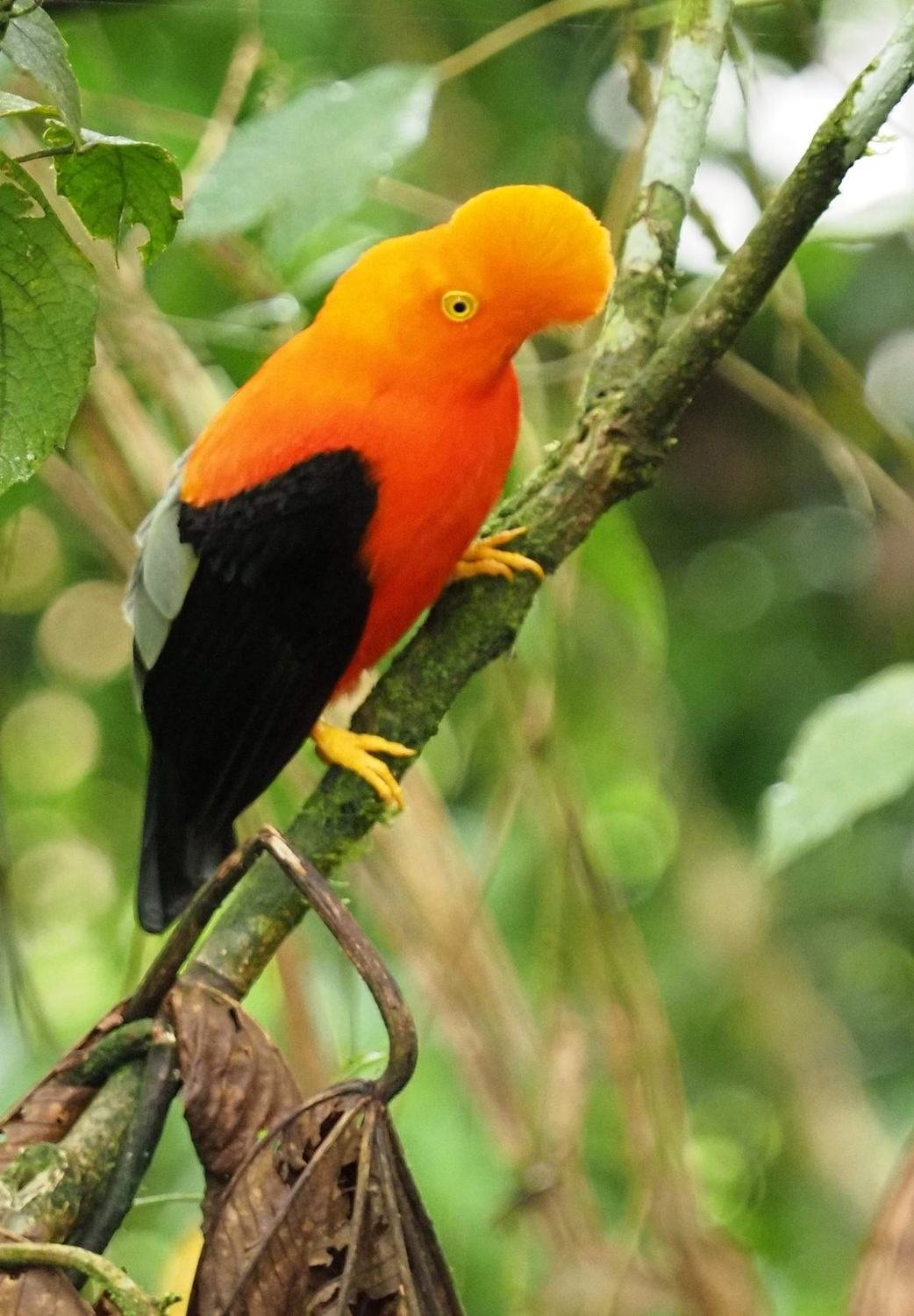
The Andean Cock-of-the-rock is the national bird of Peru, but it also lives in Ecuador. The males have bright orange plumage and at dawn they gather at a lek to display to the females. It is a noisy and colourful show. The females are a modest brown and glue their nests of mud to rock faces above streams – hence the name.
Toucans
The cloud forests are home to mountain toucans with blue-grey plumage and colourful bills. They are shy and hide in the treetops. When one appears on a mossy branch, it is a special occasion. Mountain toucans are best looked for at fruiting trees, where they gather to feed. They call loudly and the sound carries through the forest.
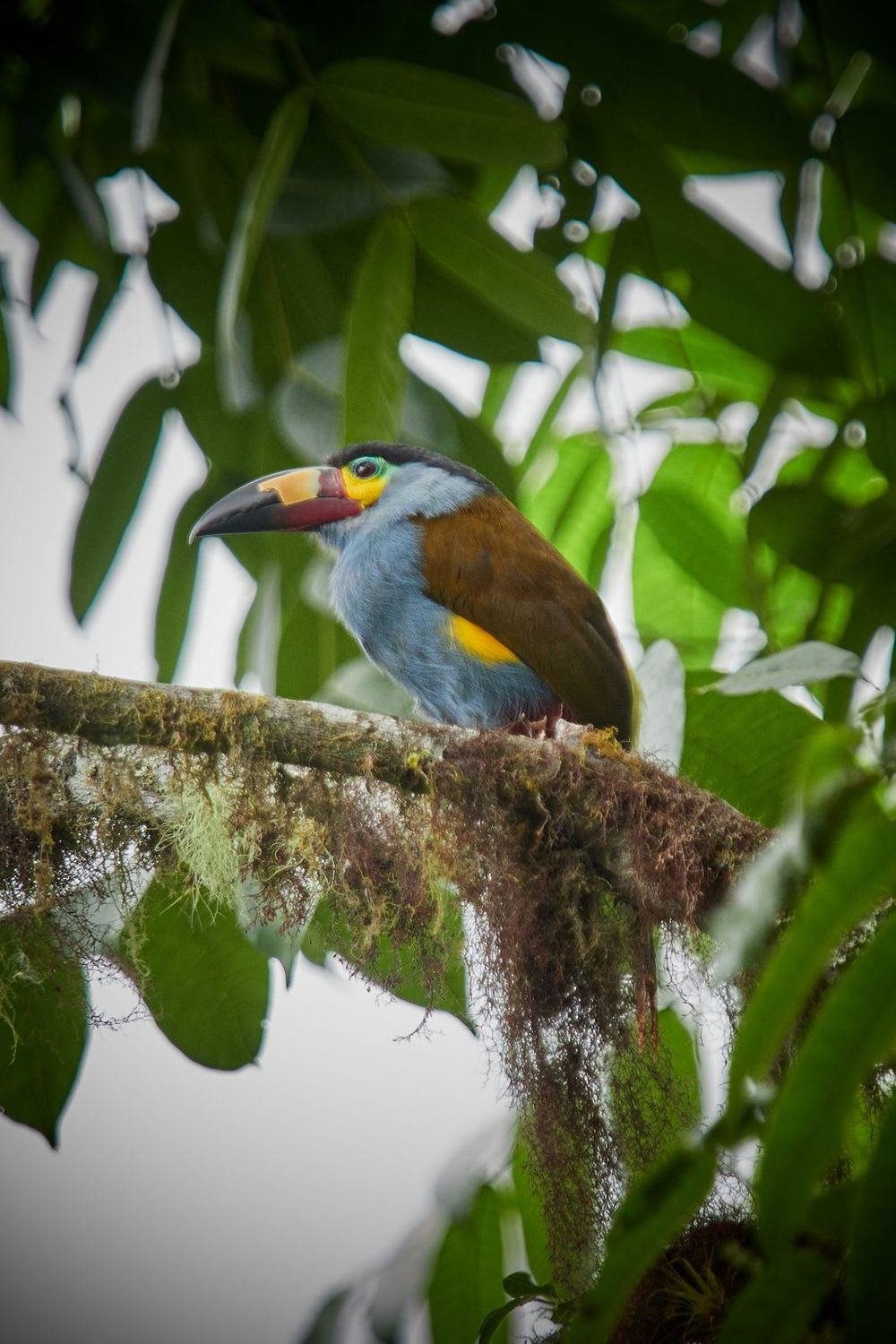
Lower down in the rainforest there are black-and-yellow toucans and aracaris, which feed on palm fruit. They often move in small groups and call loudly.
Butterflies and other small creatures
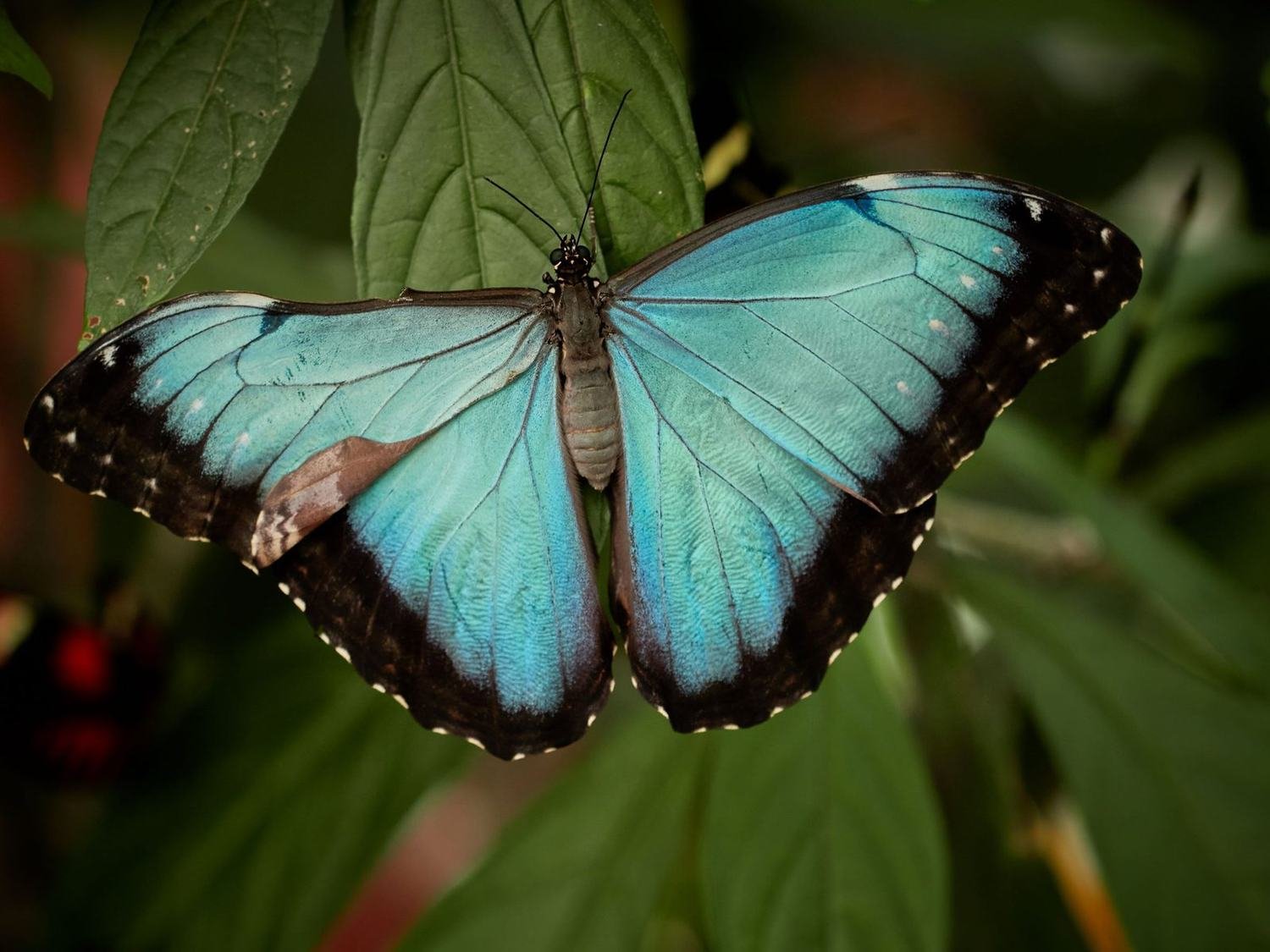
Besides birds, the forest is full of butterflies. The most striking is the blue morpho, whose wings flash metallic blue in flight. Other butterflies have transparent wings or large eyespots meant to scare off predators. The morpho's colour does not come from pigment but from the structure of the scales on its wings, which refract light. The underside of the wings is brown with eyespots, so when the butterfly settles it is almost invisible.
In the evening and at night frogs, snakes and tarantulas appear. For a night walk with a torch you need a guide who knows where to look – and where not to step. More than five hundred species of amphibians live in Ecuador and new ones are still being discovered. Many live only on a single mountain ridge.
Staying in the forest
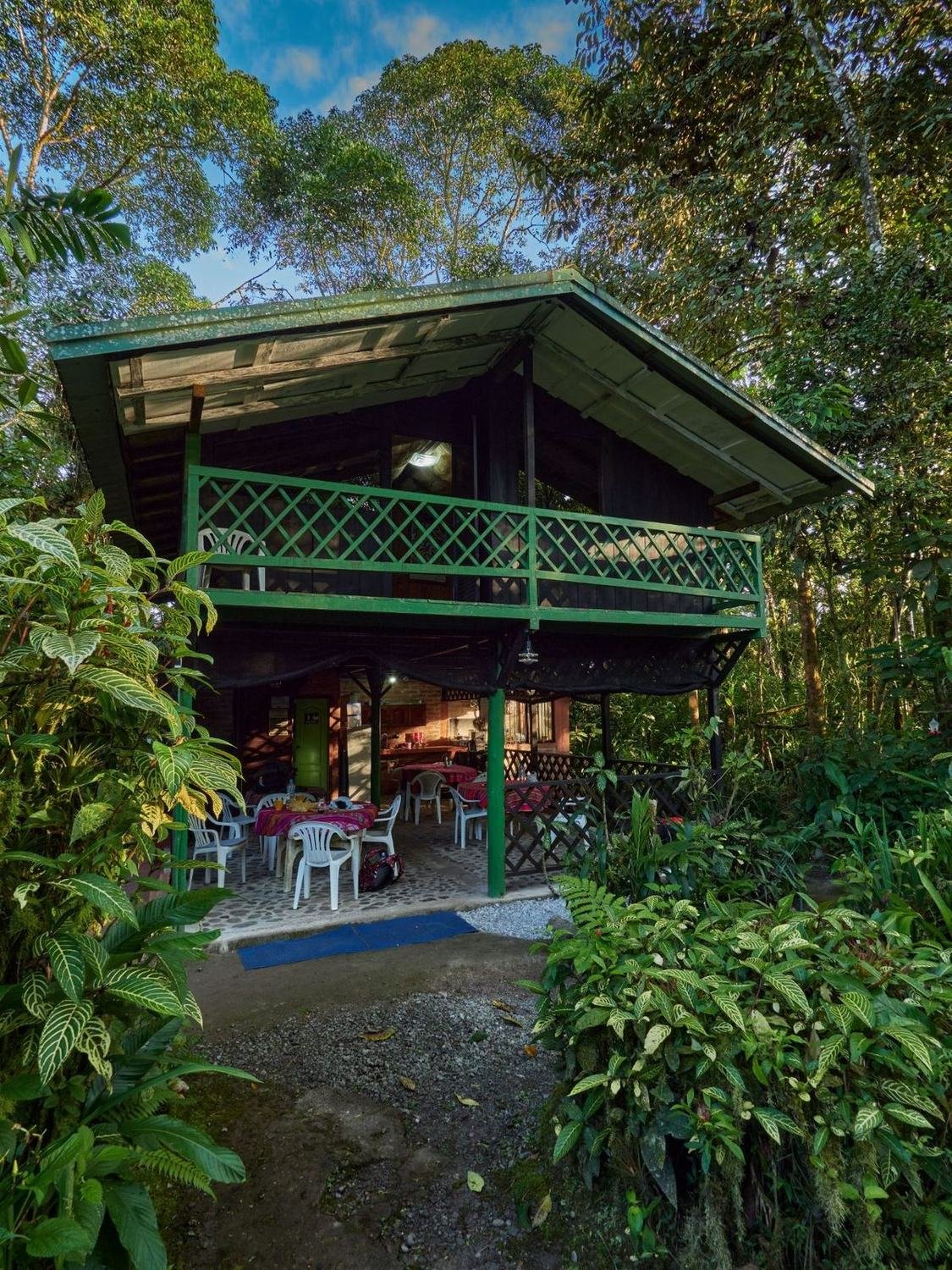
The cloud forest lodges have wooden cabins with verandas right among the trees. You can photograph birds from the veranda even before breakfast. In the evening the forest resounds with thousands of sounds.
Practical tips
Bring waterproof clothing and rain protection for your camera to the cloud forest. Moisture is everywhere and lenses fog up easily. The best light is in the morning; it often rains in the afternoon. Rubber boots are useful in the forest because the trails tend to be muddy. Binoculars are handy at the hides – you will often hear the birds before you see them. For photographing hummingbirds a telephoto lens and fast shutter speeds work well. Patience matters more than equipment. You will find more photos in the gallery.