New Year's Eve at the border, sunrise over Angkor Wat, the faces of the Bayon temple, Phnom Penh and cycling to Kampot.
We crossed from Thailand into Cambodia on New Year's Eve. From Bangkok we took a six-hour train to Aranyaprathet and stood for most of the way. At the Poipet border crossing a customs officer wanted an extra hundred baht for the stamp. We refused and after a while he issued our visas without it. The train was so packed with Thais who wanted to celebrate New Year's Eve in Cambodia that we stood for almost five hours fighting for every centimetre. The border crossing is so notorious that the Lonely Planet guide devotes a whole double page to it.
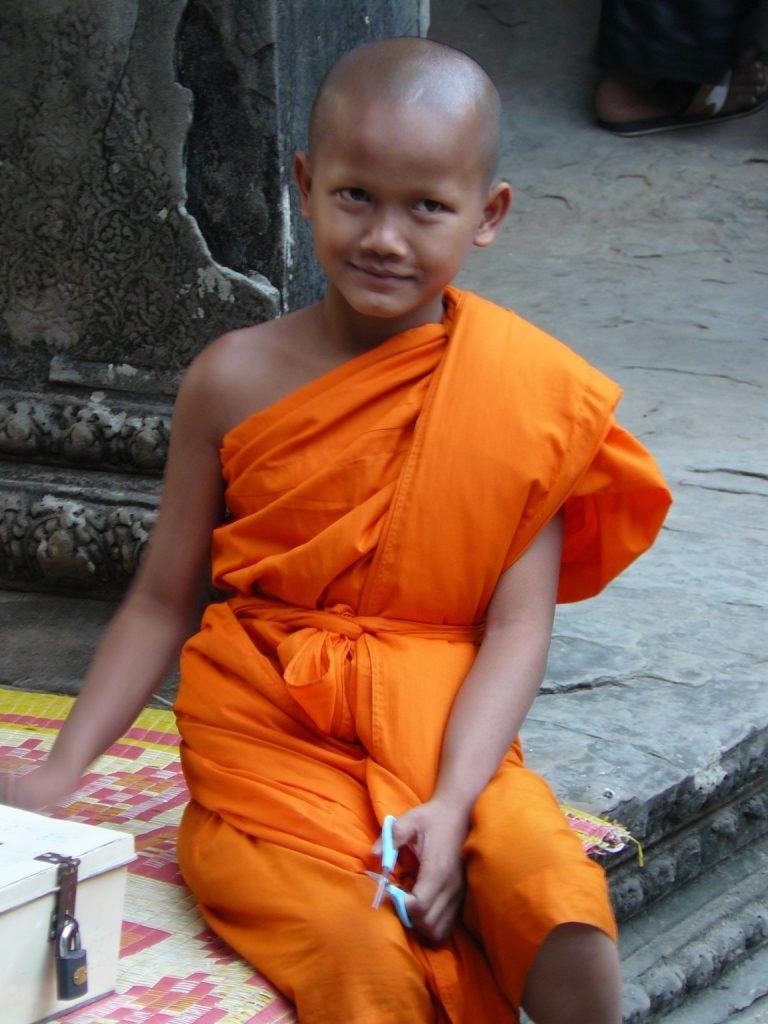
We celebrated the New Year in Siem Reap with Angkor beer. The streets were full of people, music and stalls. Cambodians smiled all the time, despite everything their country has been through. The bus from the border to Siem Reap cost nine dollars for a hundred and sixty kilometres. Elsewhere in Cambodia we paid half that for the same distance. On the first of January we cycled round two temples right in the town, where there were no tourists and a monk gave us a talk on Buddhism.
Angkor
We set off by bike to the temples of Angkor at four in the morning to catch the sunrise. Darkness, dust and dozens of other bikes and tuk-tuks ahead of us. At Angkor Wat hundreds of people with cameras gathered in front of the pond. The afternoon before we had tried the sunset at Angkor Wat, but a thousand other people were waiting there with us. I have never seen more tourists at a single monument, not even at the pyramids or the Taj Mahal. The morning was better – after sunrise most people went back for breakfast.
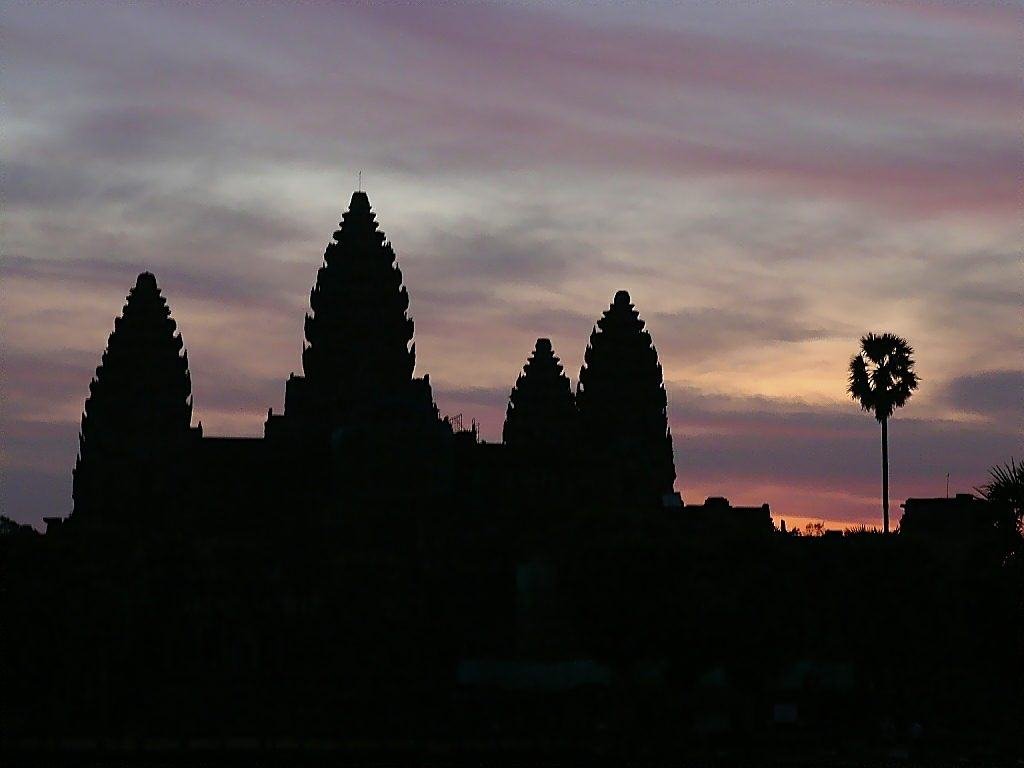
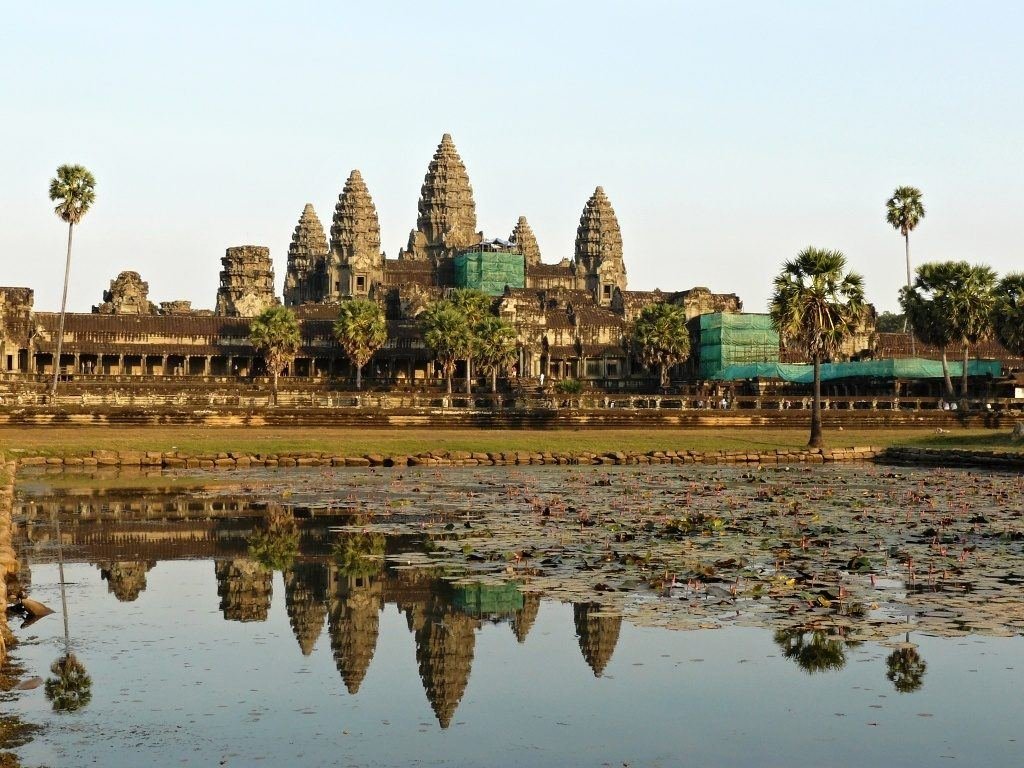
Angkor Wat is the largest religious building in the world. The Khmer built it in the 12th century as a Hindu temple and it later became Buddhist. Its walls carry hundreds of metres of reliefs with battles and gods.
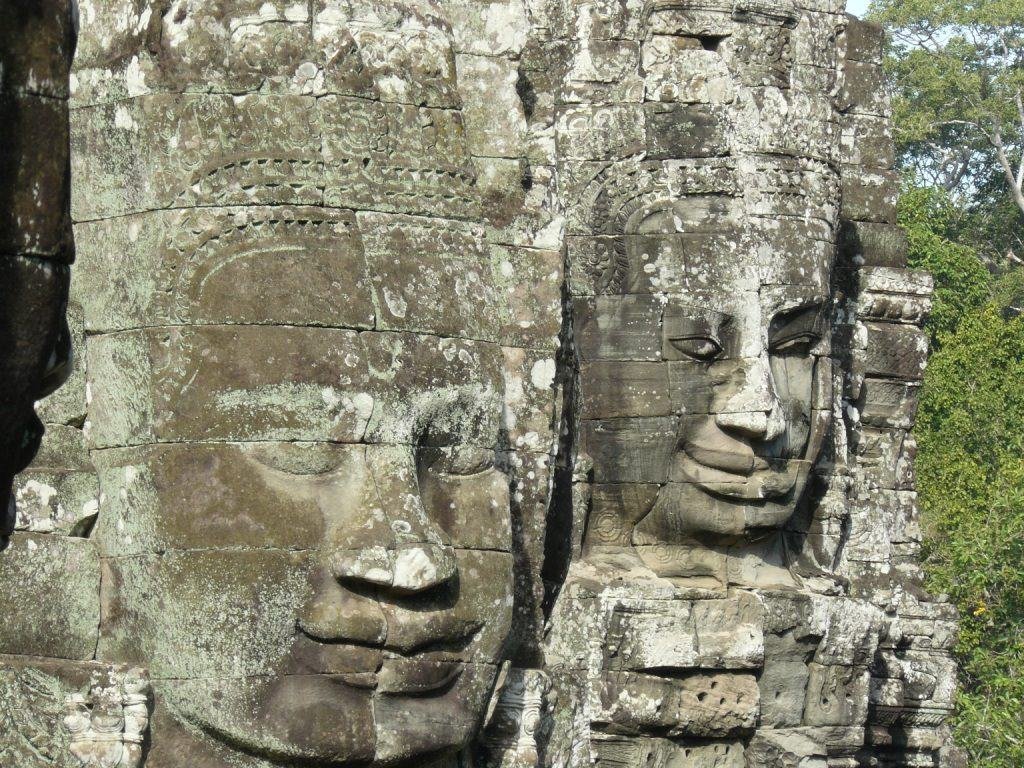
The Bayon temple captivated us even more. About a hundred and fifty giant stone faces look down at you from its towers. Wherever you go, one of them is smiling at you. It was relatively quiet until a busload of Japanese tourists arrived. We moved on and hid from the midday heat in the Ta Prohm temple.
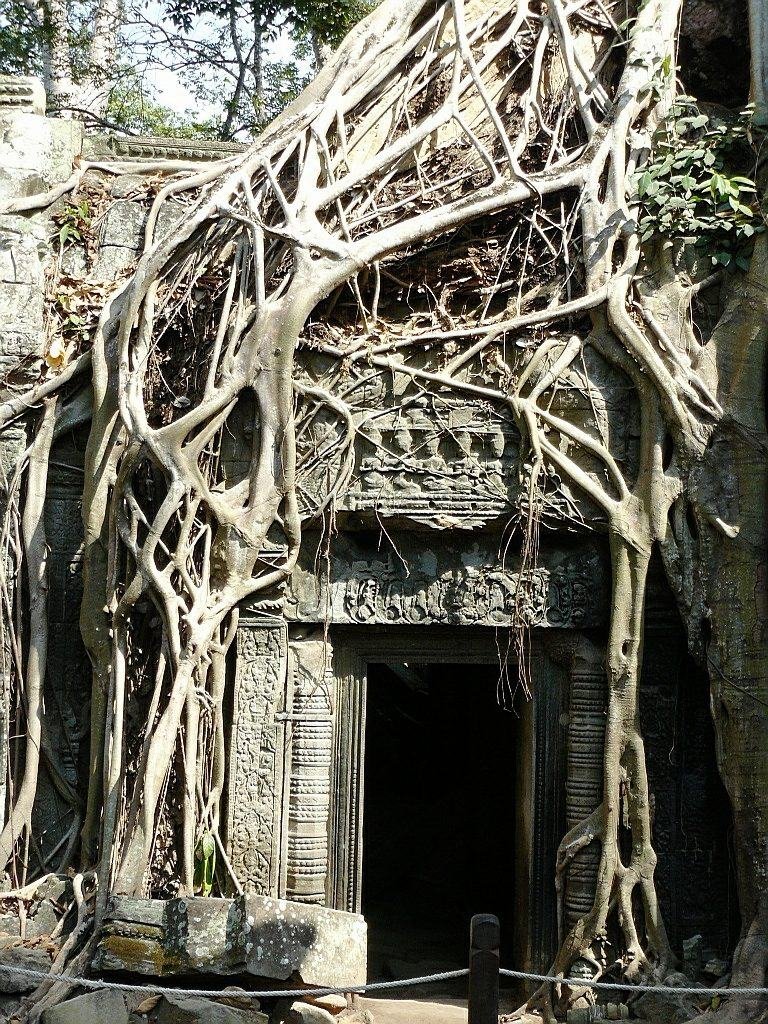
Archaeologists left Ta Prohm the way they found it. The roots of giant trees split the walls and grow over the gates. The Tomb Raider film with Lara Croft was shot here. One day was enough for the main temples, although we covered a lot of ground.
Phnom Penh
In the capital we visited the Royal Palace and the Silver Pagoda. Its floor is made of five thousand silver tiles and the golden Buddha statue is set with 9,584 diamonds. Within the palace grounds there is also an iron pavilion given to the Cambodian king by Napoleon III. The palace felt familiar – it reminded us of the Grand Palace in Bangkok, including the green Buddha. Napoleon's iron house, however, did not reckon with the Cambodian climate and is gradually rusting and falling apart.
The hardest moment was at the Tuol Sleng museum. The Khmer Rouge used the former school as the S-21 prison. Thousands of people passed through it and were tortured and executed. When the regime fell, only seven survivors were found here. Thousands of photographs of prisoners, carefully registered by the Khmer Rouge, hang on the walls. After seizing power the Khmer Rouge drove most of the population out of the cities into the countryside, and women and children were among the prisoners. The paintings depicting the torture are horrifying.
To the sea
From Phnom Penh we took a bus to Kampot, a quiet riverside town. We hired bikes and rode out into the countryside among rice fields and pepper plantations. Kampot pepper is famous all over the world. On Kampot's square stand a few French-style houses and the riverfront is lined with cafés. The streets were deserted, but the first four hotels were full. In less than an hour we had cycled all over Kampot.
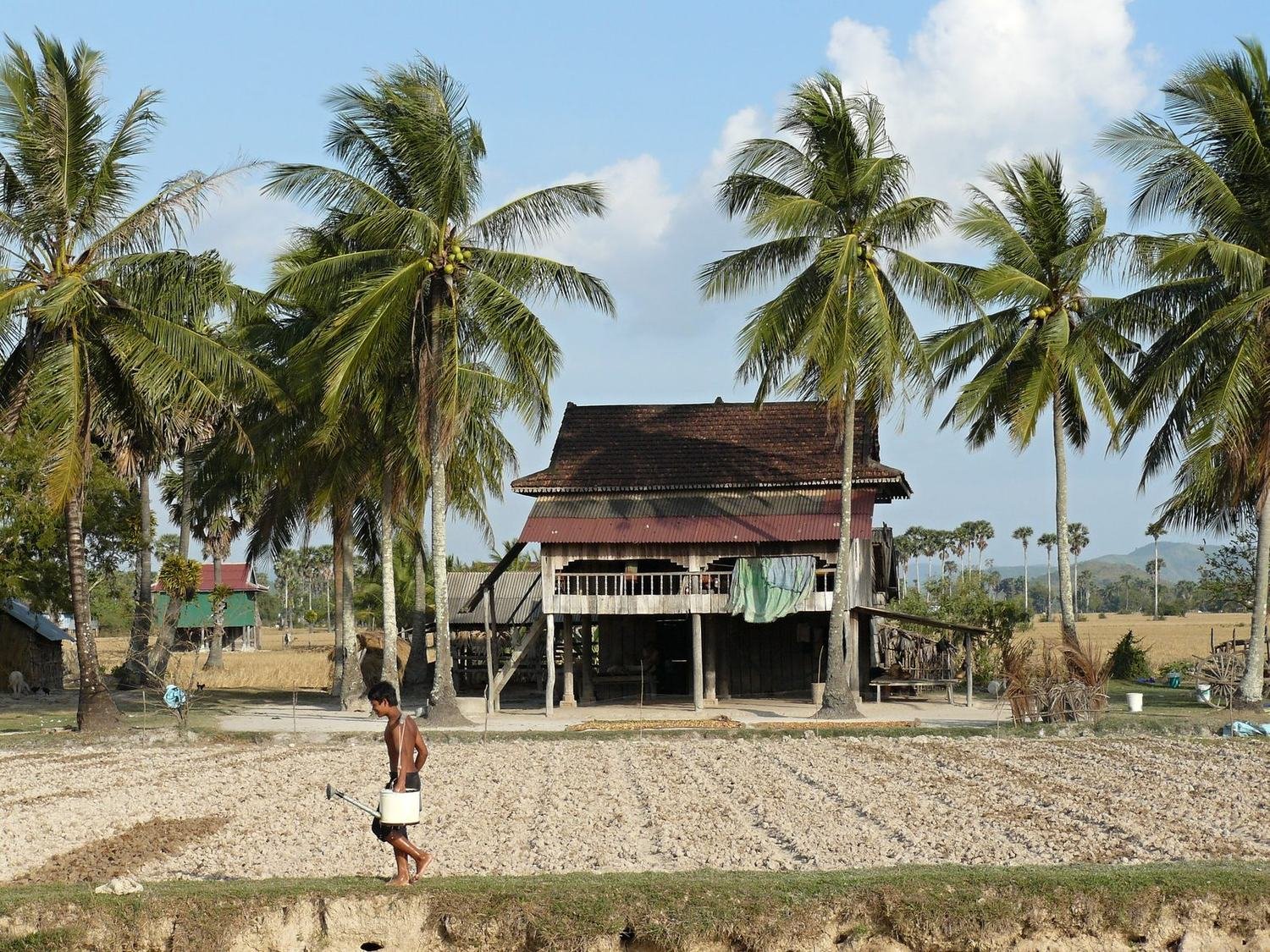
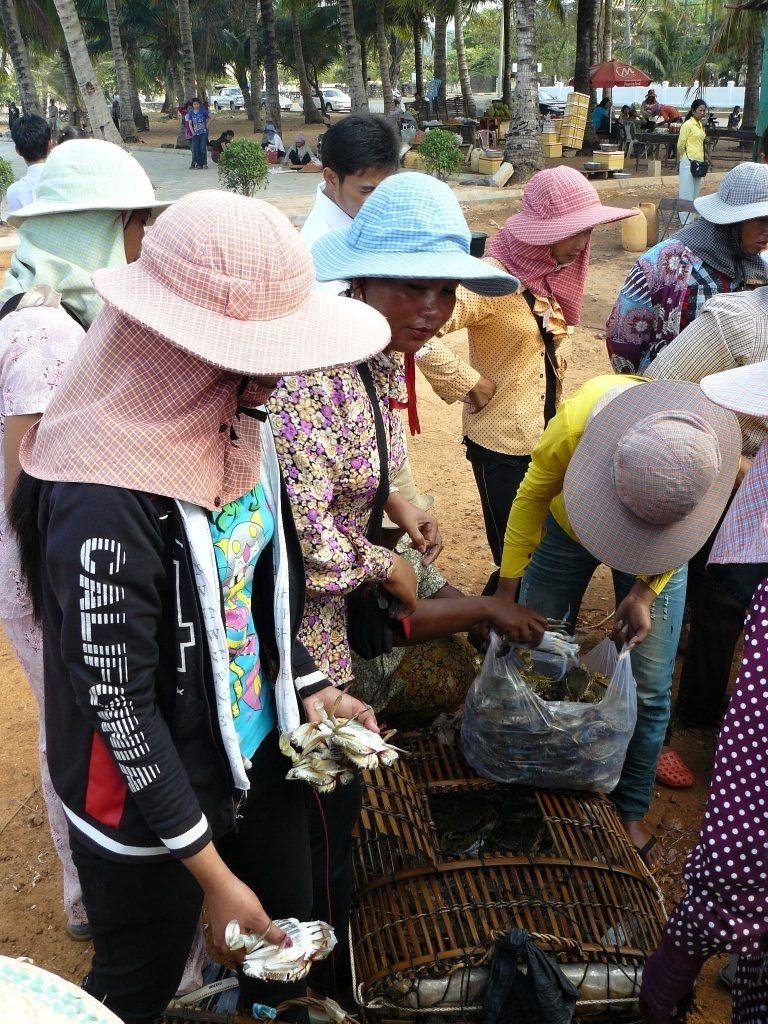
Above Kampot rise the Bokor mountains with an abandoned French colonial hill station. In the seaside town of Kep we ate crab with green pepper. Right at the market they pull the crabs out of a basket in the sea and cook them. The white meat is hard to get out of the shell and claws, but we have never eaten better seafood. On the way back a gang of playful children showed us around a cave with a small Hindu temple.
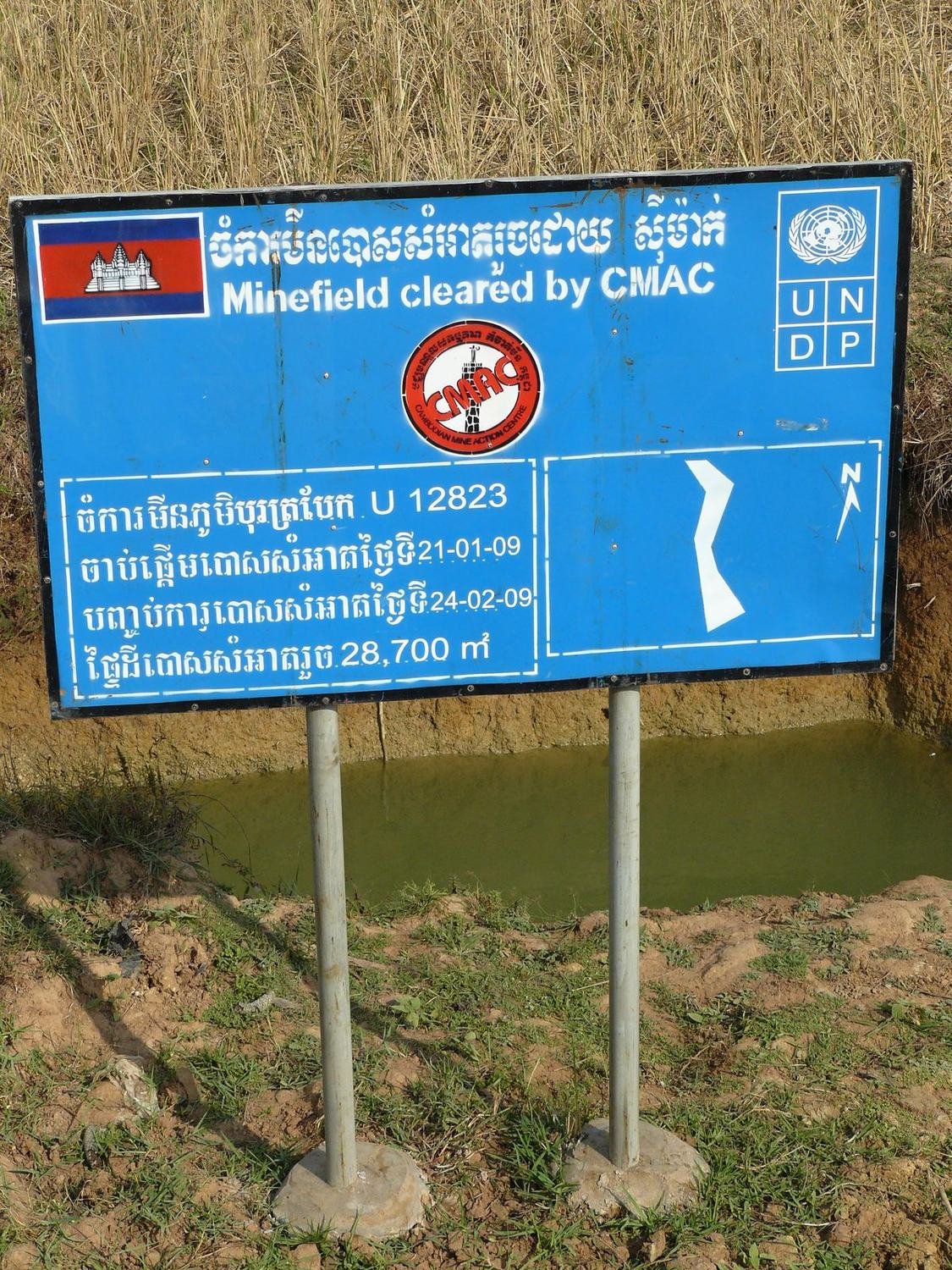
Travelling through the countryside we saw signs warning of mines. Cambodia is one of the most heavily mined countries in the world and demining is still going on. Nobody walks off the beaten track here.
We spent the last few days on Otres Beach near Sihanoukville and in Ream National Park. Mangroves, deserted beaches and fishing villages. On Otres we lay on sunloungers under a pine tree drinking mango cocktails. In Ream our jungle guide showed us an ants' nest built of leaves glued together high above the ground.
Practical tips
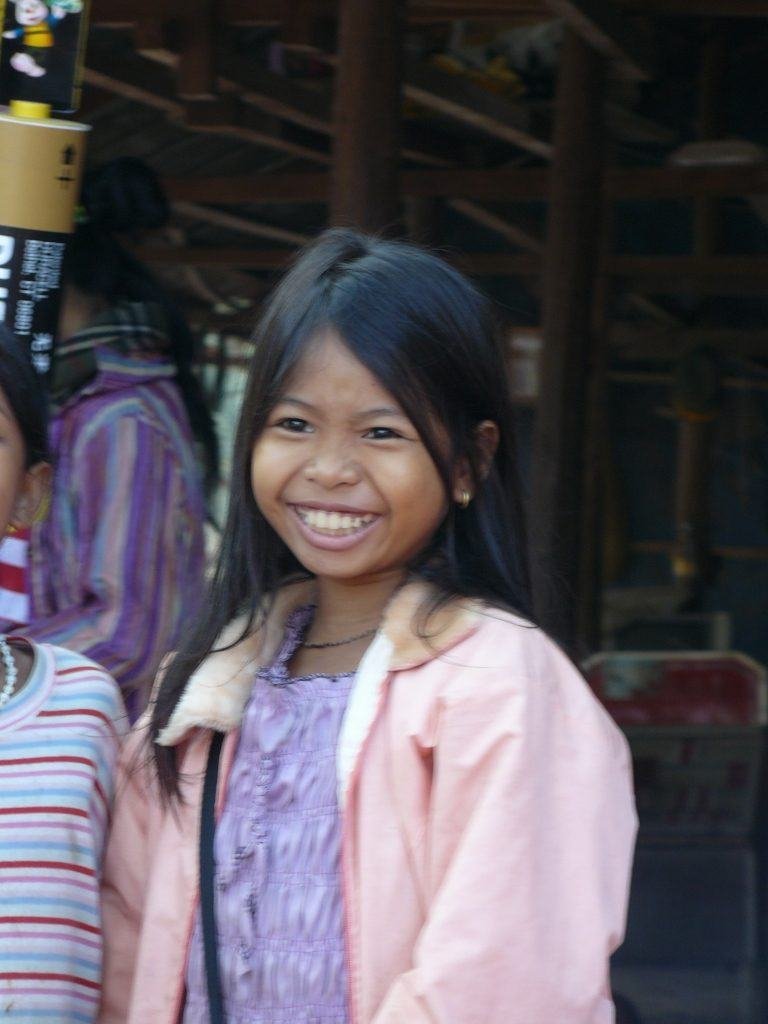
Prices in Cambodia surprised us – they were higher than in Thailand and mostly in US dollars. Buy at least a two-day ticket for Angkor and start early in the morning before the heat. The best time to visit Cambodia is the dry season from November to March. Bargaining hardly works here – they name a price, and if you do not agree, you do not get on the bus. But the people were wonderful and always laughing. After what we saw at S-21, that surprised us all the more.