The world's largest wetland is the best place to see jaguars in the wild. Besides them: tapirs, giant otters, hyacinth macaws and thousands of birds.
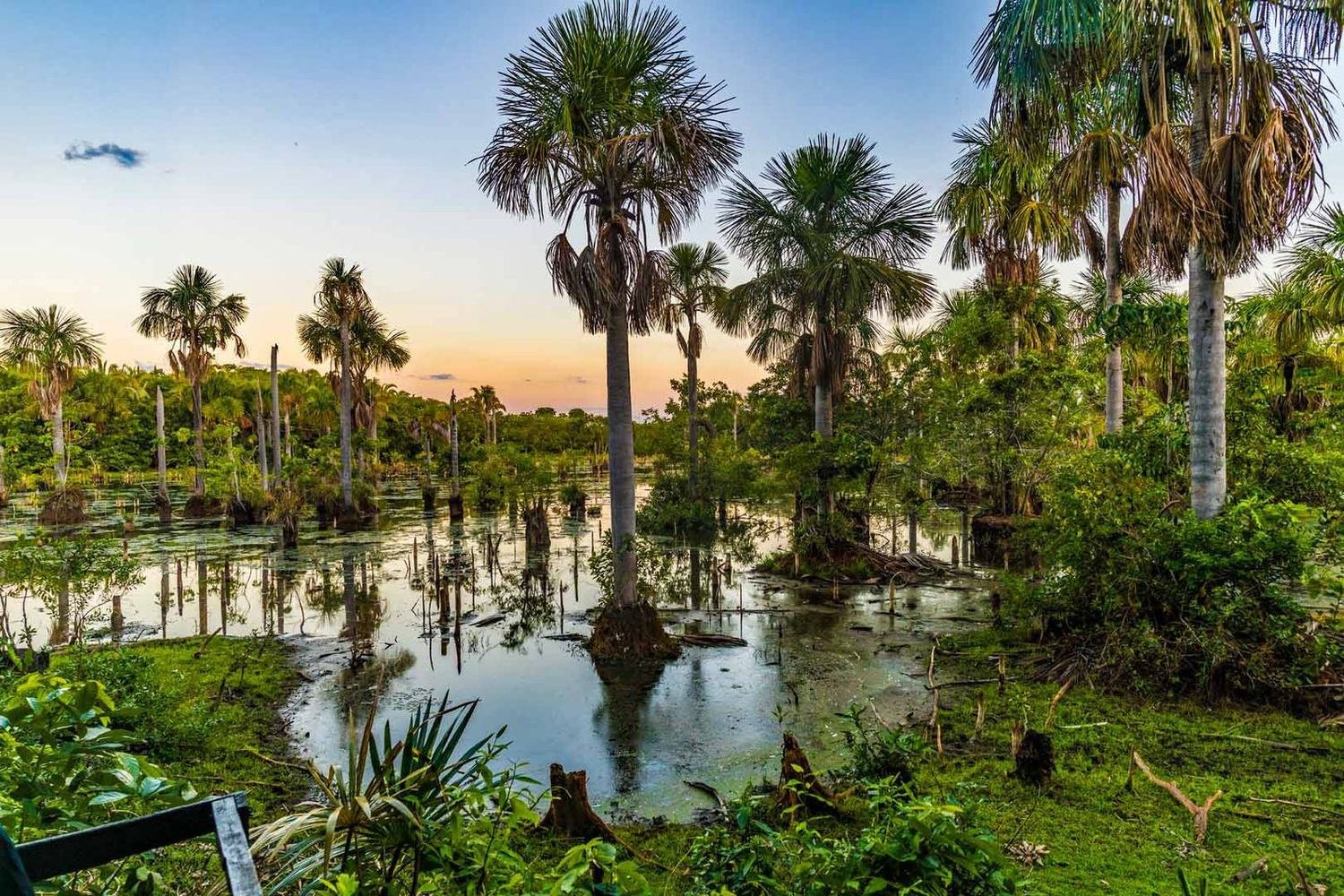
The Pantanal is the largest tropical wetland in the world. It lies mainly in western Brazil and extends into Bolivia and Paraguay. In the rainy season it turns into a huge lake; in the dry season from July to October the water recedes and the animals gather along the rivers. It is roughly twice the size of the Czech Republic. Water flows in from the surrounding highlands and over the year the river levels change by several metres. As a result, flooded meadows, lagoons, gallery forests and savannahs alternate here.
For a nature photographer the Pantanal is exceptional. The landscape is open and the animals are not so shy, so you can photograph them up close. And above all – nowhere else in the world do you have such a good chance of seeing a jaguar. Most of the land belongs to private cattle ranches, the fazendas. Many of them now live mainly from tourism, and their owners protect the animals because they bring in more money than cattle.
The Transpantaneira
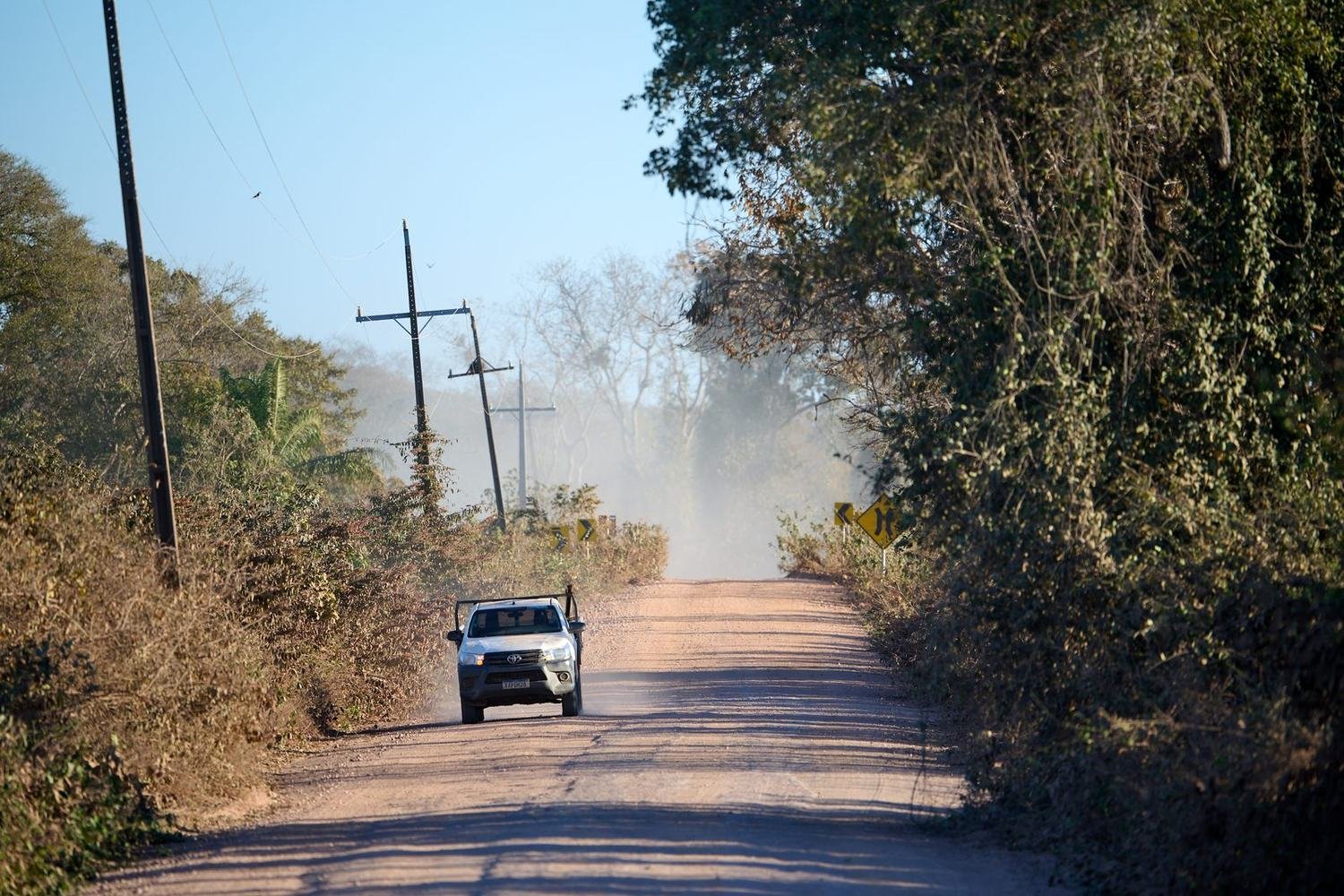
You reach the northern Pantanal from the city of Cuiabá and then along the Transpantaneira road. The dirt road crosses more than a hundred wooden bridges and ends at the river in Porto Jofre. The road itself is a safari.
Caimans lie in the puddles and lagoons along the road, and families of capybaras, the world's largest rodents, graze on the banks. Toucans, kingfishers and parrots perch in the trees. You stop every few hundred metres. Millions of caimans live in the Pantanal. In the dry season dozens of them can gather in a single lagoon. Capybaras are not afraid of them and graze just a few metres away.
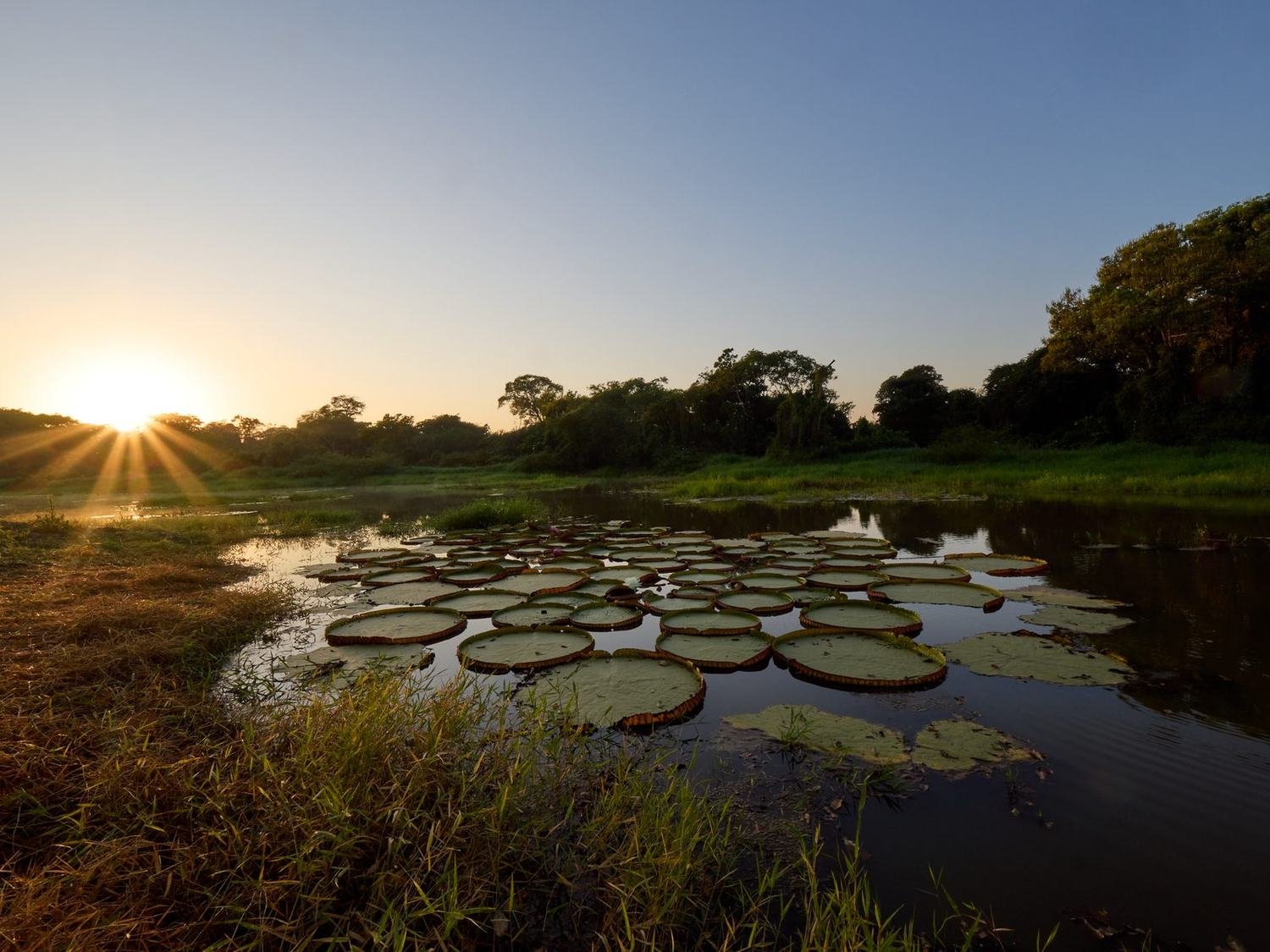
In the evening the sun sets over the wetland behind the silhouettes of palms. Giant Victoria water lily leaves float on the lagoons and flocks of birds fly over the water to their roosts.
Macaws and jabirus
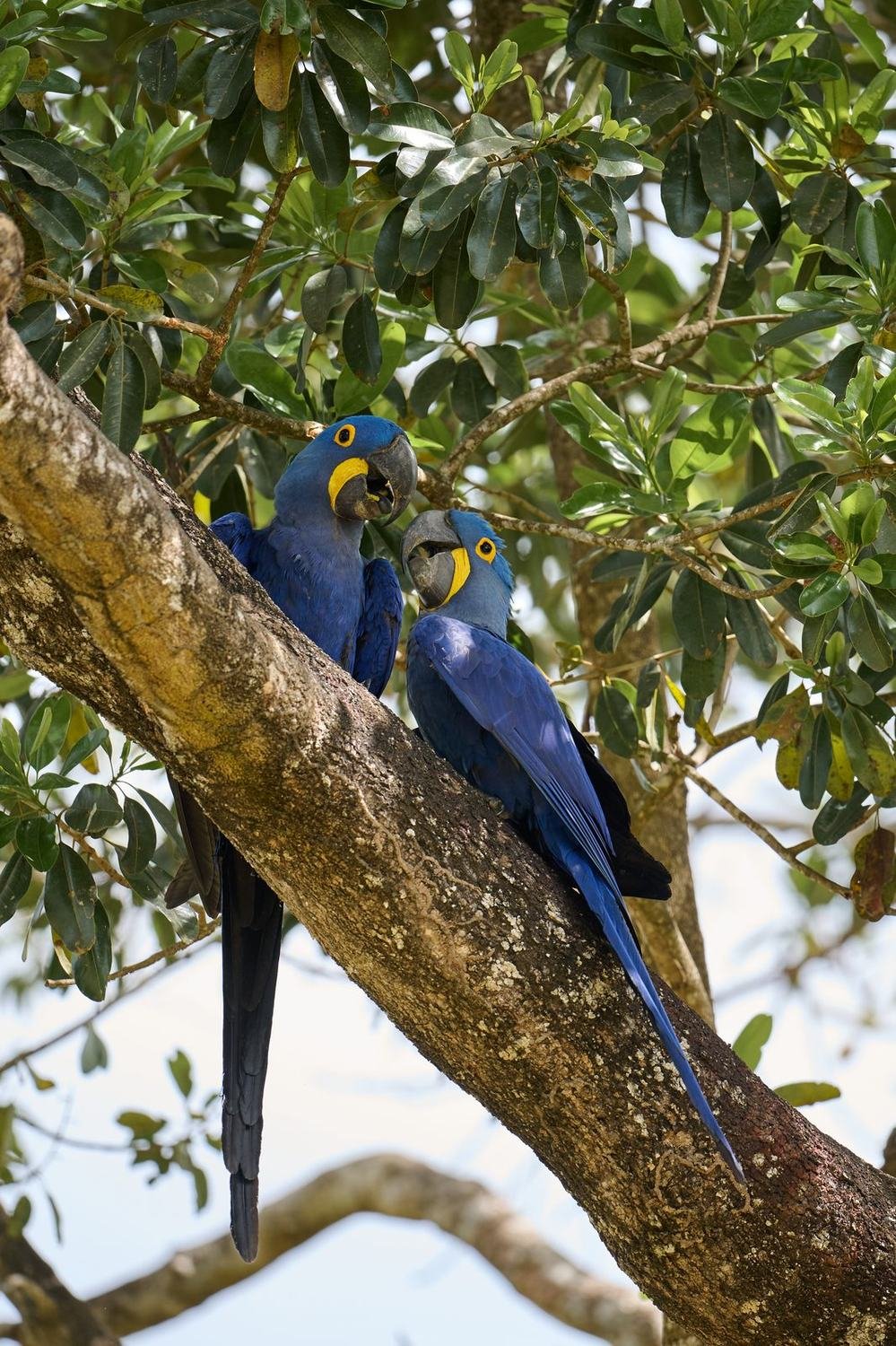
The symbol of the Pantanal is the hyacinth macaw, the largest parrot in the world. It is cobalt blue with yellow skin around its eye and bill. A few decades ago it was on the brink of extinction; today it is being successfully protected in the Pantanal.
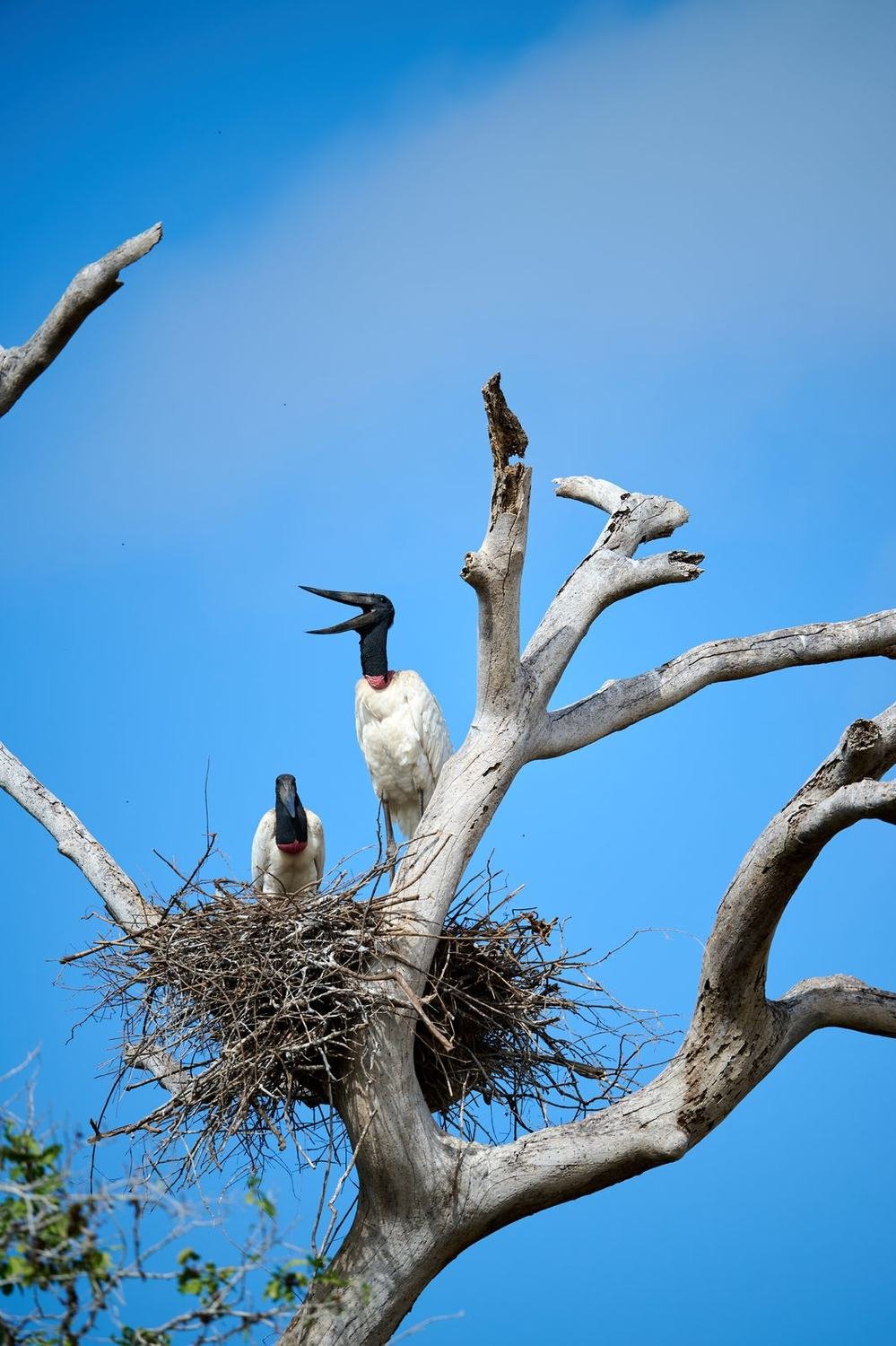
The second symbol is the jabiru stork with its black head and red collar. It builds its nests in the crowns of tall dead trees, and from a distance they look like giant baskets. The jabiru is the tallest flying bird in South America, with a wingspan approaching three metres. A pair uses the same nest repeatedly and adds to it every year.
On the Cuiabá River
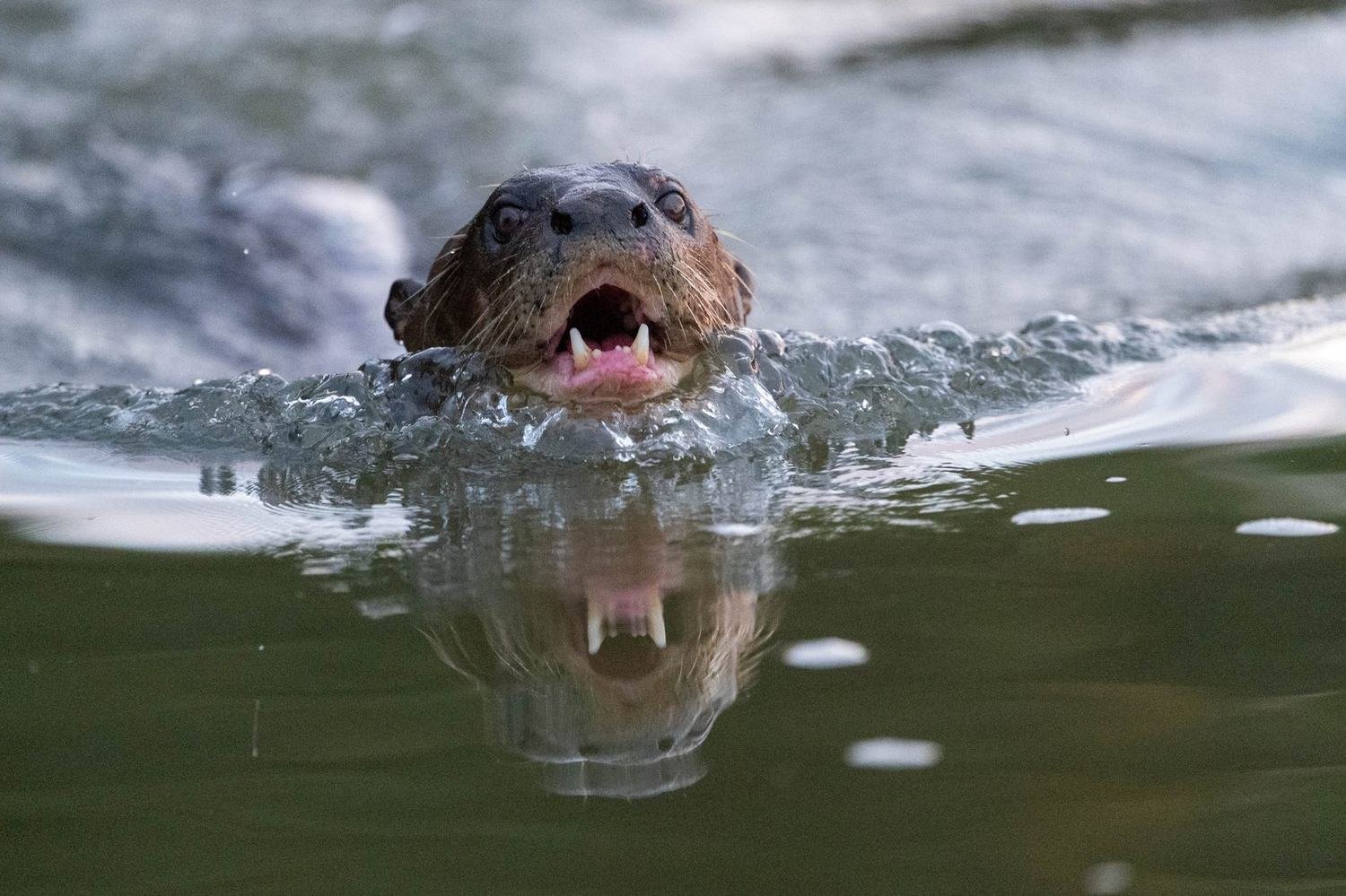
The main part of the stay is boat trips on the Cuiabá River and its tributaries. You set off early in the morning, when the light is soft and the animals are active. The boats are small and fast, so you can get close to the bank. Giant otters, which can be over one and a half metres long, live in the river. They live in family groups and are very vocal. When they hunt, they dive and resurface with a fish in their mouth.
The giant otter is an endangered species. In the past it was hunted for its fur and disappeared from many rivers. In the Pantanal its numbers are slowly increasing.
Jaguars
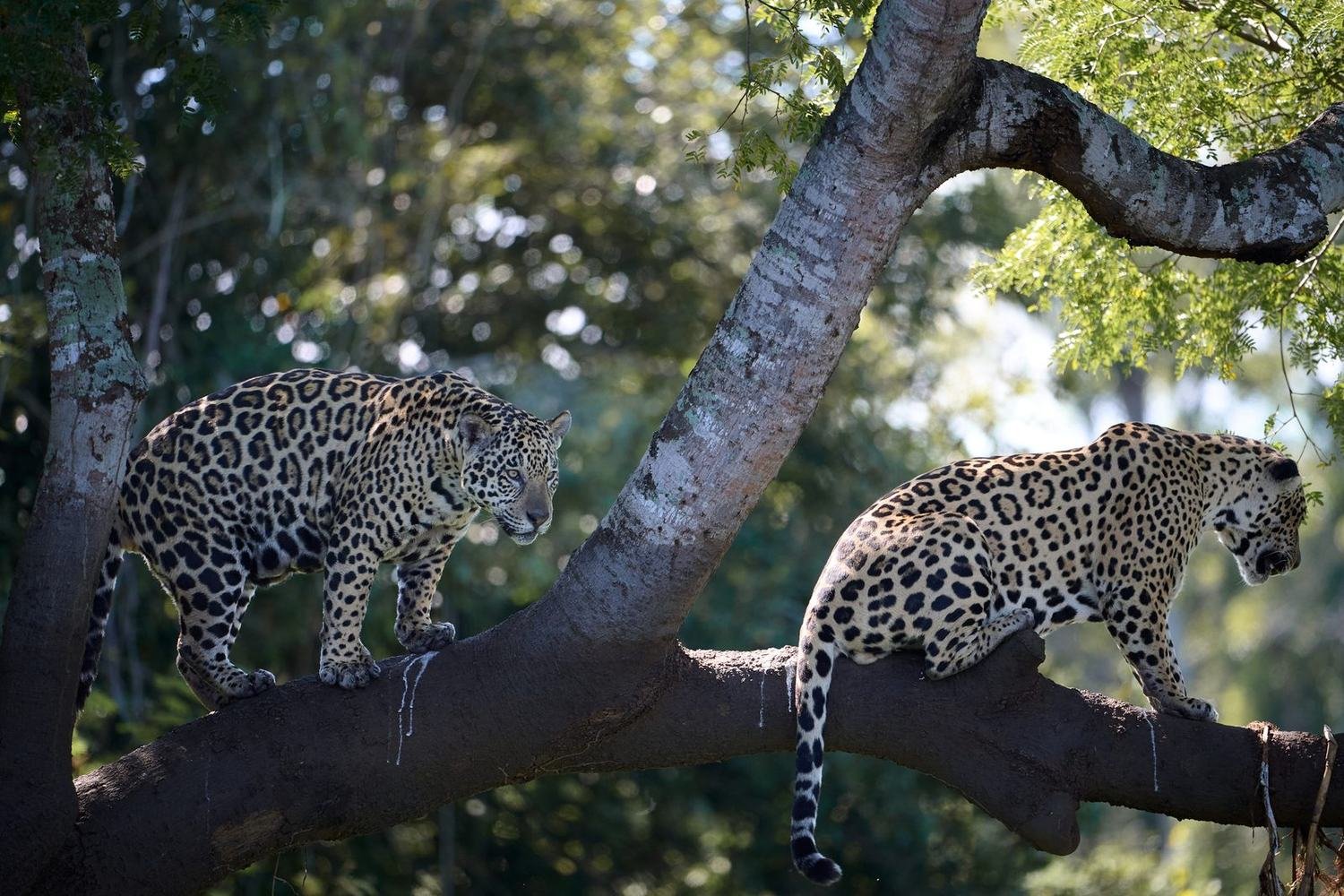
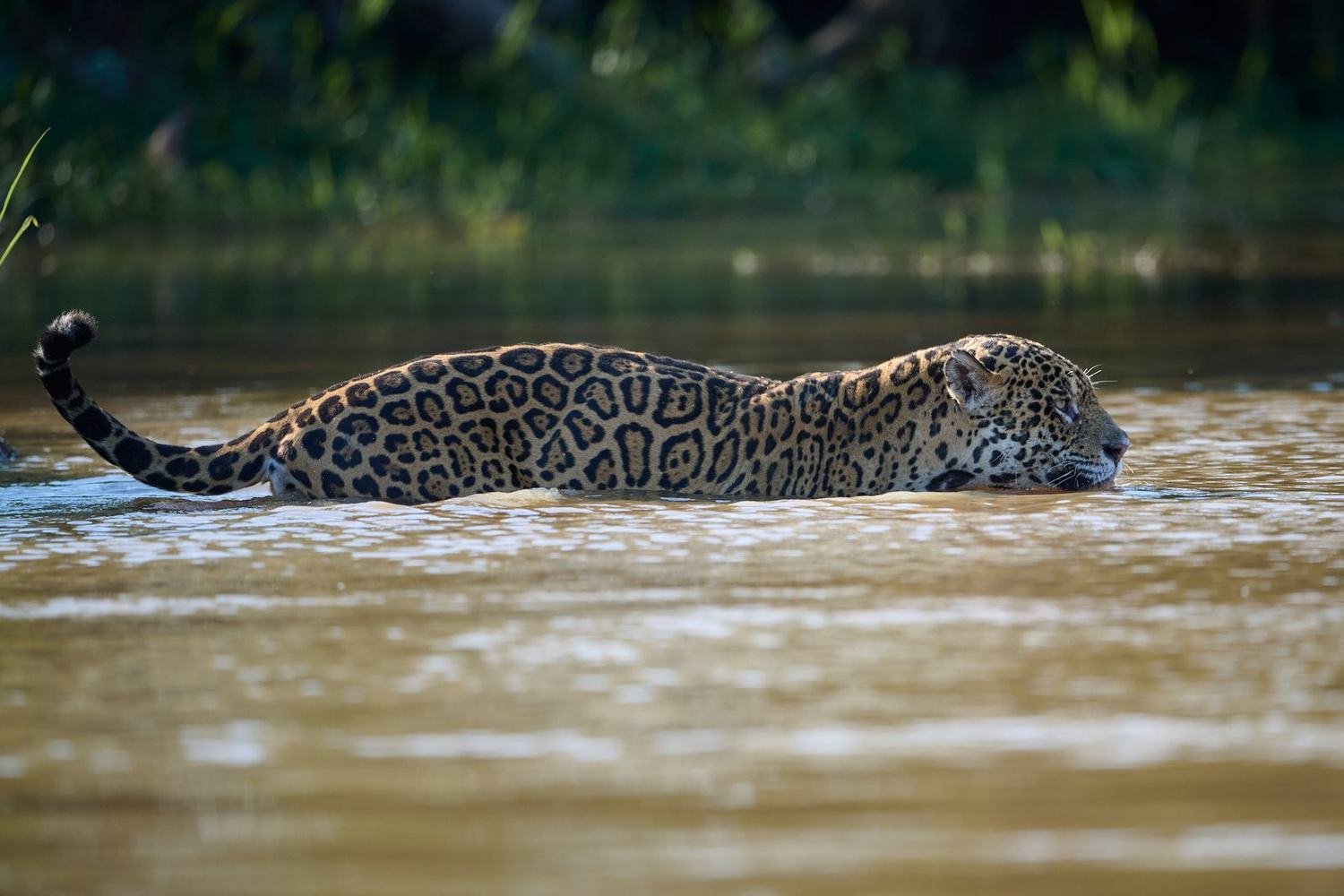
But most people come here for the jaguars. The jaguar is the largest cat in the Americas. In the Pantanal it hunts mainly caimans and capybaras and, unlike other big cats, it likes to swim. Pantanal jaguars are larger than rainforest jaguars. Males can weigh more than a hundred kilograms. They have the strongest bite of all big cats and kill a caiman with a bite to the skull.
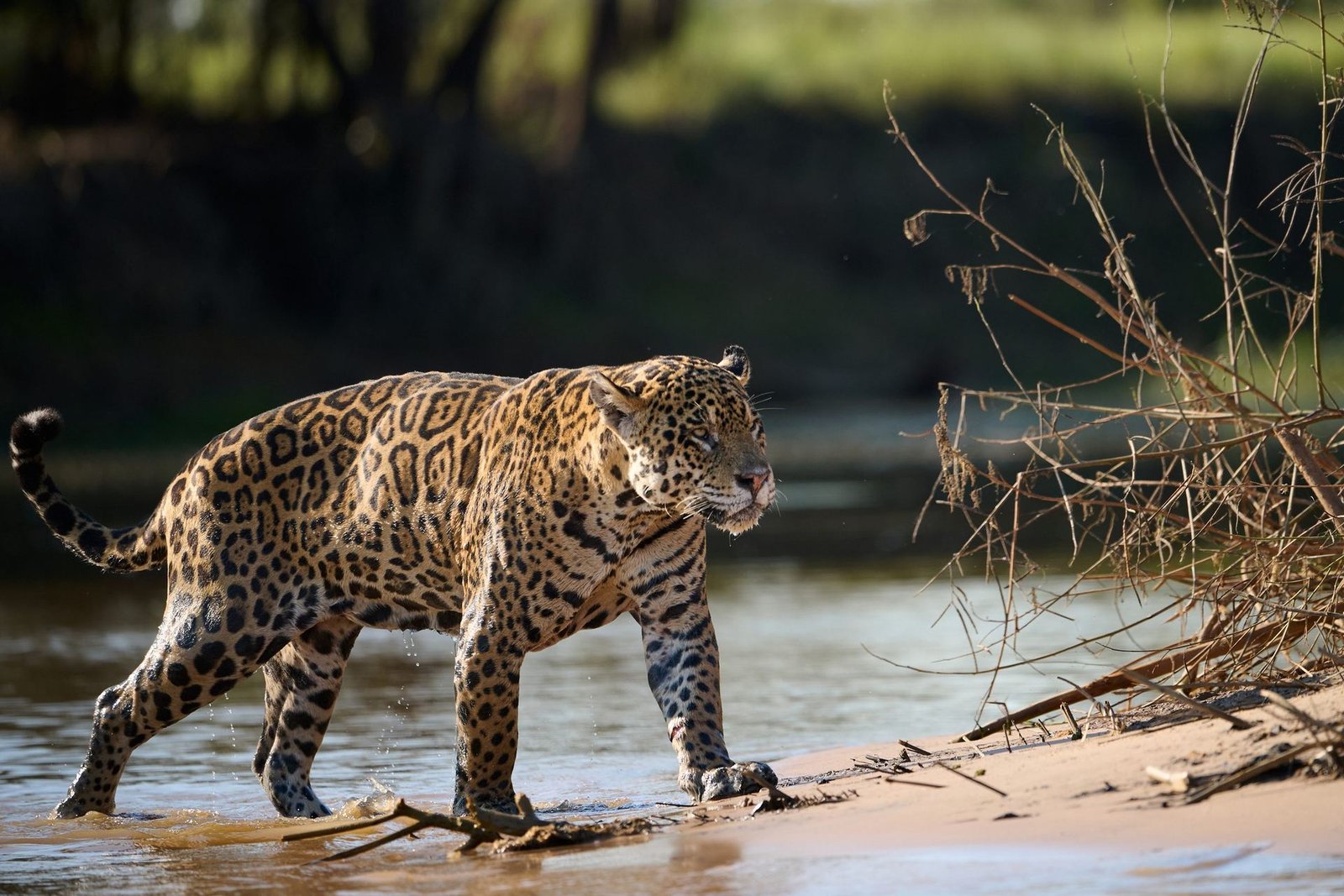
The guides share information by radio, and as soon as someone spots a jaguar, the boats converge. A jaguar usually rests in the shade on the bank, walks along a sandbank or lies on a branch above the water. Researchers tell the jaguars on the river apart by the spots on their flanks, and many of them have names. The guides know them the way you know your neighbours.
The greatest experience is seeing a jaguar swim. It slowly enters the water, swims across the river and disappears into the vegetation on the other bank. You need to shoot fast and have your settings ready – a moment like this lasts only a few dozen seconds. Sometimes a jaguar lies in wait on the bank and then leaps into the water after a caiman. Very few people get to see such a hunt, and it lasts just a few seconds.
A jaguar on the riverbank, yawning on a sandbank or snarling at a neighbouring cat – every encounter is different. For a photographer, a telephoto lens of at least 400 mm and a fast shutter speed are essential.
Tapirs
At the end of the trip it is worth visiting an area where tapirs appear even during the day. The South American tapir is the largest land mammal in South America. It is shy and mostly active at night, so seeing one by day is a stroke of luck.
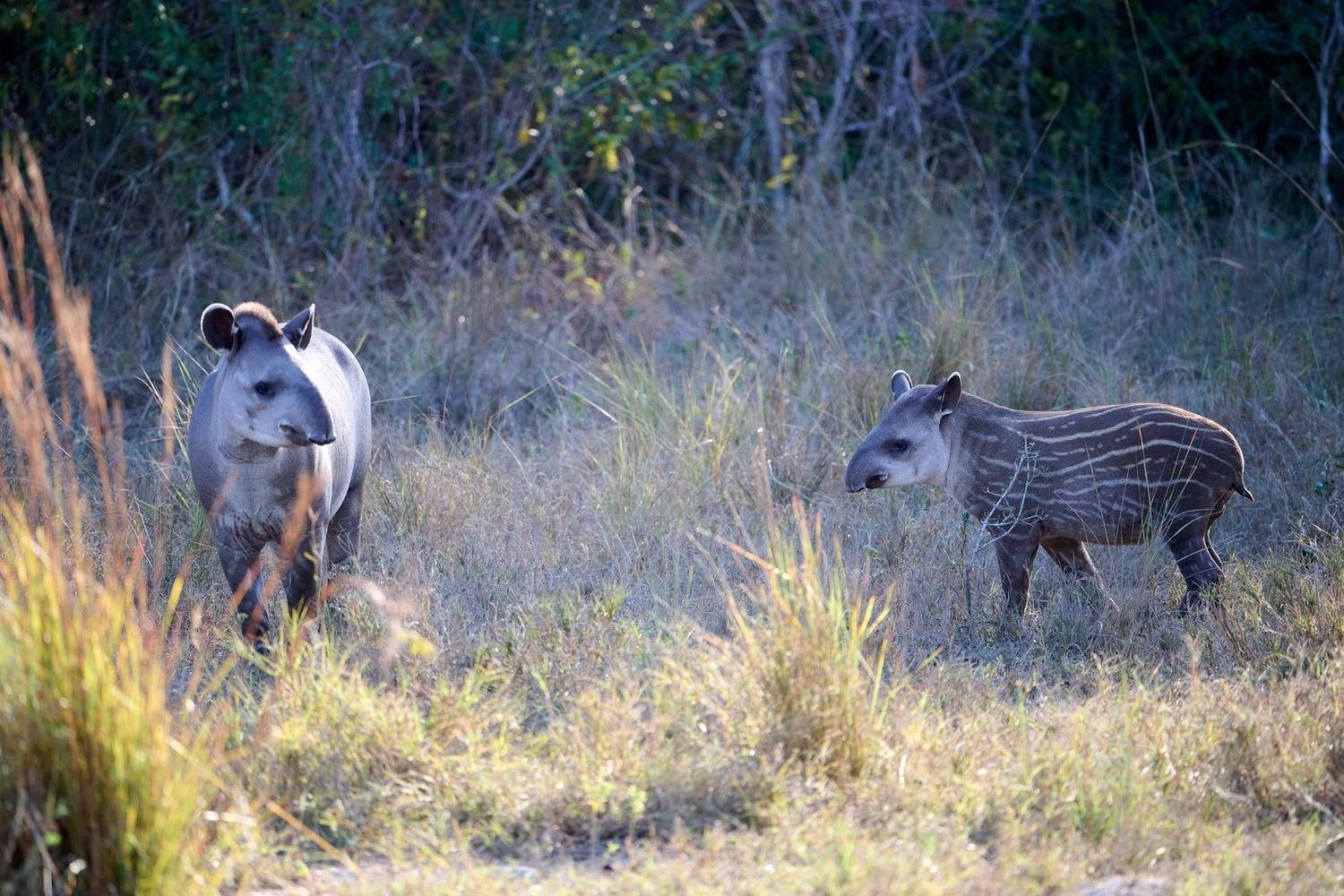
The young have pale stripes and spots that camouflage them in the forest. Once they grow up, the pattern disappears. Tapirs spend a lot of time in the water, where they cool off and escape insects. They are good swimmers and can dive.
Practical tips
The best time is the dry season from July to October. Mornings and evenings are pleasant, the days are hot. Repellent and long sleeves are a must. On the boat a hat, sunscreen and plenty of water come in handy. For shooting from the boat a bean bag or monopod is practical; a tripod cannot be used in a small boat. I run an expedition to the Pantanal. You will find the details on the page Brazil – Pantanal.