Bangkok, Christmas in Chiang Mai, a two-day trek to a Lahu village, the ruins of Ayutthaya by bike and kayaks among the limestone cliffs near Krabi.
After six weeks in India we flew into Bangkok just before Christmas. Suddenly everything was clean and organised and nobody was chasing us. For the first few days we enjoyed being able to walk down the street without anyone calling out to us. We took a city bus to the Banglamphu district and stared in disbelief. Everything clean and calm, no honking cars. It was as if we had landed on another planet.
Bangkok
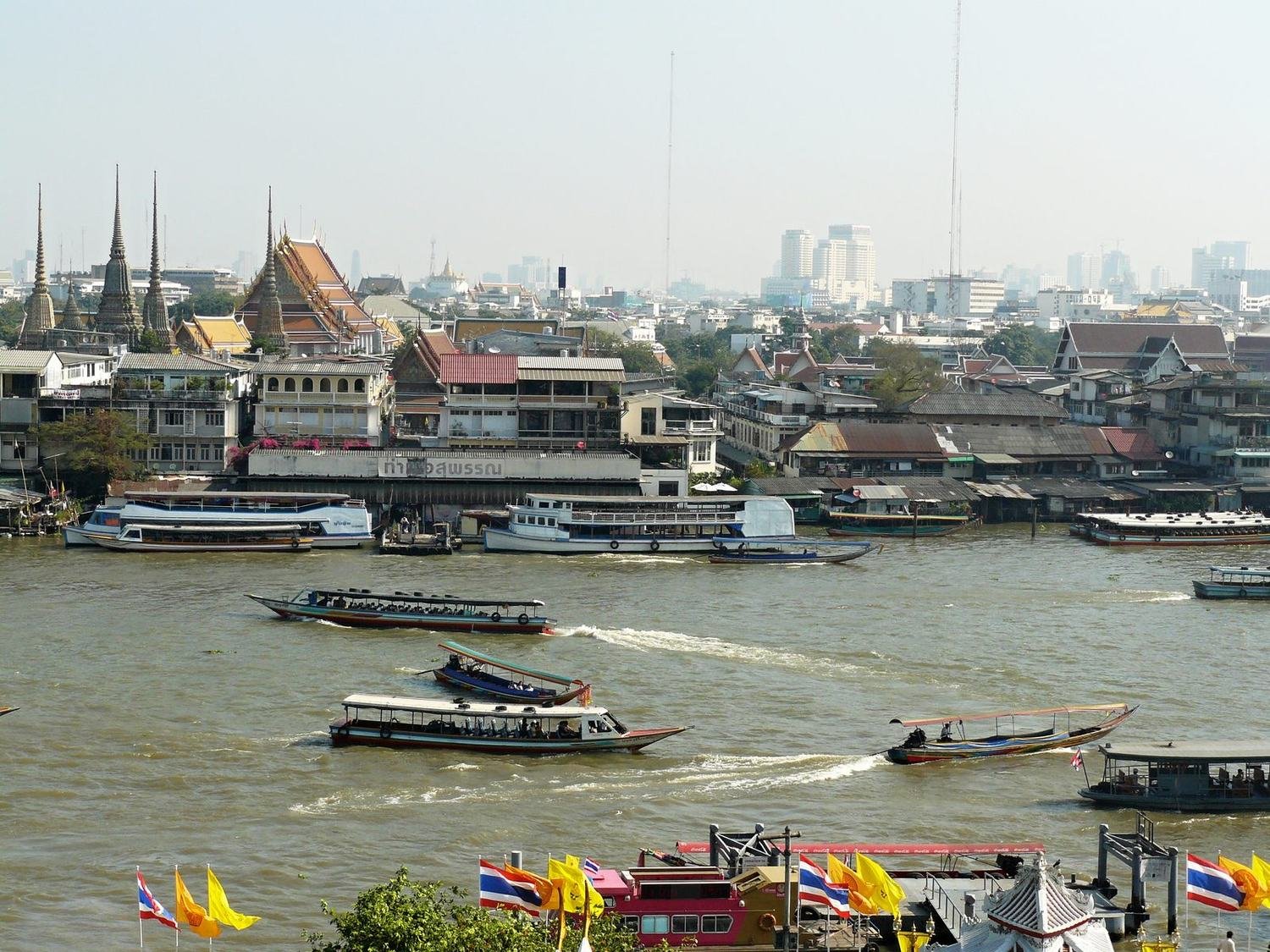
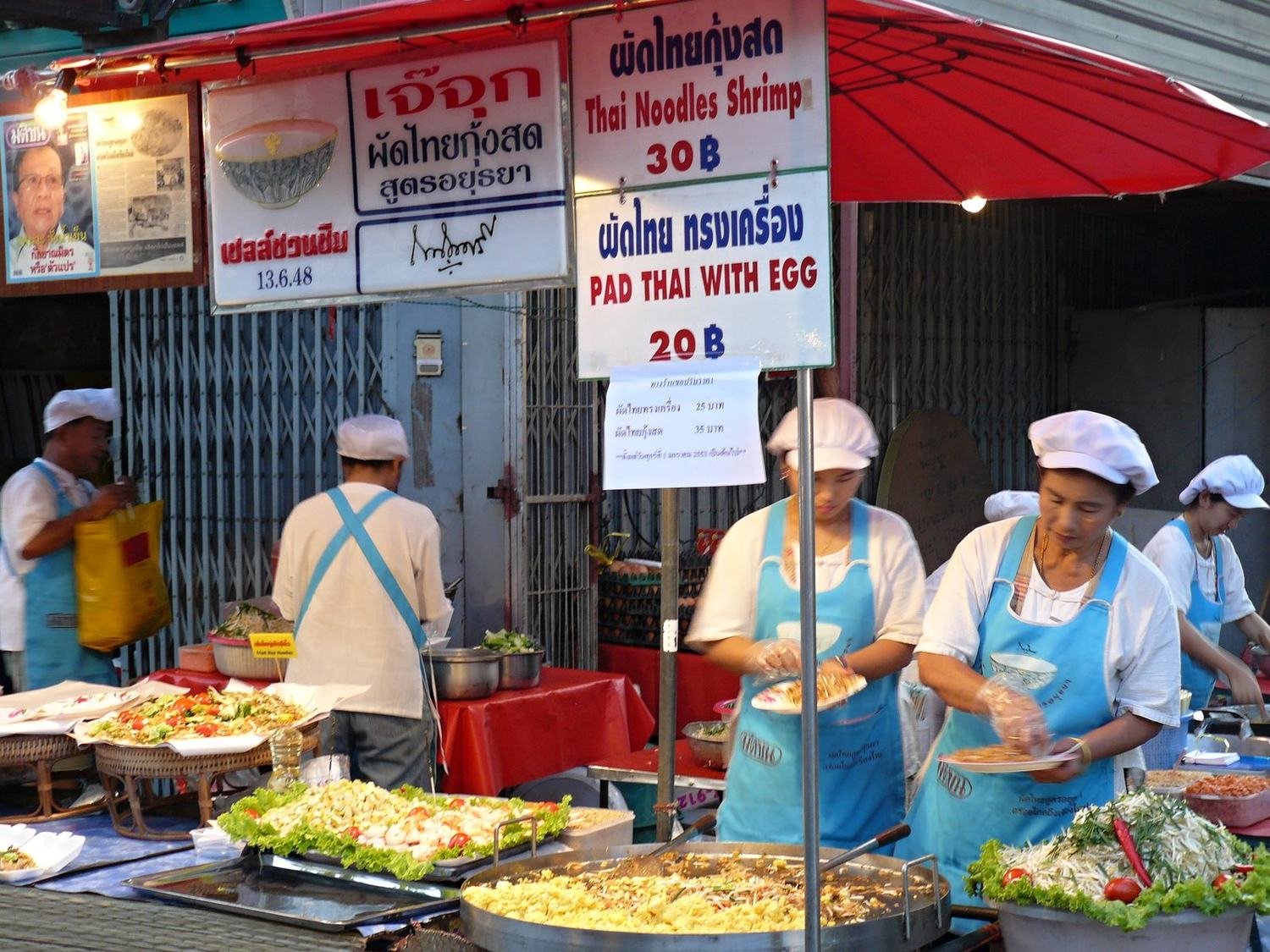
We stayed on Khao San Road, the backpacker street with hostels, stalls and bars. From there you can walk to the main temples. Wat Phra Kaew is home to the Emerald Buddha, the most sacred statue in the country. Every evening the street becomes a pedestrian zone with stalls selling noodles, fruit, clothes and kitsch. The massage parlours even have tanks with little fish that nibble your feet.
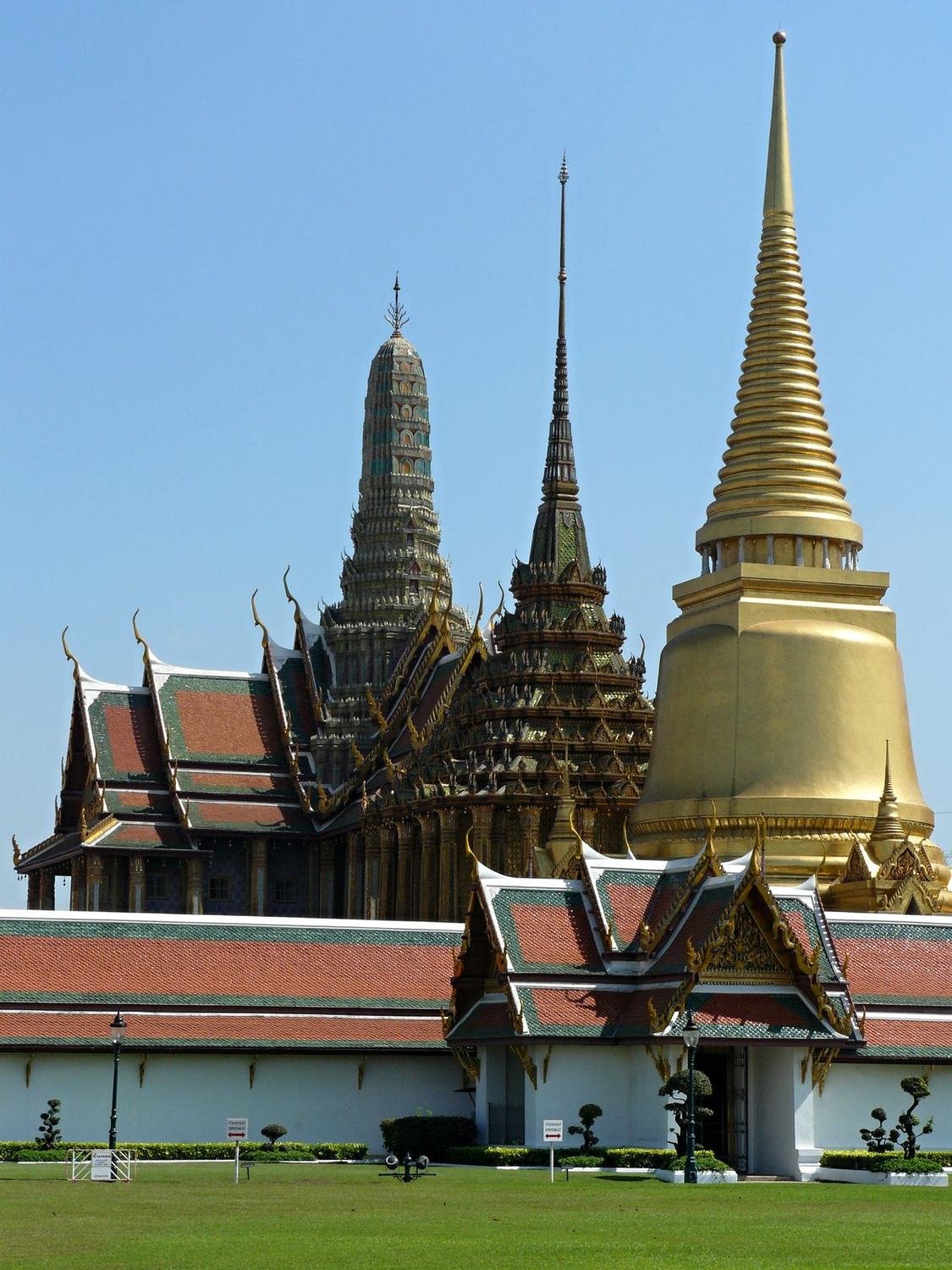
At Wat Pho lies a reclining Buddha 46 metres long and 15 metres high. It is completely gilded and the soles of its feet are inlaid with mother-of-pearl. The same temple houses a school of Thai massage. The whole complex of the Grand Palace and Wat Phra Kaew has more than a hundred different temples and monasteries, colourful and richly decorated. Bangkok must have thousands of temples. We got around the city by river taxi on the Chao Phraya and by the Skytrain. After India it felt like science fiction.
We had lunch with the locals at a market. Communicating in English was difficult, but the lady flapped her arms like wings, so we knew we were eating poultry.
Chiang Mai and a trek
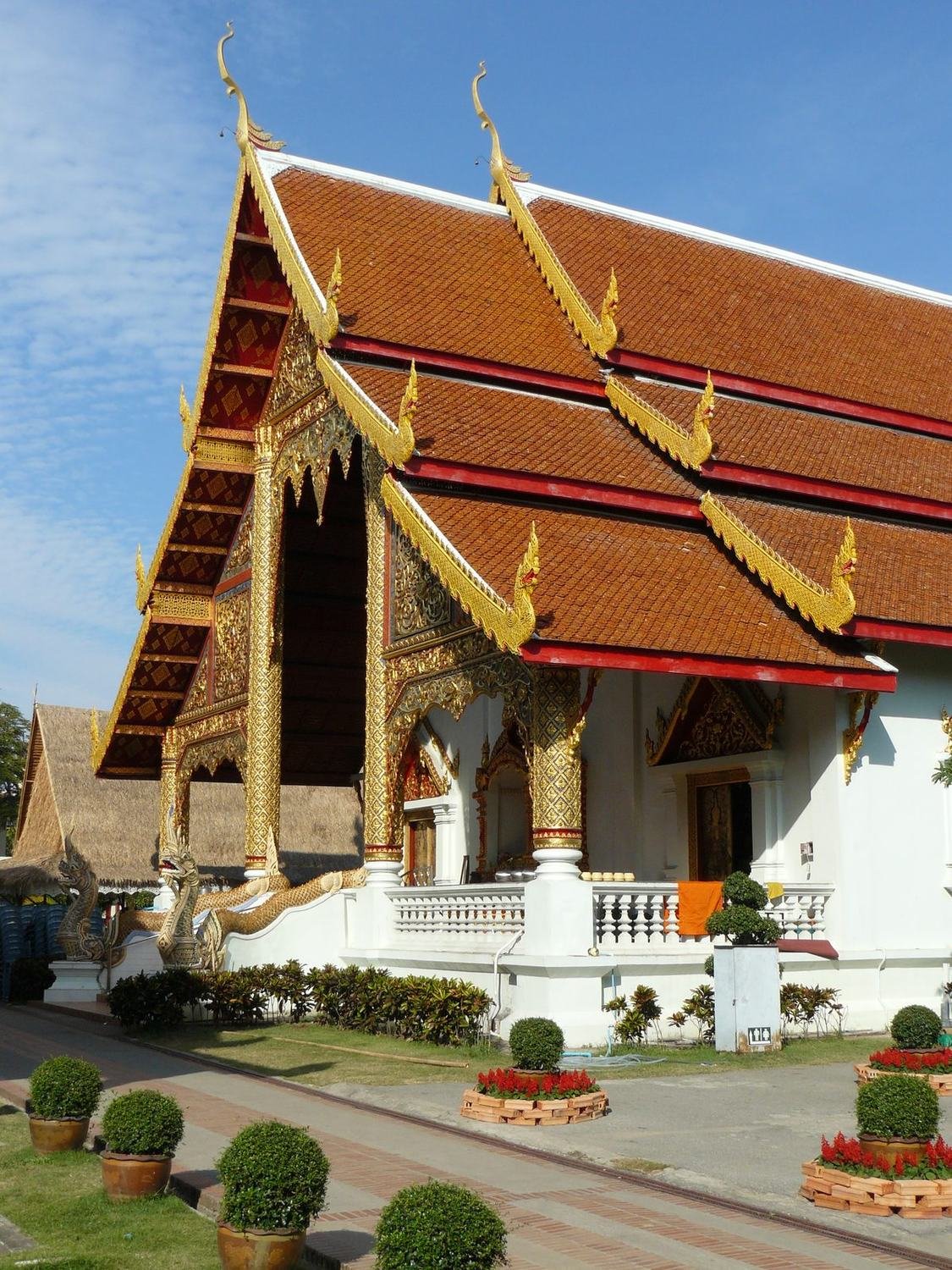
We took a night train to Chiang Mai in the north. We celebrated Christmas in an Irish pub – no tree, but with beer and other travellers. The next day we went up Doi Suthep mountain with its temple, from where you can see the whole city. The line is seven hundred kilometres long. The sleeper carriages were sold out in high season, so we sat up all night. Chiang Mai has a moat around its centre and temples in almost every street.
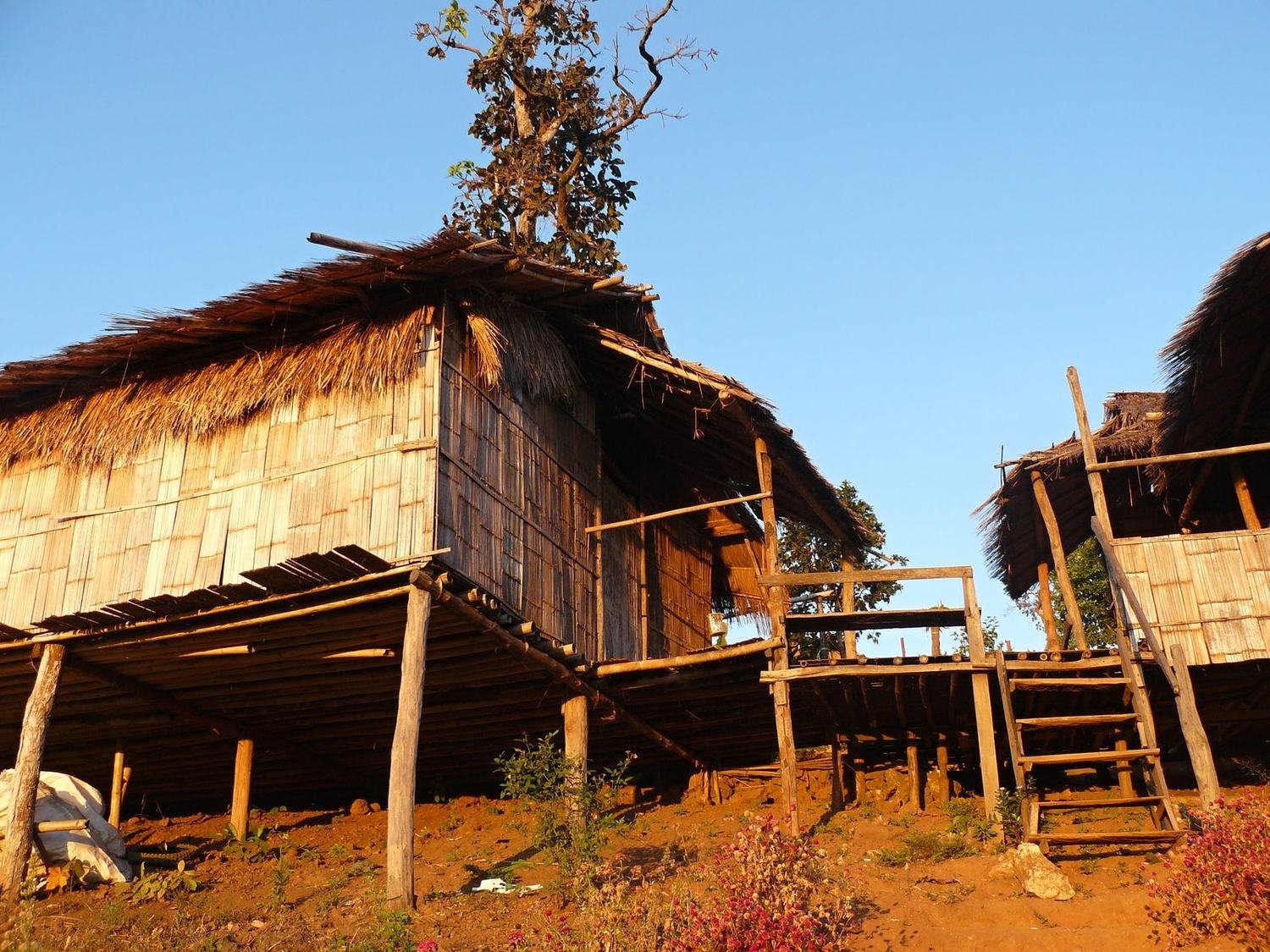
In Chiang Mai we booked a two-day trek. We walked through the jungle to a village of the Lahu tribe, where we slept in a bamboo hut. In the evening we sat by the fire and the locals cooked us rice with vegetables. We set off with eight other people. The path led up a brutal hill, and the village of the Lahu, who once came from Tibet, stood on the ridge. The houses were made of wood, bamboo and red clay.
On the second day we stopped at an elephant camp, then went down the river on a raft and finally on a bamboo raft. The raft slowly sank beneath us and we had to stand to stay dry.
Ayutthaya by bike
Ayutthaya was the capital of the kingdom of Siam for four hundred years. In the 18th century it was burned by the Burmese army, and the ruins of temples and chedis remain to this day. We hired bikes and rode among them all day. In that heat it was quite a bold trip. At Wat Mahathat and Wat Ratchaburana only the red-brick foundations of most buildings remain.
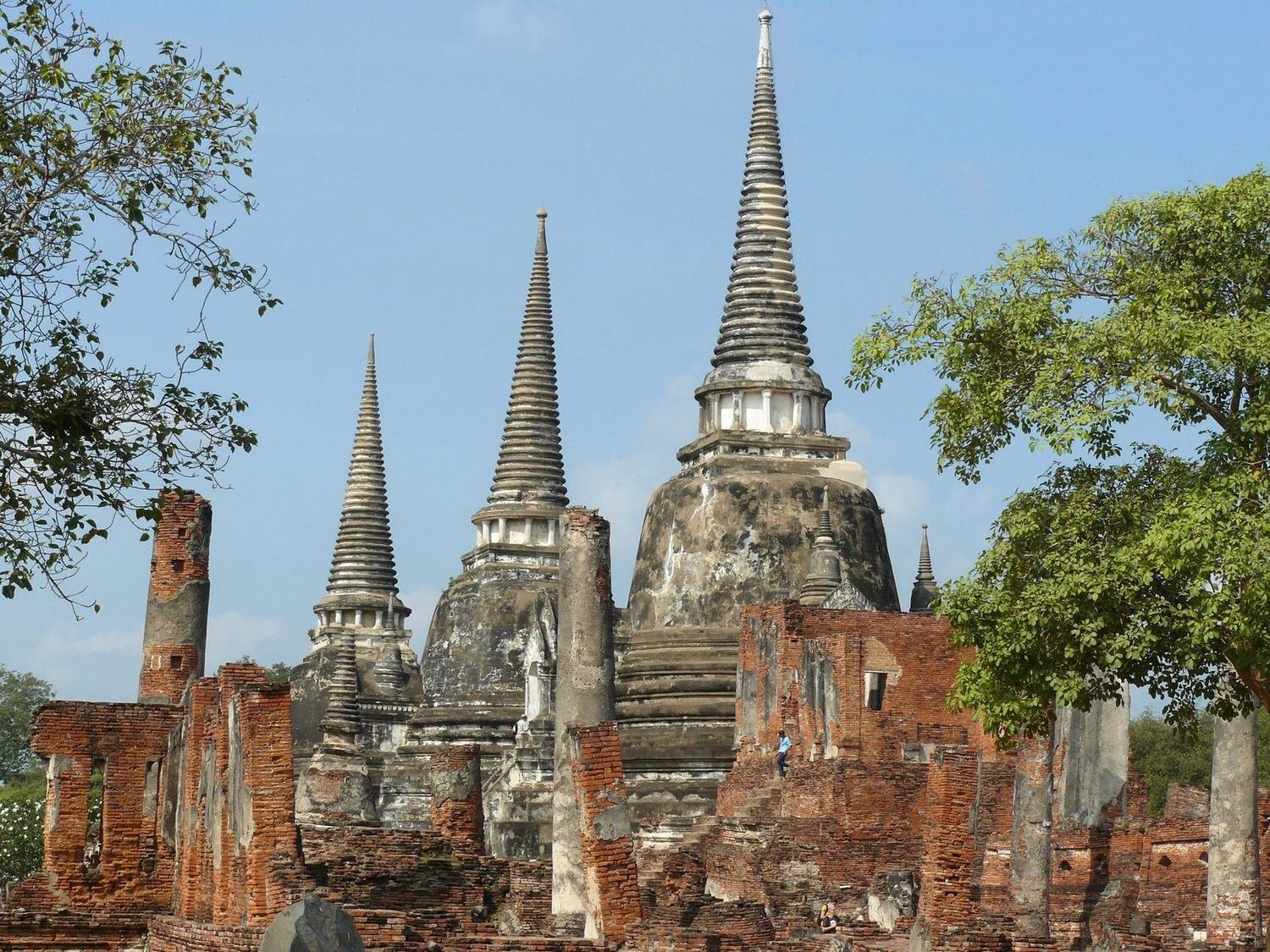
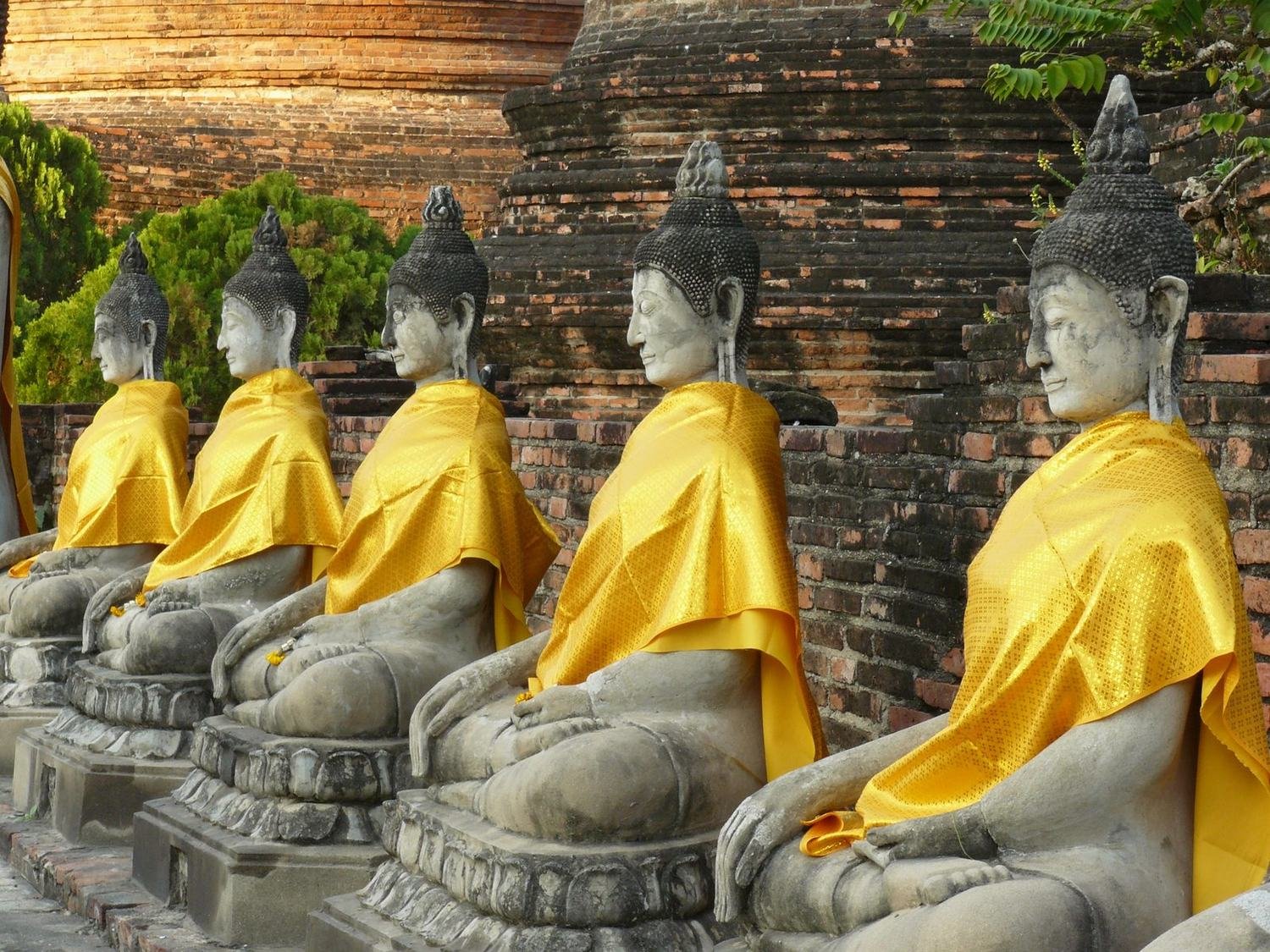
The best-known sight is the Buddha head entwined in the roots of a fig tree at Wat Mahathat. The tree grew around it during the centuries when the city lay abandoned. Rows of headless Buddhas are a reminder that soldiers cut off the heads and carried them away. But what pleased us most were the chance discoveries. Cycling around, we came across a giant reclining stone Buddha, and at a temple near the station a whole army of Buddhas.
The islands in the south
In the south we started on Ko Tao. We stayed in Tanote Bay, ate at a restaurant run by a lady everyone called Mama, and snorkelled at the islets of Ko Nang Yuan. The water was warm and crystal clear and the fish swam right around us. We arrived on Ko Tao at dawn. The owner of the restaurant on the hill welcomed us with a dance and said: “Call me Mama.” Arabic and then Gypsy music played from the speakers, and among the songs there was even a Czech one.
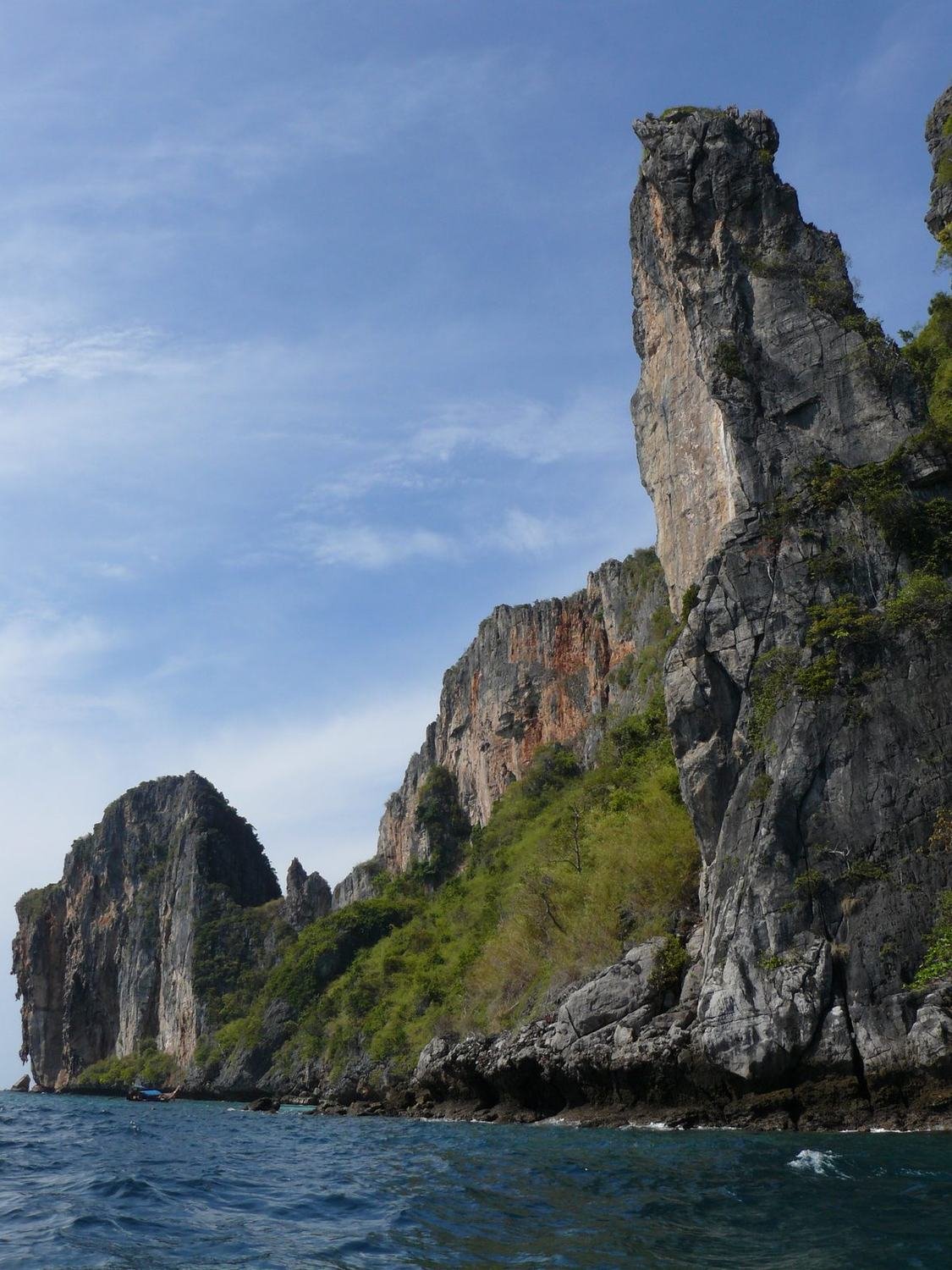
Near Krabi we kayaked through mangroves between limestone cliffs. We climbed 1,200 steps to the Tiger Cave Temple. At the top is a Buddha statue and a view over a landscape full of rock towers. We paddled a stretch on the open sea and then past caves, cliffs and mangroves into canyons that can only be reached by kayak. I wondered what a Thai would say if I took him to the Moravian Karst.
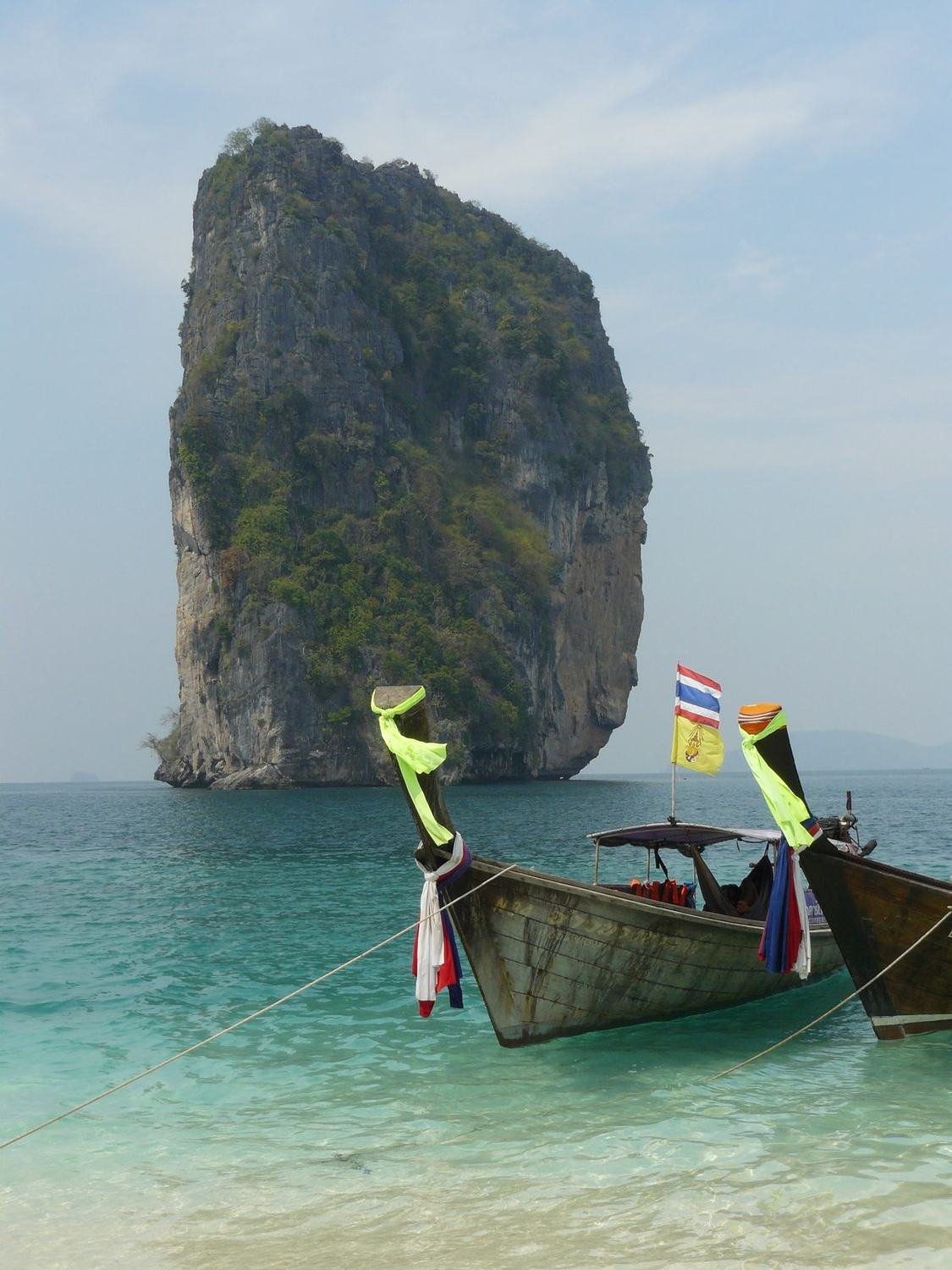
From Ao Nang we took a four-island snorkelling trip and went to Phra Nang beach, where climbers scale the rocks right above the sea. We snorkelled at Tup, Chicken and Poda islands. Chicken Island really does look like a hen. A few kilometres from busy Ao Nang beach we had a beach to ourselves, and at low tide we walked across dry land to a rocky islet.
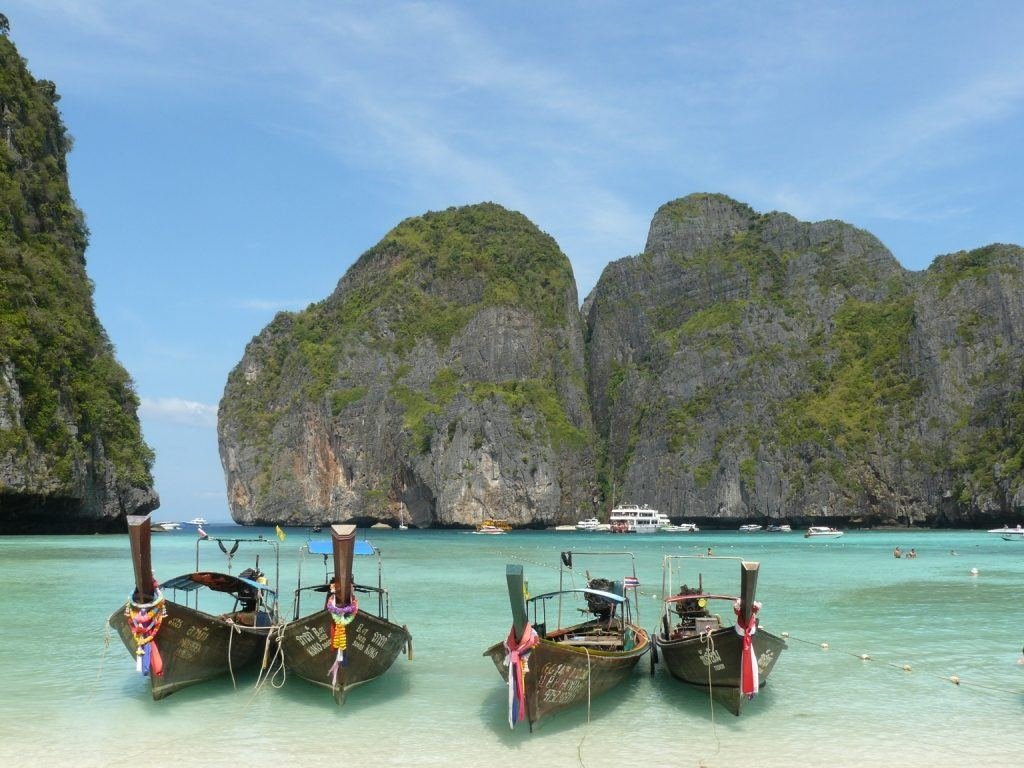
Our last stop was Ko Phi Phi. Maya Bay, where the film The Beach was shot, is truly beautiful, but there were so many boats full of tourists that you could not see the water. It does not look like that in the photos. The sea, rocks and sky play with colours here, and looking into the water is like looking into an aquarium. Visibility is several metres, with fish and coral everywhere. I can understand how some people get hooked on diving.
Before that we spent a few days on Ko Lanta with a Muslim family in a garden full of banana plants. The hut was full of animals – geckos, mosquitoes, spiders and one evening even three small scorpions.
We had the best Thai food at markets and roadside stalls. Pad thai, curry and tom yum soup for next to nothing. From Thailand we went on to Malaysia and then Cambodia.
Practical tips
The best time for the north is November to February, when it is dry and pleasant. For the Andaman Sea in the south, November to April. The most popular islands are packed in high season, so it is worth looking for the smaller ones.