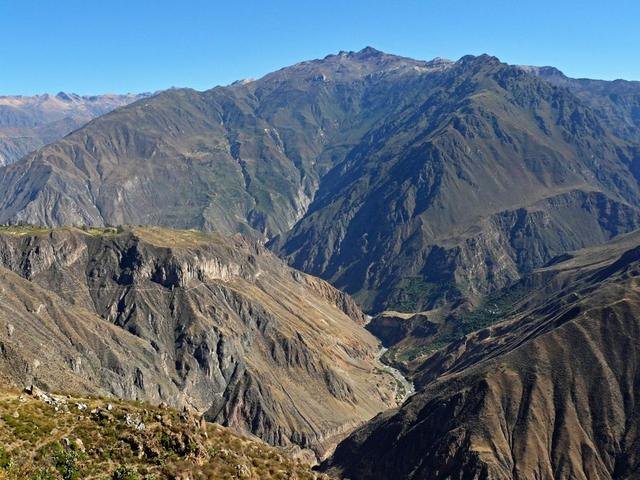
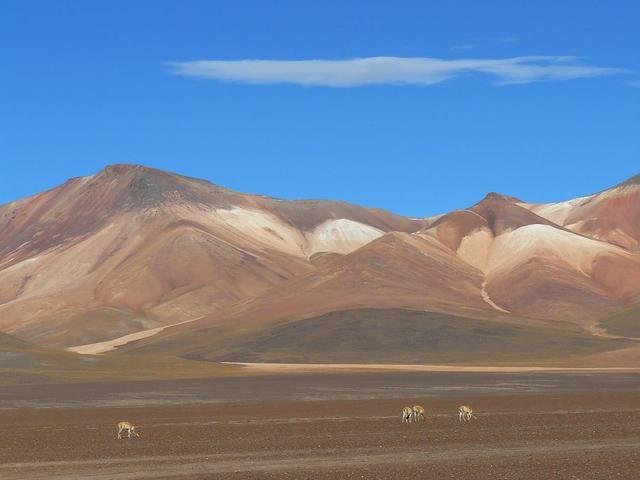
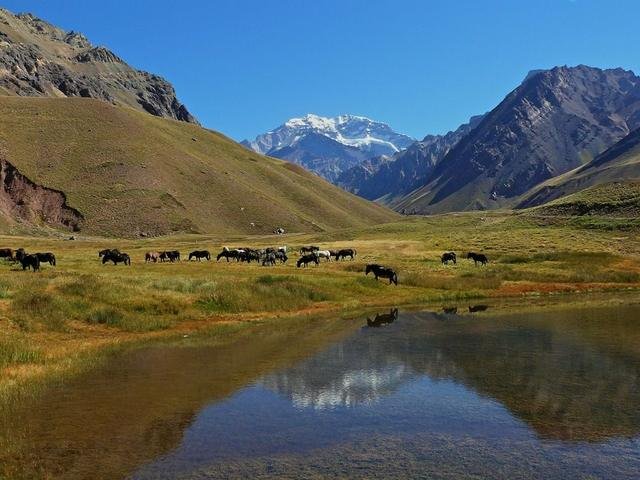
The three coloured lakes of the Kelimutu volcano, the megaliths of Bena village, an islet with wooden huts near Labuan Bajo and the temples of Bali.
Indonesia was the last country of our round-the-world trip. At the beginning of June we flew into Bali, to the tourist resort of Kuta. On the first day a money changer cheated us out of two hundred thousand rupiah, about fifteen euros. The old trick of recounting the notes. We left Kuta as soon as we could. We stayed in the Poppies Gang 2 lane. On every corner someone offered us a hotel, transport or “special” cigarettes, and hundreds of motorbikes wove through the narrow one-way street. At least our room for about eleven euros had a garden with a pool. The sea at Kuta has huge waves for surfers, but it is no good for swimming.
Flores
We flew to the island of Flores, to the town of Ende. The landing alone was an experience – the plane descended between hills and touched down right by the sea. From there we went to the village of Moni below the Kelimutu volcano. The other passengers got into taxis; we walked to the road and flagged down a bemo to the bus station. The journey to Moni took less than three hours through green volcanic hills and rice fields. Indonesia just as we had dreamed of it.
At the top of the volcano lie three crater lakes, each a different colour. According to the locals, souls go here after death – the young to one lake, the old to another and wicked people to the third. The colours change with the minerals in the water. We climbed to the viewpoint at dawn and the air above the lakes smelled of sulphur. In Moni a local young man called Ivan found us a room and pushed a much-praised dinner on us. After the meal he wanted about one and a half euros more than we had agreed and started making threats. In the end we paid part of it, but the good impression was gone. At the market, though, smiling vendors sold us tangerines and bananas and nobody thought of cheating us.
We went to Bajawa by bemo, a local minibus. It only left when it was full, so we waited. On the way people laughed at our noses and asked where we were from. They laughed a lot at themselves too. In the end the driver took us on our own and wanted us to pay for the whole bus. We got off in the first village, paid about one and a half euros and waited for the next bemo. Women and children gathered around us and a lady with a white-painted face pointed out my interestingly shaped nose to the others. The villagers then stopped every car with us until we got away.
Ngada villages
Around Bajawa are the traditional villages of the Ngada people. We visited the villages of Luba and Bena. The houses stand in two rows around a square, and in the middle are megaliths and the wooden ngadhu and bhaga shrines, which represent the male and female ancestors of the clan.
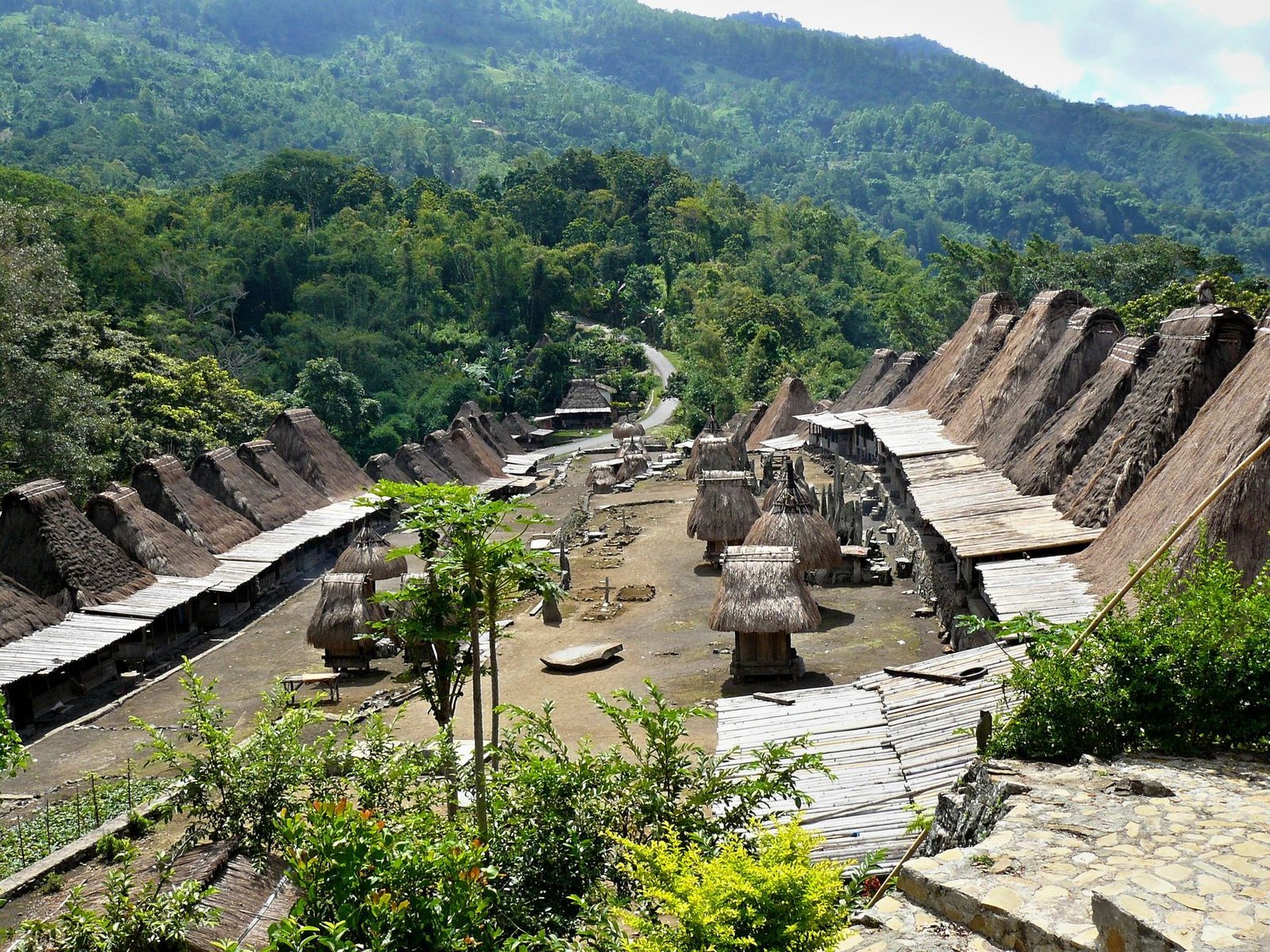
Women on the verandas were weaving ikat cloth and vanilla was drying in front of the houses. The people here are Christians, but they also keep the old animist rituals. The horns of sacrificed buffaloes hang on the roofs. A few years ago Luba was still authentic, but tourism has arrived here too. Ikats hang on the porches for sale for about four euros, and visitors sign a book and contribute to the village fund. Bena is bigger and the most visited. On a rocky outcrop at the end of the village stands a statue of the Virgin Mary.
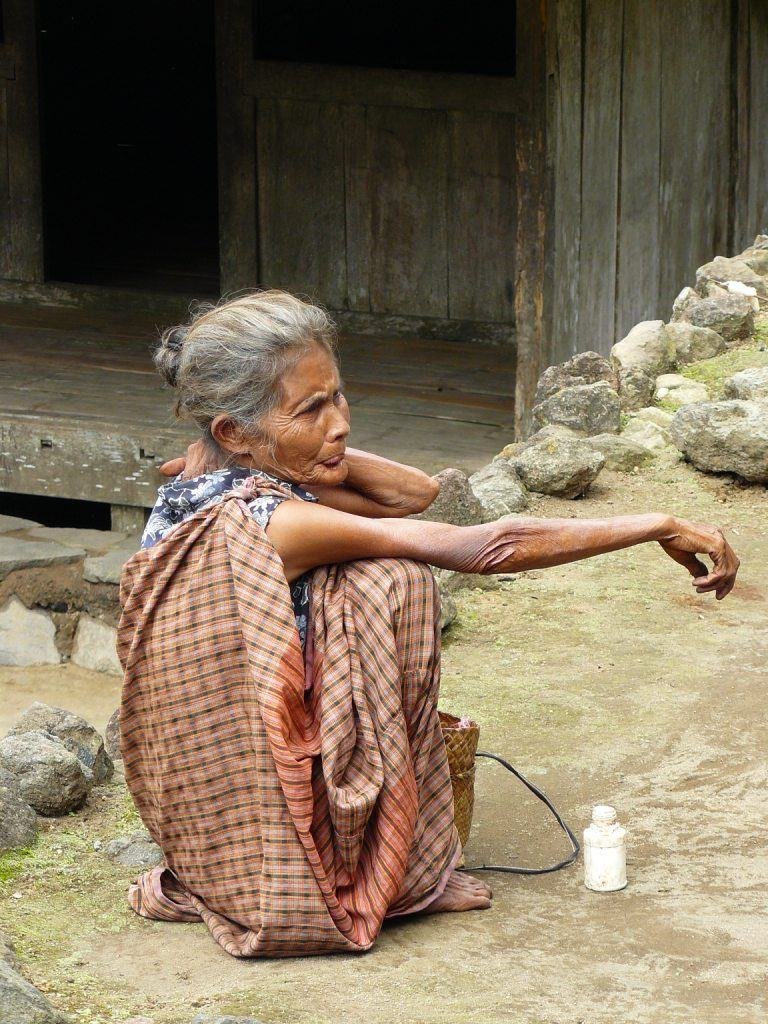
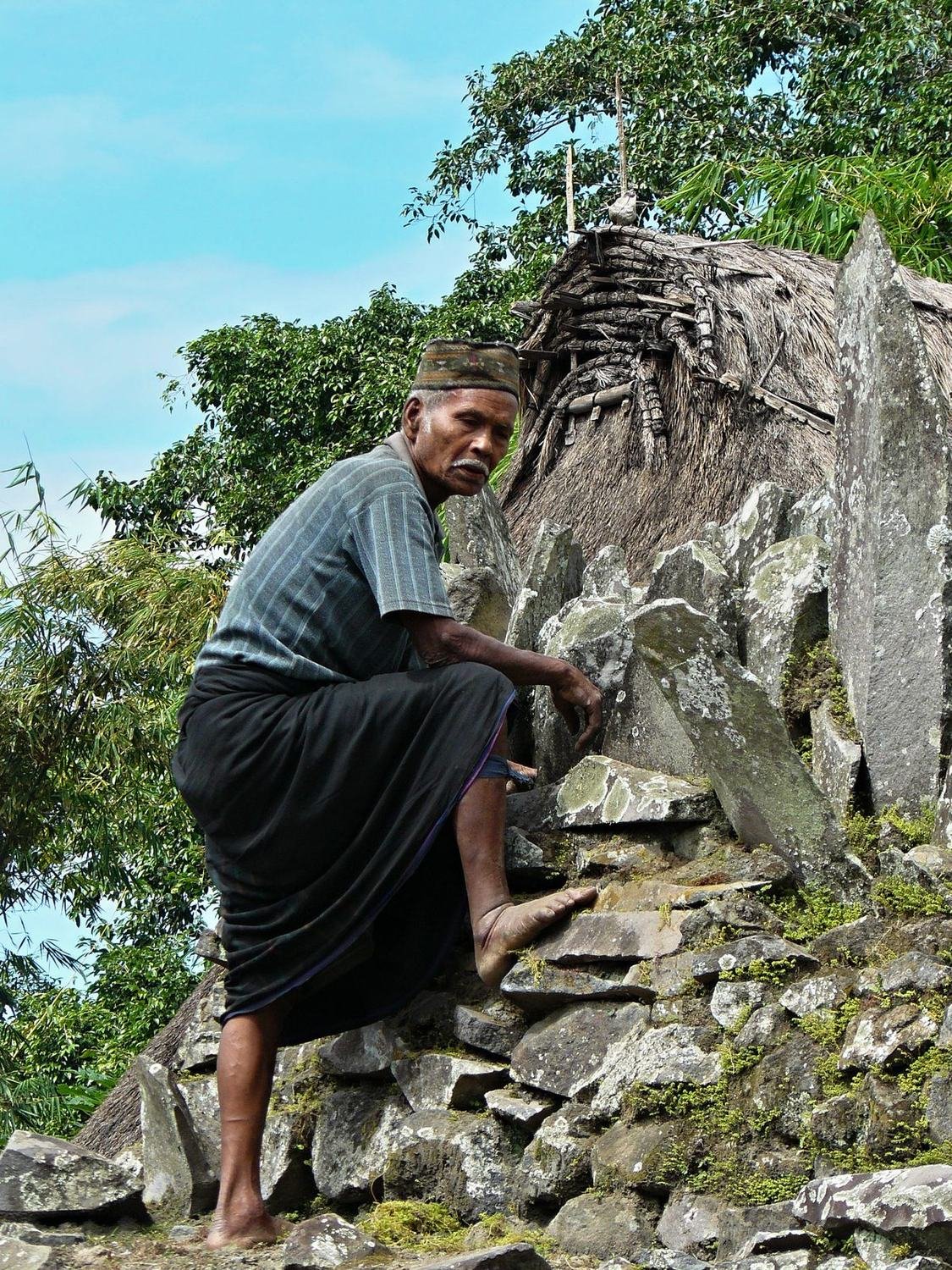
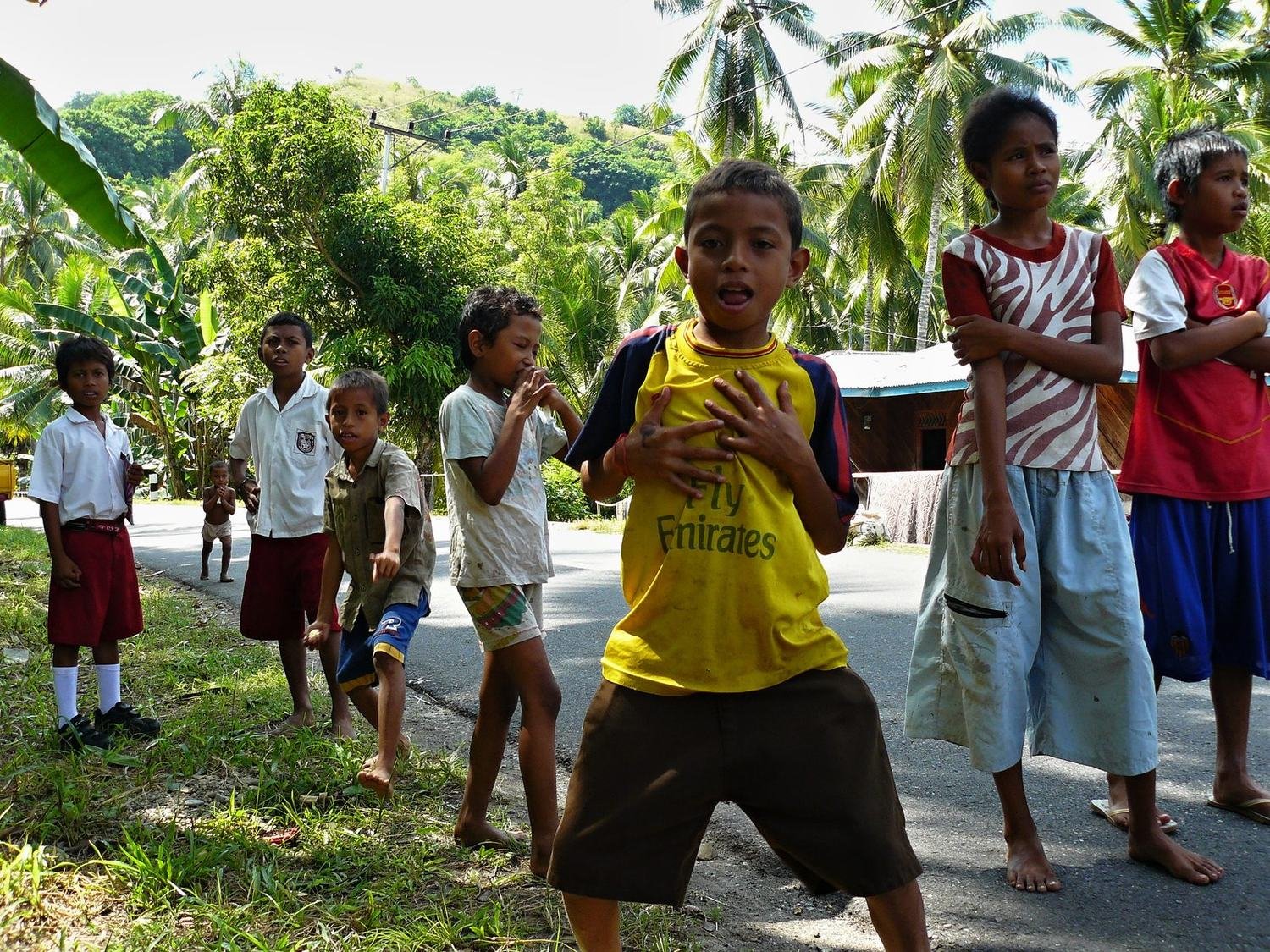
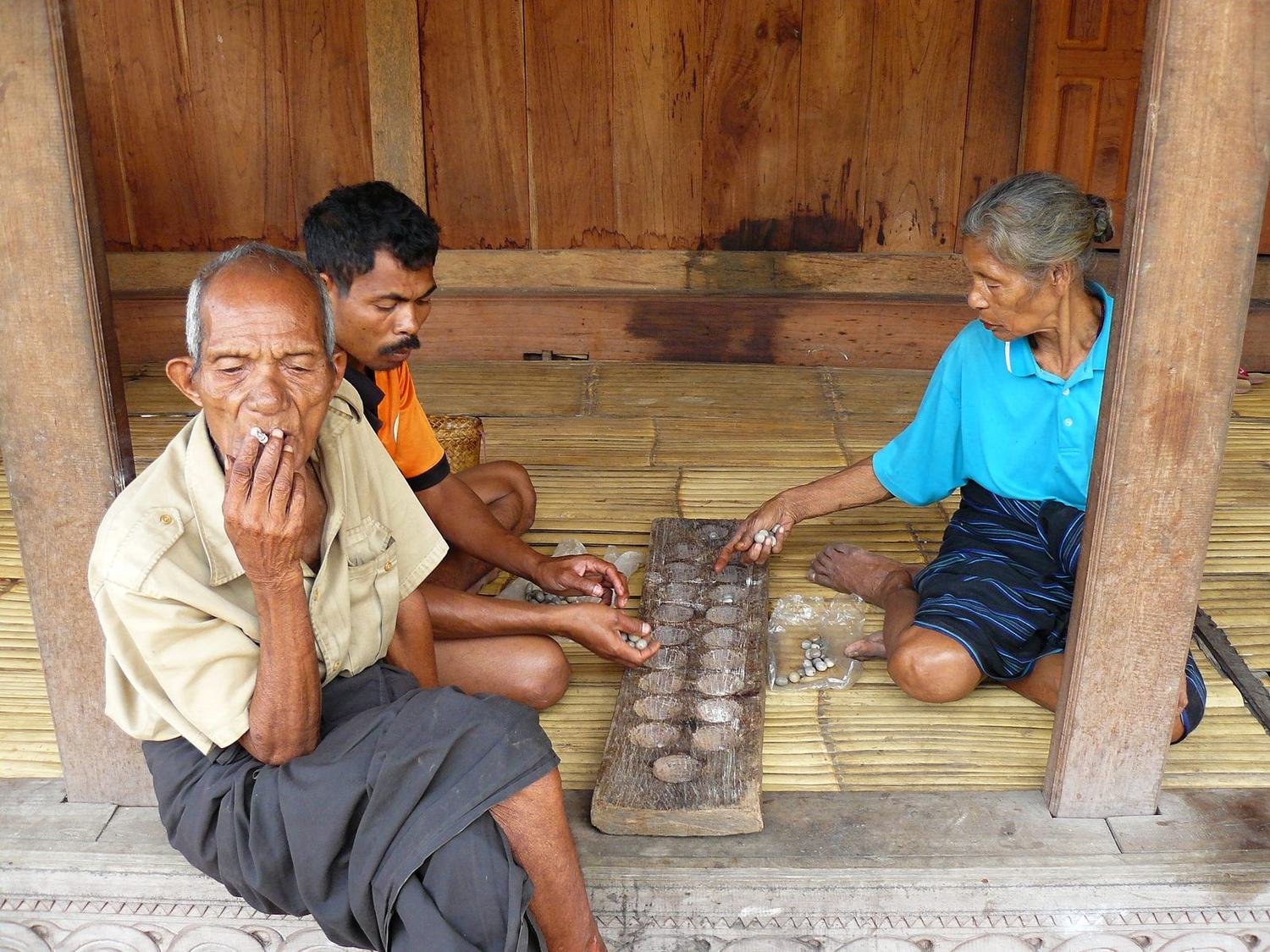
Children played on the square among the stones and every visitor was an event for them. Older people invited us onto their verandas and offered us coffee.
Labuan Bajo
We took an eleven-hour bus ride to the port of Labuan Bajo in the west of the island. The road wound through the mountains and people smoked on the bus. Boats leave from here for Komodo National Park. The bus was supposed to come at half past six, came at seven and then we waited two hours for it to fill up with passengers and sacks of rice.
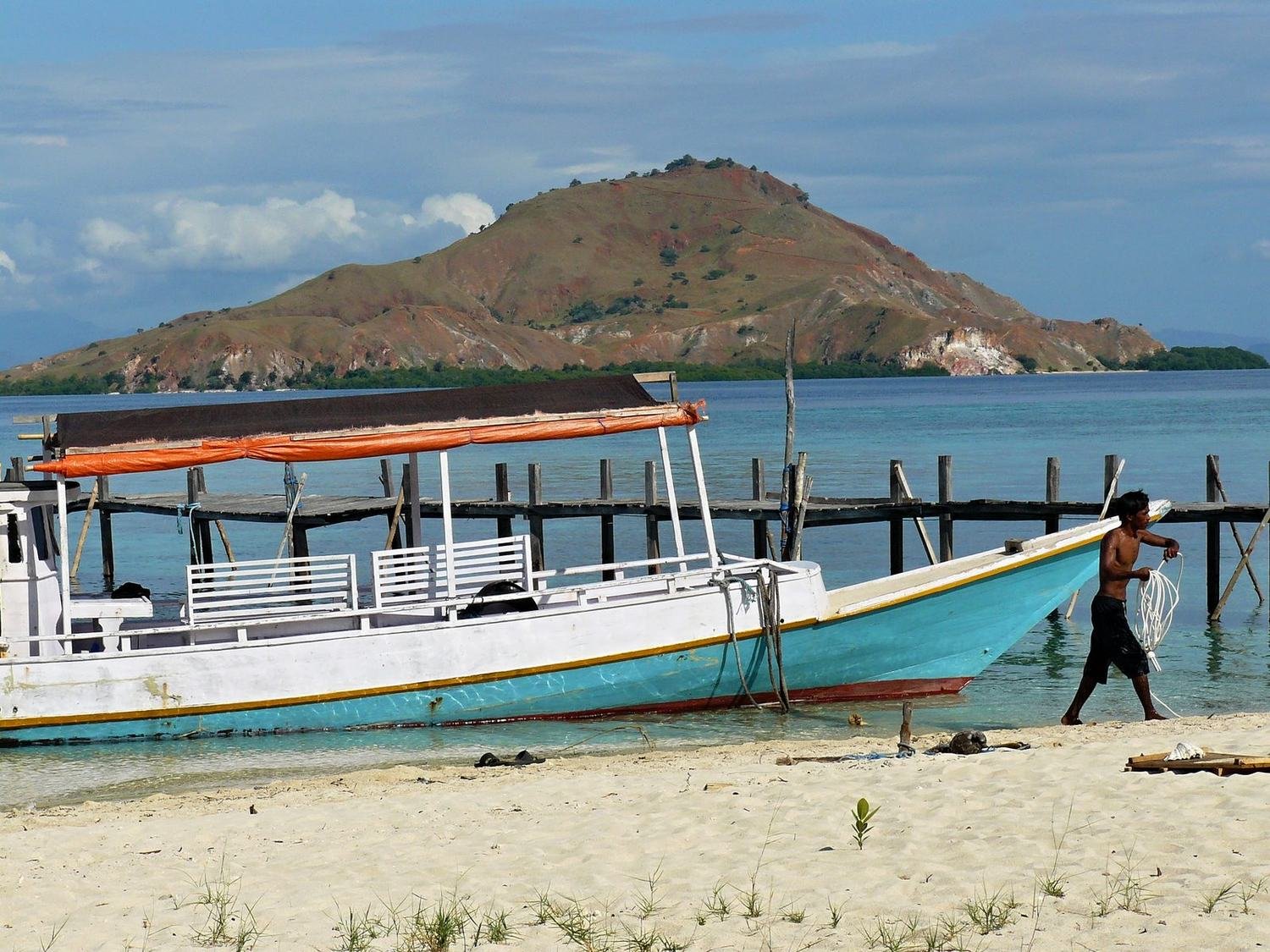
We chose the islet of Kanawa. A wooden hut by the beach cost about sixteen euros a night and a coral reef surrounds the island. Snorkelling, we met lionfish, turtles and schools of colourful fish. There are fourteen bamboo huts on the island with a bed, mosquito net and an open-air bathroom. Electricity comes from a generator and fresh water is used sparingly. The sea is turquoise and the beach white. We would have loved to stay longer, but we had already bought our flight to Bali.
Bali
We returned to Bali differently – to Ubud in the interior. In the evening we watched a traditional dance with gamelan music. Then we hired a car with a driver and toured the island. First the musicians with flutes, drums and small hammers took their places on stage. When the dancers ran out and began to twist and roll their eyes, it was clear this would be another highlight. The loop around the island was about a hundred kilometres, so instead of a motorbike we hired a small off-road car.
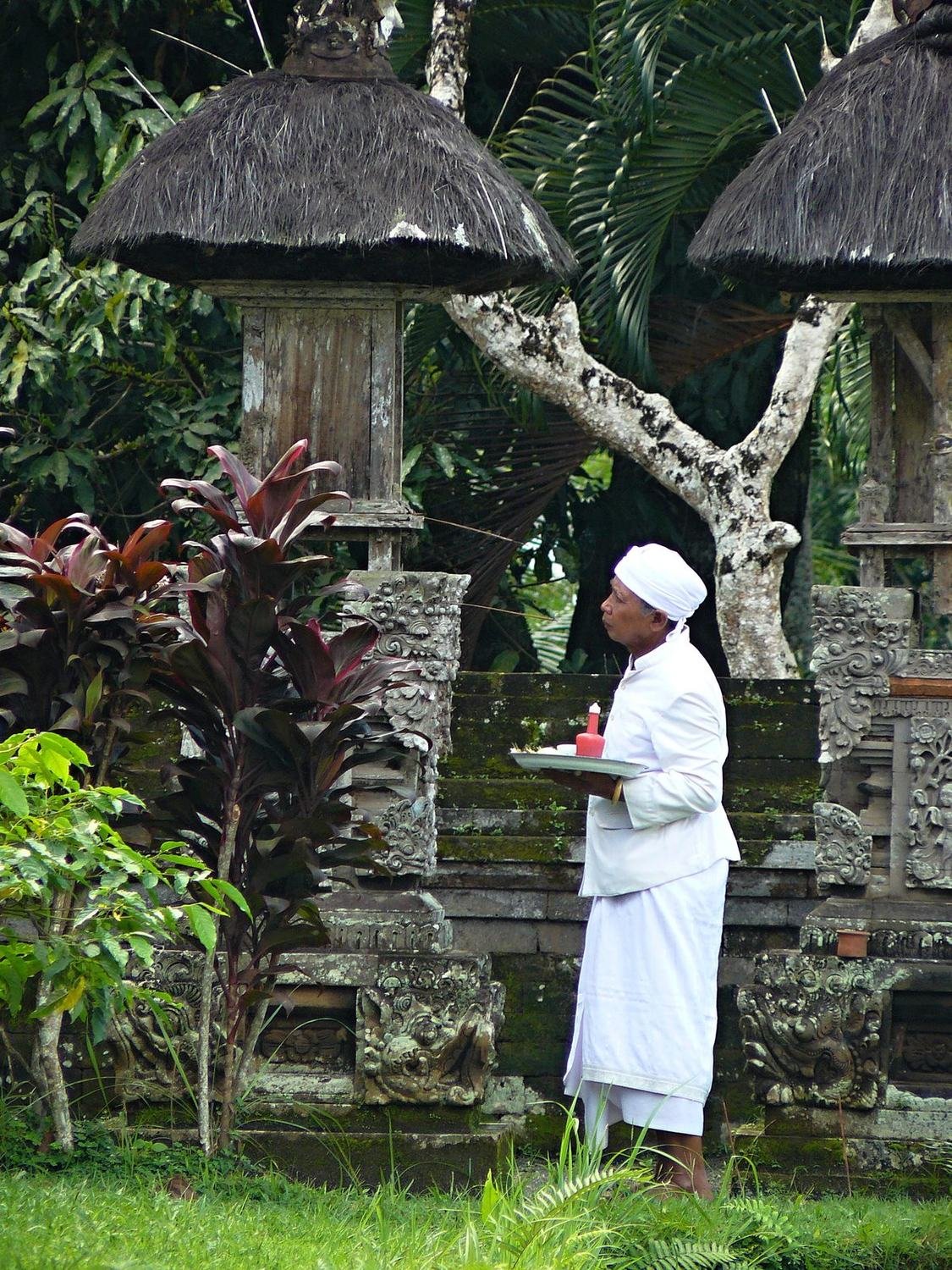
We stopped at the Pura Taman Ayun temple with its tower-like meru shrines, at the rice terraces and at the mountain temple of Pura Luhur Batukau. It was quiet there with almost nobody around. The rice fields had been harvested and were not very green. But on the way to Pura Luhur Batukau ours was the only car, with just a few houses and people working in the fields. In the dark green gardens of the temple a group of monks was reciting prayers.

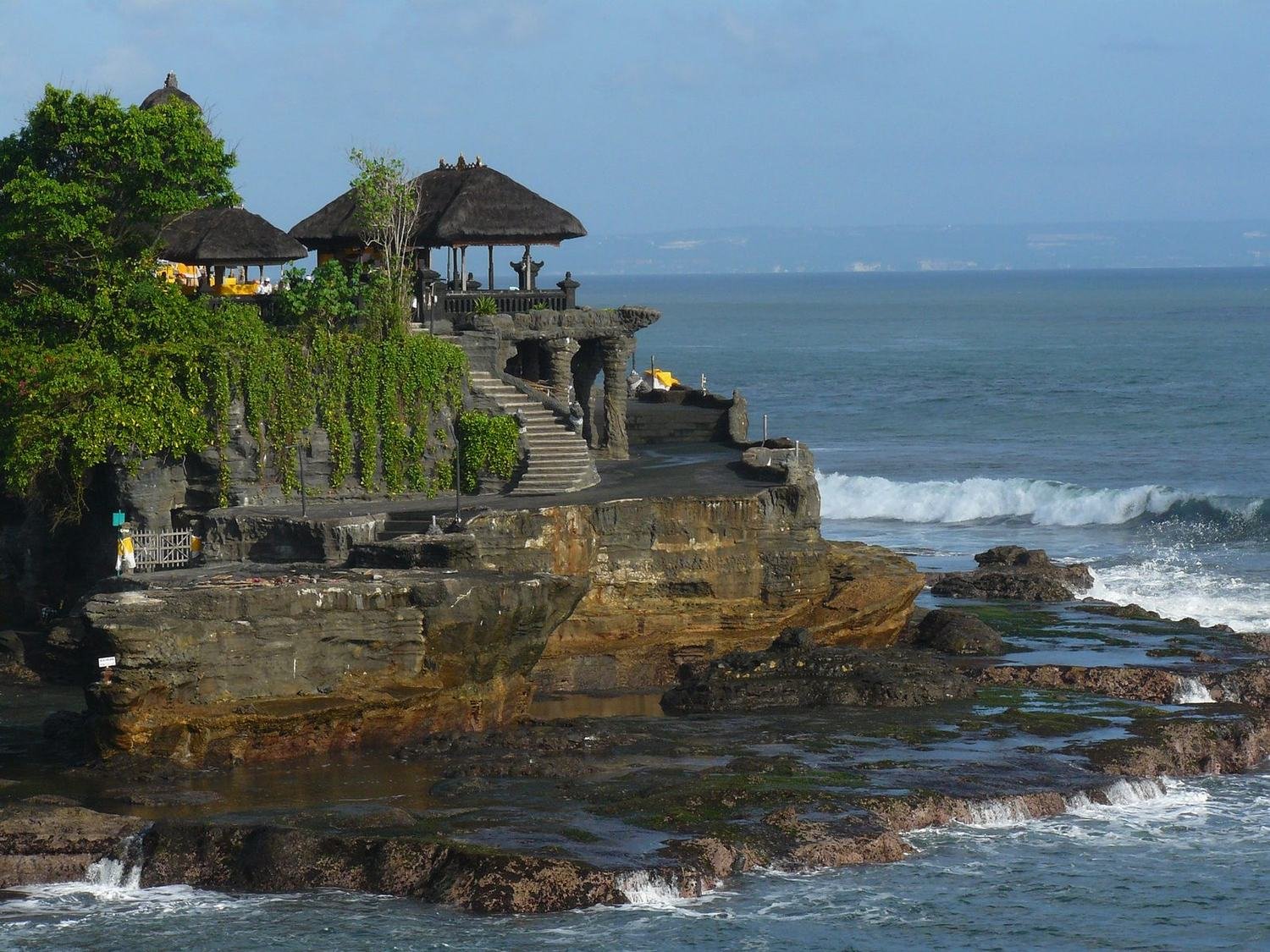
The Tanah Lot temple stands on a rock in the sea. At low tide you can walk to it. But thousands of people come here for the sunset and the buses stand in a line.
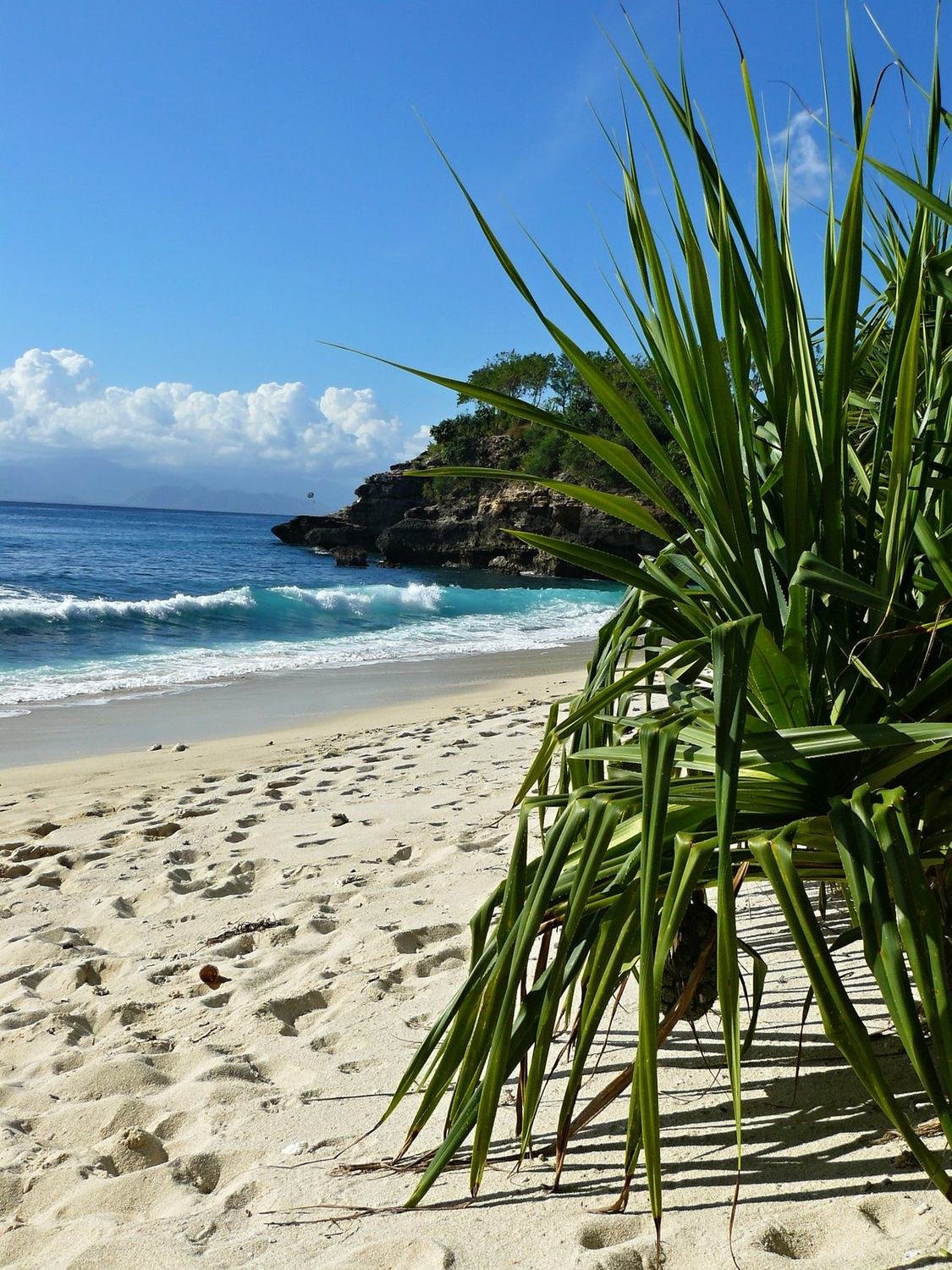
We spent our last days on the islet of Nusa Lembongan. The locals grow seaweed here on wooden frames in shallow water and then dry it in the sun. On Mushroom Beach we said goodbye to our trip around the world. The boats in eastern Bali look like spiders – they have outriggers on the sides that cut through the waves. We hired a motorbike and rode all the way round the islet.
Practical tips
Transport on Flores is slow and buses only leave when they are full. Allow extra time. The best time to go is the dry season from May to September.